
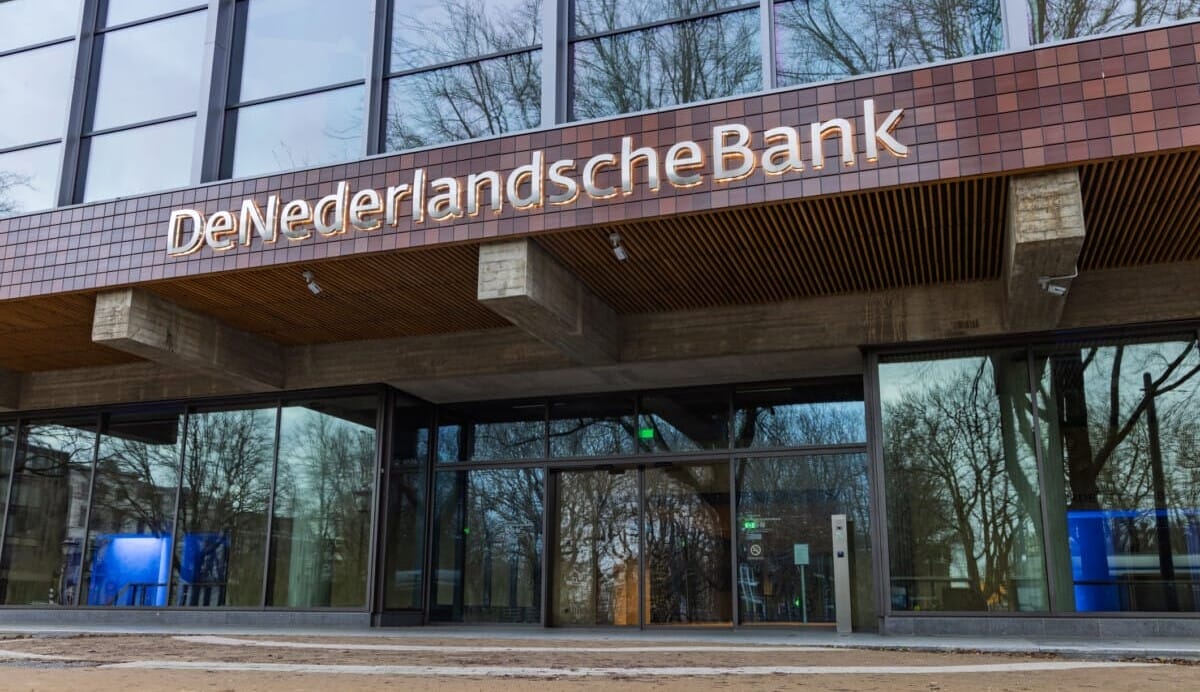

The Netherlands Central Bank, DNB, recently warned Dutch pension funds, insurers and investment institutions of the risk inherent in their large allocation to tech stocks. The regulator estimates institutional investors have doubled their equity investments in technology companies over the past five years, with invested capital amounting to €200 billion, over half of which (€95 billion) is invested in the Magnificent Seven.
“The value of tech stocks depends heavily on uncertain future profits, and there are growing doubts about whether these will materialise. Stock prices can also be strongly influenced by monetary policy interest rates. In addition, tech stocks are highly sensitive to factors such as geopolitical fragmentation, innovation, new regulation and antitrust cases,” warned the bank.
Against the backdrop of increasingly shrill warnings that the AI bubble could burst and puncture tech valuations, DNB warned of the risk to the country’s pension funds. At the end of July 2025, Dutch pension funds specifically had invested more than €150 billion ($177 billion) in tech companies, representing almost 43 per cent of their portfolios of listed shares and 8 per cent of their total balance sheet.
Notwithstanding the significant differences between the country’s diverse pension funds, DNB warned that “compared to January 2020, this represents an increase of almost 50 per cent. The weight of the seven large American tech companies in their share portfolio has risen even more sharply in recent years: from 7 per cent in January 2020 to 19 per cent in July 2025.”
DNB warned of the possibility of an “abrupt correction” and voiced its concern that investee companies are investing too much in AI. It also flagged concerns about the growing financial interdependence in the AI ecosystem whereby problems at one company can easily spread to others.
In response, PME Pensioenfonds, the €60 billion ($70 billion) Dutch pension fund for the Dutch metal and technology explained how it believes it is protected from the risk ahead.
Speaking in an interview on Dutch radio program ‘Money or your life’ broadcast on NPO Radio 1, Daan Spaargaren, senior strategist at PME, explained how PME safeguards its exposure by capping its individual weighting to tech stocks to 3 per cent. It means the share of tech companies in PME’s equity portfolio is currently about 25 per cent – not the DNB’s forecast 43 per cent.
“We’ve seen tech companies make up an increasingly large share of pension funds’ investment portfolios in recent years. And since those values have risen dramatically, there’s also a risk that they could fall again if the promised returns fail to materialise,” Spaargaren said.
“We don’t invest more than 3 per cent of our equity in any one company – not even in any of these large companies. The Magnificent Seven currently represents about 4.5 per cent of our assets – equivalent to €2.7 billion of our assets are tied up in these companies. In a hypothetical scenario where the value of those Magnificent Seven companies to halve, we would lose approximately €1.4 billion of our assets.”
Alongside praising the role of the Central Bank in highlighting the risk, Spaargaren also stressed the importance that investors take a long-term view on key underlying trends like technology.
“The bubble is really mainly about whether those promised profits will materialise in the very short term, or whether they will actually be realised,” he said.
In other news, PME recently terminated a $5.9 billion equity mandate with BlackRock, the world’s biggest asset manager, because of PME’s different view on ESG alignment.
PME began defining its key ESG themes and ambitions in 2022. Using this framework it constructed an ESG index portfolio in 2024 consisting of approximately one thousand companies in developed markets. Together with a focused portfolio of about 250 companies, this forms a “Portfolio of Tomorrow” in which every company is selected based on deliberate choices aimed at achieving solid returns and supporting a livable world.
“Implementing this strategy also means we carefully select and evaluate our external asset managers,” said the investor in a statement.
PFZW, the Dutch pension fund for the care and welfare sector, also terminated BlackRock in September.








Leave a Comment
You must be logged in to post a comment.
Login