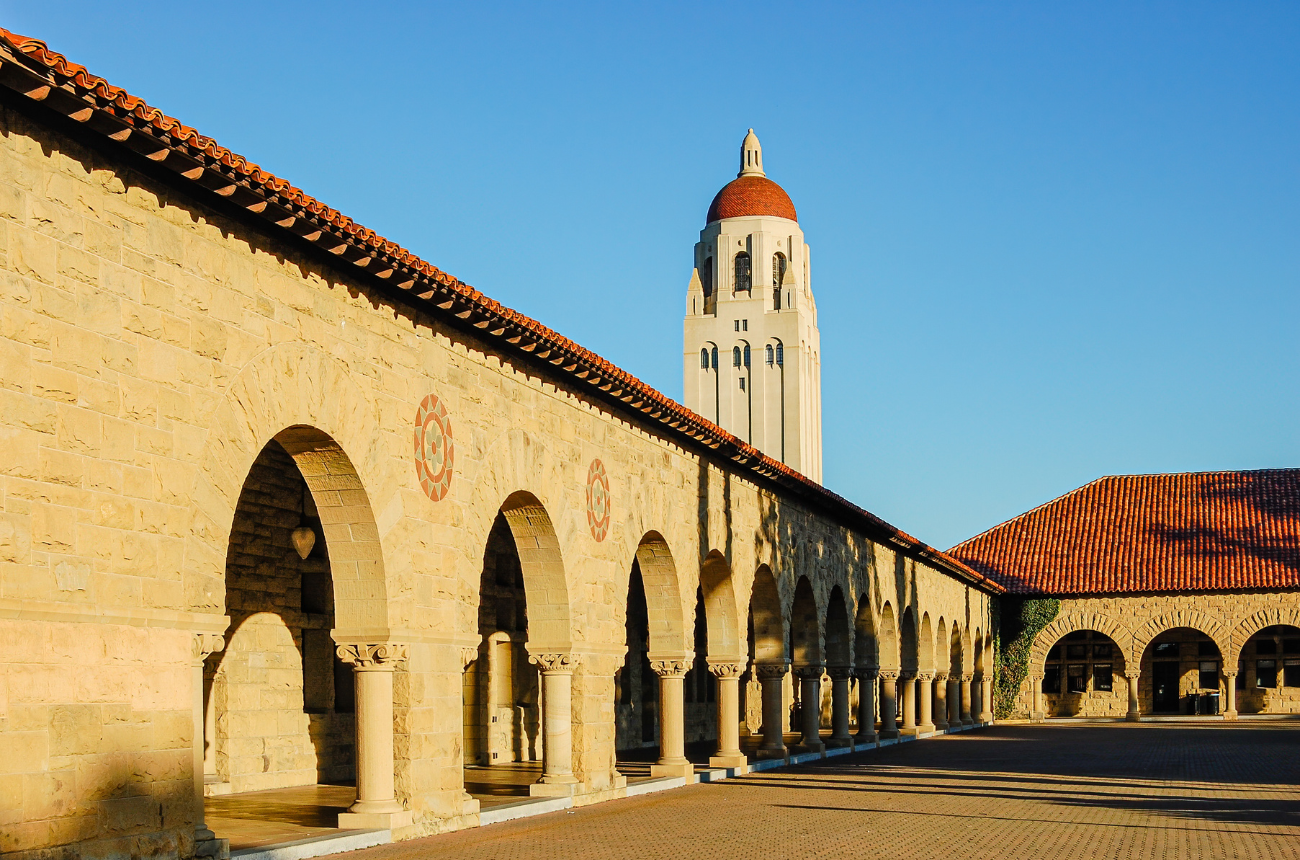
Tour of Stanford University campus (optional)
Registration and light lunch
The geopolitical map has been redrawn, leaving the assumptions that shaped capital allocation, alliances and global trade under sustained pressure. This conversation between two of the deepest strategic thinkers at Stanford's Hoover Institution will examine the contest between great powers, the return of industrial policy, technology rivalry, military risk and the fragmentation of economic blocs. It will consider how institutional investors should read the risk parameters of a world in transition, and what they mean for macro views and asset allocation.
Artificial intelligence is reshaping not just markets but the political and institutional systems that govern them. Andrew Hall runs the Free Systems research lab at Stanford GSB and the Hoover Institution, where his team stress-tests frontier AI models, runs governance experiments and studies how AI is reshaping political behaviour and democratic institutions. For institutional investors, the stakes are direct. Hall will examine what the widening gap between AI's capabilities and the governance structures designed to constrain it means for long-term capital allocation, fiduciary duty, systemic risk and the geopolitical contest between democratic and authoritarian models of AI development.
Afternoon tea
The AI revolution depends on a vast buildout of physical infrastructure, from data centres and fibre networks to the power systems required to sustain them. With data centre capex estimates reaching $7 trillion through 2030, the scale of the opportunity is matched by constraints in energy, land, regulation, and execution. This session, including the inside view from hyperscalers driving the investments, examines where the bottlenecks sit, the role of private capital in bridging what corporate balance sheets cannot accommodate, how institutional investors can access the opportunity, and what responsible development at scale requires.
INCLUDES TABLE DISCUSSION
Surging demand, supply constraints, and the broader repricing of energy across the global economy, combined with AI-driven energy demands are forcing investors to rethink allocations. This session brings together leading institutional investors to examine how energy is being underwritten as a return-generating asset class. From traditional oil and gas to renewable energy opportunities and next-generation nuclear it will examine the portfolio construction implications and risk-adjusted return expectations.
Asset owners have scale, clarity of purpose and access to patient capital, yet operating models, governance processes and external manager relationships too often create skewed incentives. Stanford's Ashby Monk argues that offloading bold innovation to commercially driven external managers imports short-term thinking into long-term focused institutions. This panel will explore how asset owners can overturn that model and embrace an innovation architecture, including the adoption of AI and technology, to deliver long-term returns.
INCLUDES TABLE DISCUSSION
In a world of compounding uncertainty, CalSTRS’ chief investment officer Scott Chan is building a portfolio designed to stay dynamic no matter what is presented. In this session he will discuss CalSTRS' One Fund approach, its version of a total portfolio approach, which has enabled the $420 billion fund to rebalance tactically, manage liquidity, and pursue opportunities when markets are dislocated. He will share how cross-divisional collaboration is positioning the fund to capture long-term value in data centres, private credit and the net zero transition.
Welcome function | Upper terrace, Stanford Faculty Club
Registration and coffee
This conversation with co-founder of Anthropic, Jack Clark, who is among the most consequential voices in frontier AI policy and safety, situates Anthropic's choices within the broader arc of the AI industry itself. As frontier labs race to release ever more capable models, governments scramble to keep pace, societies confront the unresolved question of AI's impact on labour markets, and questions arise about democracy and governance, Clark offers a candid, insider perspective on the commercial, ethical, political and geopolitical trade-offs shaping the trajectory of our shared AI future. This is a rare opportunity to engage directly with one of AI's leading minds on the questions defining the revolutionary transformation underway.
The AI infrastructure buildout is generating one of the most significant macro impulses in a generation. Bridgewater estimates the AI capex cycle will add more than 100 basis points to US growth in 2026 and 2027. But the picture is more complex than the headline numbers suggest. The AI capex boom is unlikely to support labour markets, and a material part of the GDP estimate comes from a narrow set of companies whose profits are unlikely to be recycled back into the economy. Set against the backdrop of modern mercantilism and shifting global trade relationships, this session will examine the implications for inflation, rates, and the broader economic outlook for investors.
AI is moving from experimentation to deployment at scale, and the infrastructure required is triggering a broad-based capex cycle across the tech stack. In this session, an expert panel will dissect what’s fueling listed tech leaders, whether today’s market leadership can persist, and where the next breakthroughs may come from. It will explore the ripple effects from compute and networking to data centres, grids and software, along with the key bottlenecks, valuation risks and potential winners in public markets.
Morning tea
The US financial system is growing more fragile, not through reckless decisions, but through individually defensible ones. Reduced bank capital requirements, offshore reinsurance of retirement annuities, and stablecoin frameworks built on implicit rescue expectations are each widening government backstops while weakening the private and public disciplines that constrain excessive risk. Drawing on research by Ross Levine from the Hoover Institution, this session examines how quiet accumulation builds the conditions for crisis, and what long-term investors should understand about the system they operate within.
INCLUDES TABLE DISCUSSION
Long-term investors are increasingly discovering that geopolitical volatility creates opportunity rather than reason to retreat. Temasek's track record navigating market dislocations demonstrates the power of counter-cyclical investing during periods of maximum uncertainty. This session looks at analysis of established geopolitical risk indices and reveals investors are no worse off, and often meaningfully better, deploying capital during high-risk episodes than during calm periods.
The investment environment of 2026 is reshaping the opportunity set for asset owners simultaneously across geopolitics, monetary policy, and asset class valuations. This session takes a top-down view of where the real risks lie, how leading funds are building genuine resilience, and why the current environment rewards those with the governance and conviction to move decisively when markets dislocate.
Lunch
Quantifying the exact nature of private credit risk requires a more nuanced assessment than the chorus of warnings from the media. In a landmark paper Stanford University's Amit Seru argues that the most pressing danger lies not in excess leverage, but in opacity. In this session he presents what comprehensive fund-level data actually reveals and examines the vulnerabilities that could emerge as the sector grows, including governance and disclosure frictions, stress-period dynamics, bank-non bank linkages, and the transmission of losses through limited partner balance sheets and retail vehicles. For institutional investors with significant allocations to the asset class, understanding where opacity ends and systemic risk begins has never been more important.
Fixed income investors are navigating a world where ballooning sovereign debt, divergent central bank policy paths and shifting capital flows are fundamentally reshaping the opportunity set. As developed market governments test the limits of fiscal sustainability, the implications for duration, currencies and portfolio construction are profound. In a lively debate, panellists will contest views on sovereign risk and fiscal discipline, the credibility of central bank independence, the trajectory of the US dollar and de-dollarisation, high yield spreads, and the role of international bonds.
INCLUDES TABLE DISCUSSION
Afternoon tea
Few investors have a better claim to having seen the future before anyone else. One of Silicon Valley's most celebrated venture capitalists, Vinod Khosla has built a career on backing founders across clean energy, AI, health care and consumer technology. In this fireside chat he shares his conviction that AI will perform 80 per cent of all economically valuable jobs within five years, that Fortune 500 incumbents face faster disruption than any previous era, and that the productivity gains ahead will reshape the global economy in ways markets are nowhere near pricing. From the future of health care and energy to the geopolitical race between the US and China for AI supremacy, Khosla offers a vision of the next 20 years in a session that is a rare opportunity to stress-test assumptions with one of the great contrarian minds in technology investing.
As chief fiscal officer of the world's fifth-largest economy, Controller Malia Cohen navigates one of public finance's most complex balancing acts. With California simultaneously managing a near-$350 billion budget, multi-year pension obligations across CalPERS and CalSTRS and ambitious investments in AI infrastructure, the pressure on fiscal discipline has never been greater. Cohen will discuss how she maintains financial transparency and investor confidence — including restoring timely ACFR reporting after an eight-year gap — while ensuring California's bold technology buildout doesn't come at the expense of long-term fiscal soundness.
Transfer from Sheraton Palo Alto to Cantor Arts Center, Stanford University
Conference dinner | Cantor Arts Center, Stanford University
Transfer from Cantor Arts Center, Stanford University to Sheraton Palo Alto
Coffee
US exceptionalism has defined institutional portfolios for a decade, but rising US debt levels, contested global leadership, and the intersection of demographics and technology are raising questions. For asset owners, the question is no longer whether to rebalance, but where. This panel will consider whether a cyclical recovery is taking hold in Europe after years of near-recession. It looks at whether global monetary easing reviving the region's rate-sensitive manufacturing sector and the Draghi report’s structural reform agenda, are strong enough tailwinds to finally lead to sustainable outperformance. The discussion will weigh the trade-offs of valuation, liquidity, governance and currency risk as asset owners search for greater portfolio diversification and resiliency.
As the world moves from US dominance towards a more multipolar order, the line separating emerging from developed markets is breaking down. Improving fundamentals, greater policy visibility and deep structural growth drivers have delivered outsized returns, prompting a closer look at Asian, African and Latin American opportunities. This session asks where the most compelling opportunities now sit, and why geography, not just asset class, may become the defining axis of diversification.
The investment industry concentrates too much on picking winners and maximising returns within a static distribution, according to Nobel Prize-winning academic Myron Scholes, who argues that investors should instead be dynamically managing the downside and deploying convexity to shift the distribution of outcomes. Against this framework he examines the implementation and execution implications of a total portfolio approach.
Moving from a TPA framework to implementation raises many execution questions. This session brings together investors who have implemented TPA to share practical lessons from the transition. Panellists will discuss governance and decision-making structures, how they think about opportunity cost and dynamic capital allocation, the cultural and organisational shifts required, and the pitfalls to avoid along the way.
Morning tea
This session will examine how large funds are using expanded toolkits to assess their fund managers: challenging performance narratives, renegotiating alignment, and pruning rosters. It will ask where external mandates still create genuine value, and where they have become legacy arrangements that no longer fit a total portfolio approach, as well as the real value add of strategic partnerships.
Conference close and lunch
DELEGATE PROFILE
The Fiduciary Investors Symposium is a quarterly event for the senior investment professionals at large institutional investors around the globe. The audience comprises chief investment officers and other senior investment professionals from pension funds, endowments and sovereign wealth funds from more than 20 countries.
MEDIA PARTNER
www.top1000funds.com is the news and analysis site for the world’s largest institutional investors. It focuses on strategy and implementation and is populated with original news stories, case studies and research that relate directly to the work of investment professionals at pension funds, endowments and sovereign wealth funds. One of its defining characteristics is truly global content that focuses on the strategies, portfolio construction and implementation techniques of institutional investors.
AGENDA TIMES
Tuesday, September 15 - Thursday, September 17 | Conference proceedings
Stanford Faculty Club, Stanford University
439 Lagunita Drive, Stanford, California 94309
Tuesday, September 15 | Welcome function
Upper terrace, Stanford Faculty Club, Stanford University
439 Lagunita Drive, Stanford, California 94309
Wednesday, September 16 | Conference dinner
Cantor Arts Center at Stanford University
328 Lomita Drive, Stanford, California 94305
ACCOMMODATION
Sheraton Palo Alto
325 El Camino Real
Palo Alto, CA
Conference rate: USD 455/night plus tax
Click here to book the Sheraton Palo Alto
The Westin Palo Alto
375 El Camino Real
Palo Alto, CA
Conference rate: USD 555/night plus tax
Click here to book the Westin Palo Alto
DRESS CODE
The dress code for all conference proceedings and social functions is business attire.
CONTACTS
For enquiries related to registration and event logistics, please contact the Conexus Financial events team at events@conexusfinancial.com.au
Fund managers wishing to attend must sponsor the event. To discuss sponsorship opportunities, please email sales@conexusfinancial.com.au
CODE OF CONDUCT
Conexus Financial is committed to creating a professional environment that steadfastly supports the free flow and exchange of ideas, as well as the personal safety, wellbeing, respect for, and full self-expression of all our employees, guests and partners.
We have a zero-tolerance policy for behaviour that is detrimental to any of the above, including but not limited to bullying, harassment, and discrimination of any kind.
Please confide any incidents of concern to a member of the Conexus Financial team.