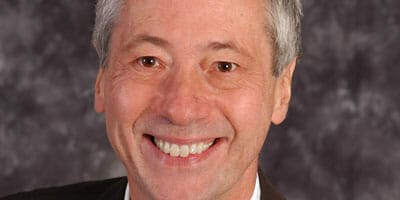
State Street’s Probyn into 2013

The current equity rally is not predicated on a shift in economic performance, according to chief economist at State Street, Chris Probyn, who says it would be reasonable to say the market may “pause for thought”.

Probyn says the move from fixed income to equities has been fostered by some of the “economic areas for concern” being eliminated.

These include the avoidance of a hard landing in China, and a disorderly breakup of the euro, proactive policy responses in Japan and the avoidance of the US fiscal cliff.

“These have all been ticked off,” he says. “But still growth is not great. The fourth quarter earnings reports have been good, with the notable exception of Apple, so there is some fundamental support for equities. But there is no fundamental upshift, so the size and speed of the rally is a little surprising.”

Probyn’s outlook for 2013 is for 0.25 per cent global growth, driven by a 0.5 per cent growth in emerging markets.

His economic outlook for developed markets is zero growth, which he partly attributes to fiscal policy decisions.

Sponsored Content

“We have reinvented economics, when the economy is weak we stop government spending, it is a failure of policy and we are repeating the mistakes of the 1920s,” he says.

Probyn also attributes the equity rally to a certain psychological behaviour.

“People have worry fatigue, they are tired of worrying about the same things,” he says.

State Street doesn’t have a big economics department, three people in fact. One emerging markets specialist plus two who look at the G8, defined as the G7 plus Australia (because of State Street’s presence in that country).

Probyn believes that in order to understand certain asset classes there needs to be an understanding of the global economic story, such as the relationship between resources and China.

He admits that for most economists it is difficult to predict exact growth numbers, but it’s more important to get “the overall story right”. Last year that overall story was further growth moderation, and that is the outlook for 2013 as well.


 

Leave a Comment

Sort content by

Global search activity down, but US pension funds hire and fire

US pension funds increased their manager search activity in 2008 on the back of large losses in equity markets, while funds in the UK, Europe and Australia ditched searches to concentrate on strategy issues. mrec4inarticleinline Sponsored Content scnative1 scnative2 scnative3

ICGN appoints Rosen to ex dir as Simpson departs to CalPERS

The International Corporate Governance Council (ICGN) has appointed Carl Rosen, head of corporate governance at the Second Swedish National Pension Fund (AP2), as its new executive director replacing Anne Simpson who will join CalPERS as senior portfolio manager for corporate governance this month. mrec4inarticleinline Sponsored Content scnative1 scnative2 scnative3

Australian Future Fund piles into debt

The $A51.2 billion ($37.9 billion) Australian Future Fund has quintupled its allocation to debt in the past year, significantly upweighting its exposure to debt securities in the last quarter to 21.9 per cent of the fund. mrec4inarticleinline Sponsored Content scnative1 scnative2 scnative3

Governance review to facilitate speedy decisions at SWFs

Sovereign wealth funds are prioritising a review of their internal risk management frameworks and better communication with their stakeholders regarding expectations of financial markets, according to Patricia Pascuzzo, global head of national funds consulting at Mercer. mrec4inarticleinline Sponsored Content scnative1 scnative2 scnative3

The marginal investor: thoughts from the edge

What’s in a Name (or an Acronym)? GFC is in the lexicon. It’s not in mine. I refuse to add to the surplus of investment TLAs in  circulation. I refuse because naming induces a dangerously comforting sense that we’ve understood or even controlled that named. Hurricanes sound less malevolent, friendly almost, when called Kylie or

The stochastic advantage: volatility creates opportunity

Robert Garvy, chief executive officer of Florida-based INTECH Investment Management, talks to Kristen Paech about the benefits of mathematical investing, and the blurring of the line between passive and active investing. mrec4inarticleinline Sponsored Content scnative1 scnative2 scnative3

Previous



