
SWIB develops model to highlight inflation risk

Using a factor model comprising real rates, inflation, growth and liquidity the State of Wisconsin Investment Board has “swapped binoculars for sunglasses” to see a new picture that effectively highlights inflation risk.

The sharp uptrend in the correlation between stocks and bonds in 2021 was a wake-up call to investors but few understood the causes or consequences or what had happened.

Most available risk models don’t capture macro-economic risk and investors struggle to see this exposure in their risk reports.

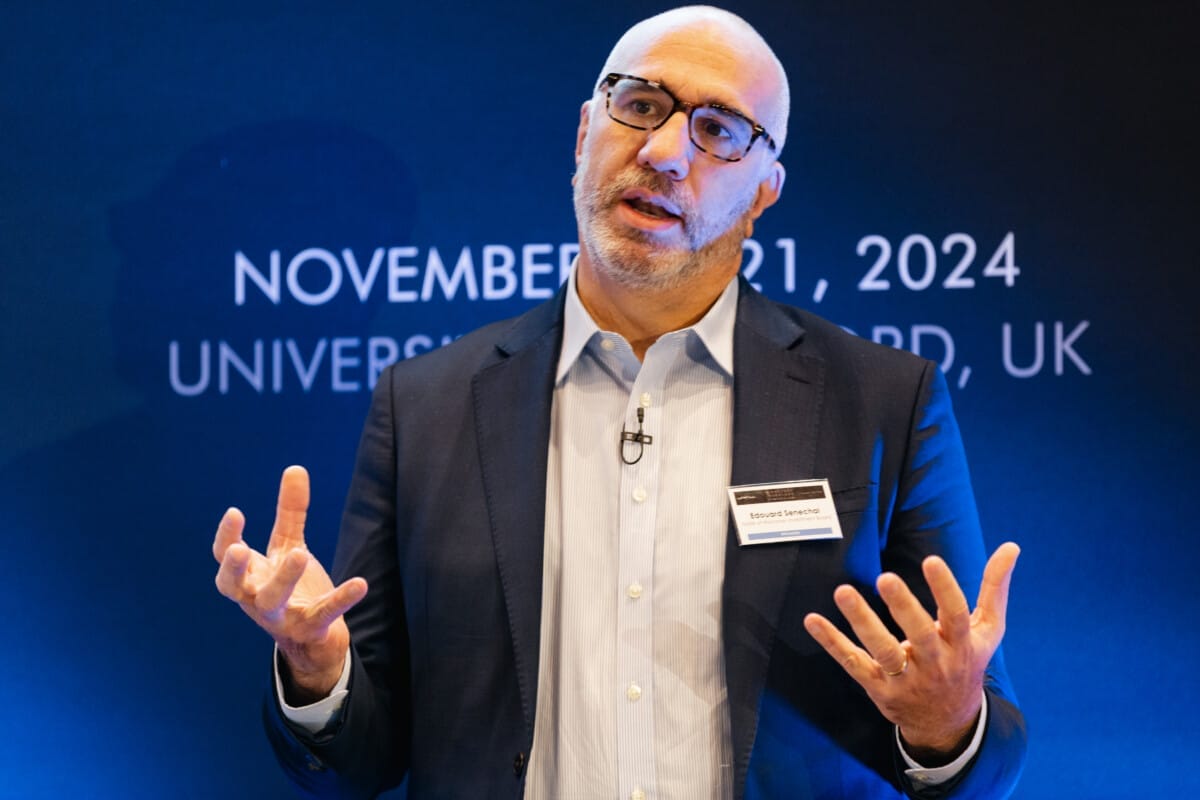
In an effort to understand what had happened, the State of Wisconsin Investment Board, SWIB, developed a factor portfolio to provide a better lens to observe the effects of macro-economic changes in its asset allocation. This revealed that inflation had a significant impact on stock bond correlations, explained Edouard Senechal, senior portfolio manager, SWIB, speaking at FIS Oxford.

Senechal is tasked with overseeing an exposure management program at SWIB, and his job is to craft an asset allocation overlay. Sometimes the team seeks to hedge exposure if there is too much risk, and other times they want to increase those exposures in a process that necessitates measuring and sizing the risk of the program.

He explained to FIS delegates that the team could see the correlation in stocks and bonds in 2021 was picking up, but they were not sure what was triggering it. Concerned about the significant impact on risk, SWIB called on its investment management partners and academics for help. It was the start of a research program with Robeco to assess what had happened and the consequences. In 2024 they published a joint paper  published in the Financial Analysts Journal.

Sponsored Content

“Back then there were very few good answers about what was going on,” said Senechal.

Together the investors looked at the correlation between stocks and bonds over a long-term horizon, casting back 100 years in US and UK markets. The long-term data showed that stable correlations also went through dramatic regime shifts.

Senechal explained that different variables impact the correlation like real rates, growth and inflation. The researchers took the variables used to price bonds and stocks like equity risk premia, real risk and inflation, real rates and bond risk premium, and saw how volatility drove the correlation, and the extent to which these factor came together.

However, the two variables that best explained the move in correlations from an economic standpoint were inflation and real rates. When inflation is low stocks and bonds don’t tend to correlate and low inflation and low rates trigger a negative correlation between stocks and bonds. He said that lower rates change the characteristics of bonds because they become a hedging asset, acting as a type of insurance policy.

However, when inflation picks up, investors don’t’ see the bond risk premia increase.

Senechal identified the issues that drove inflation higher like the post Covid recovery. He said that today deglobalization trends are also taking shape and could fuel inflation. The level of debt amongst developed market governments is high, and it’s tempting for central banks to use inflation to manage debt levels.

Inflation was a risk in 2021 and 2024 but investors didn’t measure it very well. He said the problem lay with investors looking at risk factors but not seeing the inflation factor in the models.

He suggested using four factors comprising real rates, inflation, growth and liquidity, made of assets that can be directly linked to the underlying portfolio. By using these four factors investors can in effect “swap binoculars for sunglasses” to see a new picture that effectively highlights inflation risk.

Leave a Comment

Sort content by

Great power competition: The unlikeable, but undeniable, mega theme

The fragmentation of global power, and big increases in defence spending, alongside climate change and the rise of AI, have been identified by Wellington Management as major generational changes that will impact markets for decades to come.

Private market investors ponder transition investment

Investors putting capital to work in private market transition assets face unknowns around government policy, but the Fiduciary Investors Symposium at Oxford has heard that private credit also fits well with the long term nature of transition investments and brings valuable relationships with investee companies.

Why investing in biodiversity champions pays

Delegates at the Fiduciary Investors Symposium, Oxford University heard how an allocation to biodiversity champions, without any tech exposure, only slightly trails the MSCI World in a reflection of how it is possible for investors to make money in biodiversity solutions.

Biodiversity: Regeneration set to become big investment theme in future

Regeneration will become a key investment theme in the future according to multiple biodiversity themes, according to Gabriel Micheli, senior investment manager, thematic equities, Pictet Asset Management.

Investors balance net zero with fiduciary duty and climate scepticism

A panel session at the Fiduciary Investors Symposium at Oxford discusses how the absence of policy is making net zero investment more challenging. Asset owners have to work hard to explain to beneficiaries why net zero targets give a better risk adjusted return.

‘Opportunity to lose a lot of money’ in net zero investments

Allocating capital to net zero opportunities doesn’t mean investors are prepared to do charity. In a universe of potential transition solutions, Battcock Professor of Environmental Economics Cameron Hepburn at the Smith School of Enterprise and the Environment, University of Oxford said investors should look at them with some filters.