
Reckoning on growth: Why tech offers the solution

For thousands of years economic life was stagnant. Even before the 1950s, few people talked about the idea of economic growth as a measure of economic success.

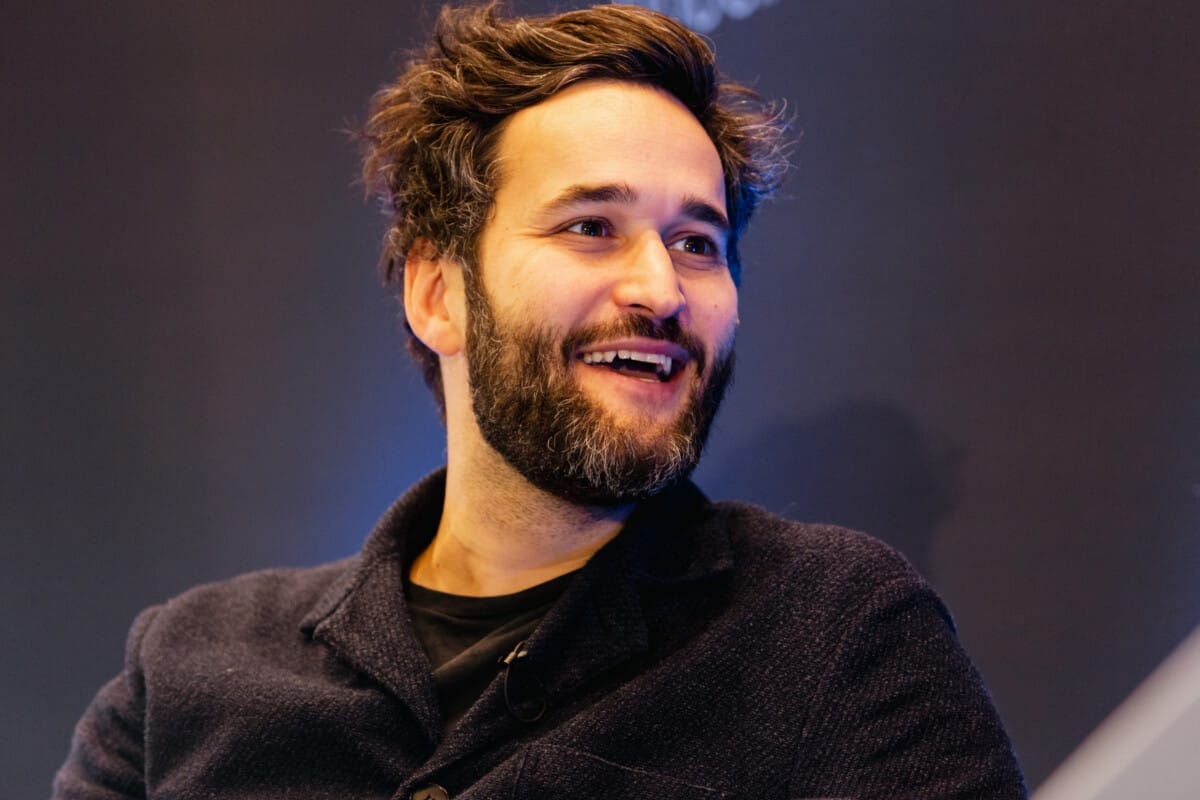
Speaking at the Fiduciary Investors Symposium at the University of Oxford, Daniel Susskind, senior research associate, Institute for Ethics in AI and associate member in the economics department at the University of Oxford argued that the concept of sizing an economy is fairly recent.

Today it is clear that the pursuit of prosperity has come at a high price, evident in the destruction of the natural environment and sharp inequality. Meanwhile the disruptive impact of new technology like AI remains unclear. Susskind, who is the  author of ‘Growth: A Reckoning’,  said the current growth path of world economies is unsustainable because it is undermining the political system and disrupting communities.

“Growth is related to many of the problems we have today; the price of growth is behind many of our greatest challenges,” he said, linking the problems inherent in growth to a de-growth movement.

“Some argue if growth is the problem, then less growth is the solution.”

But he says that de-growth means freezing GDP at current levels that would abandon people to poverty. Moreover, economic growth has been revolutionary and improved lives, and future growth is possible on a different basis.

Sponsored Content

“My starting point is we need more growth,” he said.

Still, infinite growth is not possible on a finite planet where growth comes from old-fashioned economic activity based in factories or on farms. The UK is wholly focused on how to increase growth by looking at things in the material world like more houses and faster trains.

He said if we really want to drive growth, the answers won’t come from the material world. He said in the future, growth will come instead from discovering more productive ways of using our finite resources powered with new ideas.

In short, more growth requires more technological progress which in turn requires us to discover more ideas for using our finite resources. It requires rethinking intellectual property and overhauling who owns and controls ideas in society. It means investing more in R&D and getting more people into the economy who are responsible for generating ideas, and using technology to develop ideas.

R&D expenditure as a percentage of GDP is high in Israel, but OECD countries invest much less in research. In contrast, companies like Alphabet and Facebook spend far more on R&D – to the extent that their spend makes even the spend of the most ambitious countries like Israel look meagre.

The use of technology to develop ideas is visible in how Moderna used AI to develop vaccines. In perhaps the most celebrated example of technology evolving to fuel growth, AlphaFold, the AI system developed by  Google DeepMind, can predict a protein’s 3D structure from its amino acid sequence, transforming the way we understand disease in years to come.

Today’s ideas increasingly come from technology, and economic growth depends on countries willingness to invest in these technologies.

However, Susskind said that the growth dilemma can’t be solved by technology alone and we also need to change the nature of growth.

Changing the nature of growth

Growth damages the environment and reducing emissions impacts growth, creating a trade off between growth and climate. “Protecting the climate has a price in terms of economic growth.”

Technological progress in producing renewable energy means economies can continue to grow without producing emissions. He pointed to the exponential decline in the cost of solar modules as an example to illustrate how growth can become greener than before.

He also suggested we could change the nature of growth by changing incentives. During the pandemic, employers adopted and developed new technology so that staff could work remotely in a leap forward that would have normally taken decades. Similarly, the development of the vaccine was accelerated by incentives.

He said we should use every tool at our disposal to change the nature of growth to make growth less destructive, leading to healthier politics and flourishing local communities.

Susskind suggested economies revise their GDP measure. This could include finding a way to measure the things we care about and bundle it into GDP in a GDP-plus model. He suggested presenting these types of questions to citizens in mini-publics or citizen assemblies to find out what we value most. Citizen juries and panels could ask moral questions about values to find out the extent to which we value growth more than other life measures. This kind of new thought process offers an existential opportunity and a chance for moral renewal.

“These are not questions that can be asked by technocrats; they need to be answered by citizens.”

One area mini publics could help resolve conflict is net zero. A large political constituency has not signed up to net zero. Changing the nature of growth and embracing the costs that come with it, involves politics and bringing people together.

He said it is unsettling that such consequential tech sits in the hands of private sector companies. Mini publics could also be used to ascertain our appetite to use technology to fire up growth because it will involve moral questions – our capacity to use technology will run far ahead of what we are willing to do.

“Barriers to tech have less to do with technology’s capabilities and more to do with moral apprehensions.”

Susskind concluded with the metaphor of a train on fixed rails to describe our current view of growth. He said a better metaphor is to see growth as nautical on a boat at sea with an enormous discretion to go in any direction.

Leave a Comment

SWIB develops model to highlight inflation risk

SWIB develops model to highlight inflation risk

Using a factor model comprising real rates, inflation, growth and liquidity the State of Wisconsin Investment Board has "swapped binoculars for sunglasses" to see a new picture that effectively highlights inflation risk.

Sort content by

Great power competition: The unlikeable, but undeniable, mega theme

The fragmentation of global power, and big increases in defence spending, alongside climate change and the rise of AI, have been identified by Wellington Management as major generational changes that will impact markets for decades to come.

Private market investors ponder transition investment

Investors putting capital to work in private market transition assets face unknowns around government policy, but the Fiduciary Investors Symposium at Oxford has heard that private credit also fits well with the long term nature of transition investments and brings valuable relationships with investee companies.

Why investing in biodiversity champions pays

Delegates at the Fiduciary Investors Symposium, Oxford University heard how an allocation to biodiversity champions, without any tech exposure, only slightly trails the MSCI World in a reflection of how it is possible for investors to make money in biodiversity solutions.

Biodiversity: Regeneration set to become big investment theme in future

Regeneration will become a key investment theme in the future according to multiple biodiversity themes, according to Gabriel Micheli, senior investment manager, thematic equities, Pictet Asset Management.

Investors balance net zero with fiduciary duty and climate scepticism

A panel session at the Fiduciary Investors Symposium at Oxford discusses how the absence of policy is making net zero investment more challenging. Asset owners have to work hard to explain to beneficiaries why net zero targets give a better risk adjusted return.

‘Opportunity to lose a lot of money’ in net zero investments

Allocating capital to net zero opportunities doesn’t mean investors are prepared to do charity. In a universe of potential transition solutions, Battcock Professor of Environmental Economics Cameron Hepburn at the Smith School of Enterprise and the Environment, University of Oxford said investors should look at them with some filters.