

The Future Fund knows exactly where its leadership team’s cognitive strengths, and weaknesses, lie. Does your fund?
When the Future Fund first built its team – back in 2007 – diversity was not on the agenda. But 10 years later, diversity and inclusion are at the cornerstone of the organisation’s people management strategy.
“When we built the team, we were just focusing on managing money,” says managing director David Neal.
Now, respecting and valuing difference in all its forms including diversity of background, experience and thought is actively promoted. And inclusion is seen as key to success.
The fund’s one portfolio, one team philosophy drives everything it does, so increasing the performance of its collective brain is a priority.
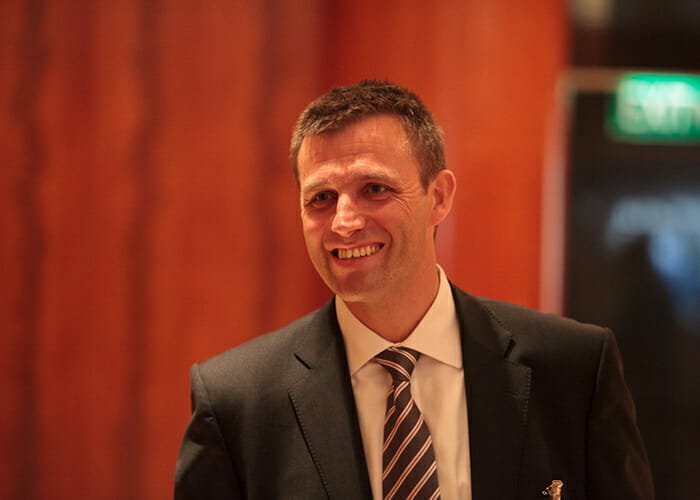
Speaking recently at the Thinking Ahead Institute topical day on cognitive diversity, Neal shared the experience of the leadership team at the recent offsite, aptly named “Leading into the Future”.
The group was assessed using the Herrmann Brain Dominance Instrument which explores the degree of preference individuals have for thinking in each of the four brain quadrants.
Perhaps not surprisingly given the organisation’s goal, the group was found to have a huge overweight to the A grouping with attributes of being factual, quantitative, critical, rational, mathematical, logical and analytical.
There were few that had the big-picture view, and few in the emotional category, Neal says.
Broken down by investment function, the testing found the investment team was mostly analytical and the support people were process driven.
“Maybe you would expect this, but the big question is how to get them to talk to each other without breaking down communication,” Neal says. “Our mantra is one team, one portfolio and incentives are aligned – then why is this so difficult?”
The thing is, according to Ned Herrmann who is the founder of Herrmann International and originator of “whole brain thinking”, that most people assume they are seeing the world the way it really is.

“So with that lens you think that someone who is thinking in a different way has poor motives,” Neal says. “They’re out to get you, or there is something about them that isn’t right – and they think the same about you. But this is just a perspective. We can think differently.”
Neal says by conducting this offsite the team can now see that their preferences are just a different view, it’s just a perspective.
“Our motives are both pure so let’s have a better conversation. This is a tool that has helped us build on our strategy for gender diversity to have a wider conversation on cognitive diversity.”
The Future Fund wants to actively seek to improve the diversity of the team, especially at the decision-making levels because it knows it will support better, more holistic decision making.
“We believe in the cognitive diversity argument. We also think we need to compete for talent, which is hard – we don’t pay as much as investment management.”
The next step for the organisation is to look at what drives sustainable diversity and allow the organisation to flourish. Flexibility is at the centre of that conversation.
“Flexibility 1.0 is specific flexibility for people, like it is documented that someone leaves on Fridays at 2.00pm. We are now looking at flexibility 2.0 and considering where and how far to take it.”
Neal points to Netflix’s much-cited slide deck on its culture which is outcomes based, rather than putting a number on the amount of leave, removing the administration and bureaucracy around controlling people. (See also How Netflix reinvented HR in the Harvard Business Review)
“It basically says you are responsible so get the job done. We would love to hear from people who have done interesting things around this.”
Future Fund staff breakdown
At the end of June last year the Future Fund had 112 staff, with only five part-time workers. Of the total staff 57 were male and 55 were female. In the investment team 30 were male and 19 were female, and in the non-investment team 27 were male and 36 were female.
In the leadership team the ratio of men to women is 70:30, and the more senior the leadership team then the more men there are.
We have a mission and can tap into that when hiring people,” Neal says. “The nature of our mission, investing for the benefit of future generations of Australians, is an attractive employee value proposition for a diverse range of people. This will give us a better collective brain.”
Neal says it is often women that are attracted to, and tap into, the Future Fund’s purpose, which is a long-term proposition.
In terms of age, around 40 per cent of the Future Fund staff are aged 31 to 40 years, with a further 33 per cent aged between 41 and 50 years. The average age is 38.8 and the median age is 37.7.








Leave a Comment
You must be logged in to post a comment.
Login