
How capital markets became a weapon of choice in great power conflict

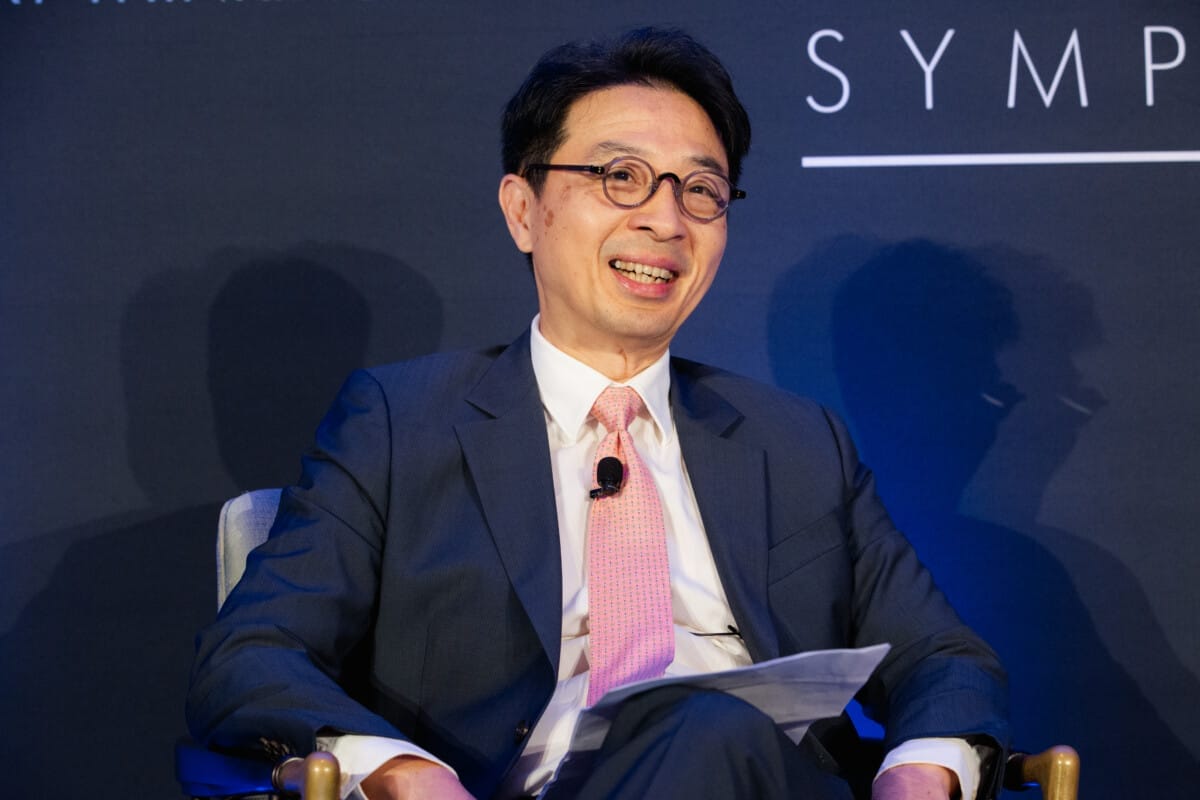
Weitseng Chen. Photo: Jack Smith

Capital markets continue to be a key battlefield of power between Beijing and Washington, and whether the yuan has a serious chance of taking over the dollar as the international currency is the next big question for the world economic order. 

The struggle is especially evident in developing countries. While the influence of US capital has waned due to the shuttering of foreign aid organisation United States Agency for International Development, China is working hard to increase its presence through programs like the Belt and Road Initiative (BRI).  

At the Top1000funds.com Fiduciary Investors Symposium, Asian law expert and Associate Professor at National University of Singapore, Weitseng Chen, said one unique thing about the yuan internationalisation scheme is China’s “capacity to maintain a dual system”. 

“One system is the US dollar-based system that is the foundation of global capital markets,” he told the symposium in Singapore. “Nowadays, China is the largest beneficiary of globalisation. They try very hard to uphold the current system and blame the United States of breaking down this current system.” 

“But on the other hand, China has established a quite effective alternative [currency] system.” 

This system includes the BRI; the Asian Infrastructure Investment Bank, which is a previous extension of BRI but later broadened its investment scope to unrelated infrastructure projects in Asia; the Cross-border Interbank Payment System that offers clearing and settlement services for yuan; and the so-called ‘dim sum’ bonds issued in foreign countries but denominated in yuan.  

Sponsored Content

Chen said users of the alternative yuan system are still limited, but its existence provides China with a plan B if it faces Russia-like sanction from the US.

“It’s already proved that [the system] is totally viable and possible,” he said.  

“US sanctions against Russia failed simply because Russia has been able to switch to this alternative platform, it’s quite powerful.” 

Chen said there is also a divergence in capital markets regulations between the two countries despite liberal scholars’ predictions over the past two decades that there would be convergence of globalised capital markets.  

“Convergence indeed happened. If you check out regulations on securities, both in the US and in China, they look surprisingly identical on many regards,” he said. “But this convergence is kind of superficial.” 

For example, investors have to opt in for complex deal structures like variable interest entity (VIE) if they want to invest in certain sectors in China with restriction of foreign ownership, such as technology. Under VIE, Chinese companies looking to list offshore will set up an overseas company, allowing foreign investors to purchase the stock.  

The foreign investor is then deemed as a creditor, not an owner of the company, “with inferior rights”, Chen said, adding that the US market regulator is “tolerating” structures like this because it wants to attract listings in the US. 

But from a legal perspective, these differences could cause global investors woes in periods of geopolitical tension. Overlapping jurisdictions in global markets create fertile ground for “legal warfare” between countries and investors need to stay vigilant. 

“There is an undercurrent…but we just ignore it. When geopolitics doesn’t matter to transactions, it’s okay; but when politics matters now, it is not okay,” he said.  

Leave a Comment

The world in flux and Trump’s role in a new equilibrium

The world in flux and Trump’s role in a new equilibrium

The second Trump administration has so far brought a lot of things: market shocks, volatile trade policies, and turbulent foreign relationships. But beyond the chaos, renowned geopolitics expert Stephen Kotkin says Trump has an unwitting role to help the world rebalance and reach a “new equilibrium” in the global order.

Sort content by

How AI will propel quant 2.0

Pictet Asset Management head of quantitative investment David Wright said at FIS Singapore that AI will not only provide drastic efficiency gain for traditional stock pickers but also will be a defining part of “quant 2.0”. 

Asset owners prepare portfolios for a brave new world

As waves of geopolitical risk and economic protectionism roil global markets, asset owners are beginning to realise that tomorrow will look very different from today. But the big question is what they can do about it.

GIC: ‘Profound uncertainties’ challenge investor assumptions

Investors are operating in a period of “profound uncertainty” intrinsically different from anything they have lived through in the past few decades and for some, their entire investing lifetimes, according to GIC's top economist and investment strategist Prakash Kannan.

Investors ponder secondaries’ role in portfolios amid PE stress

The past two years have been a challenging time for private equity investors thanks to low deal activities, falling distributions and tough exit environment. At FIS Singapore, a panel of investors examine how secondaries can help alleviate the asset class stress in portfolios.

Investors overlook APAC private credit despite attractive returns

Institutional investment in private credit across the Asia-Pacific is failing to keep pace with the region's strong economic growth and more attractive interest rate environment, according to a panel of investors at the Fiduciary Investors Symposium.

Photo gallery: FIS Singapore 25

Delegates and speakers at the Fiduciary Investors Symposium, Singapore 2025.