
APG doubles down on Asia as next growth hub

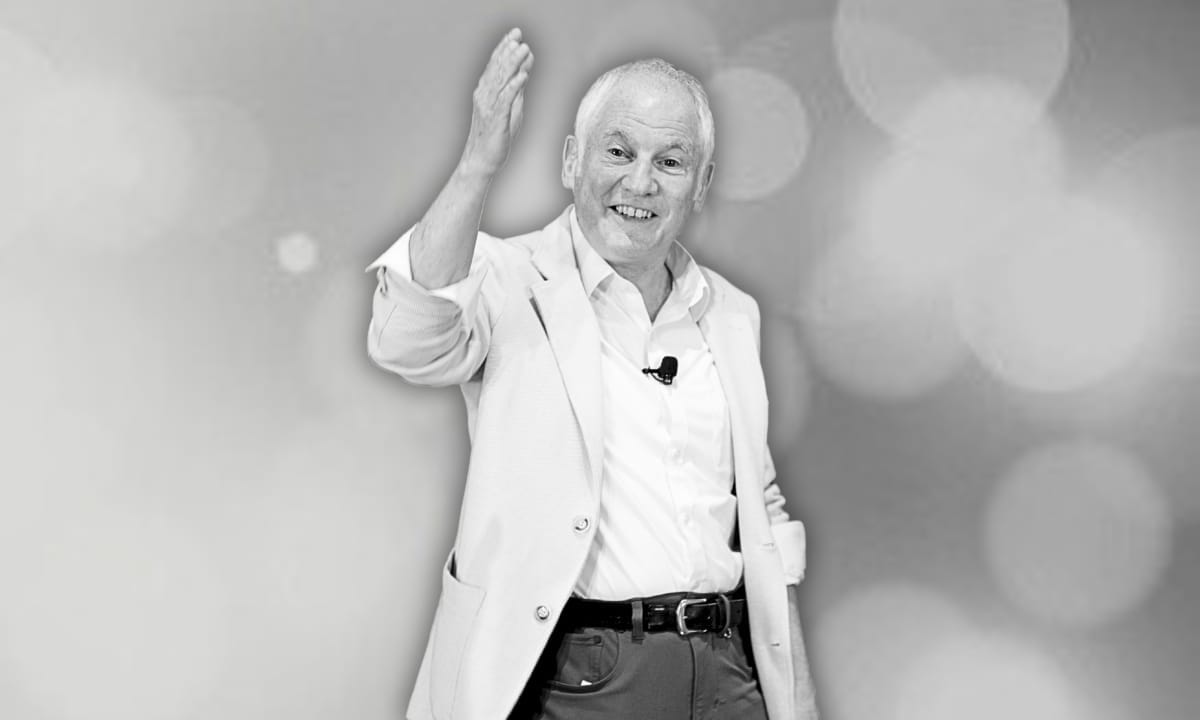
Thijs Aaten. Photo: Jack Smith

APG Asset Management is bullish on Asia’s growth prospects, with local CEO Thijs Aaten saying he would like to eventually see half of the Dutch pension fund’s real assets invested in the region. 

The fund’s Asia operations are mainly conducted out of its Hong Kong office, and investors can reach countries representing almost half of the world’s GDP and around 80 per cent of the global GDP growth within six hours of flight from the city. Aaten referred to the zone as “the Hong Kong circle”.  

“There’s a lot of growth in the region. Another statistic is that [among] the 100 largest cities globally, 69 are in that Asian circle,” he told the Fiduciary Investors Symposium in Singapore.  

 “Also in that circle there’s probably a billion people moving towards the middle-income level. That’s very different in Europe. 

“Given that so much is in this in this Asia circle… That’s why I struggled to understand why you would follow a market index and invest 70 per cent of your money – if you look at the MSCI World – in the US.” 

The benefit of being geographically diversified will only be more pronounced during uncertain times, Aaten said.  

Sponsored Content

“It’s very difficult to predict what’s going to happen. The only thing that I know is if I spread my eggs over a bit more baskets, then I’m less exposed to idiosyncratic risks,” he said.  

But while the overarching trends in Asia are interesting, Aaten said APG has a granular view towards investing in specific countries. For example, the demographics of Japan and Indonesia are vastly different and so are the investment opportunities that come with them.  

The fund has a culturally and linguistically diverse workforce who can tap into these nuances within Asia, Aaten said.

“That’s also important when you do private investments – building that network where the opportunities come from. [Because] you’re not going to an exchange and clicking on your order to get it executed.” 

Several global pension funds have retreated from Asia this year, including Canada’s AIMCo, which shut down its Singapore office for cost reasons, and Ontario Teachers’ Pension, which is winding down its Hong Kong operations in the next 18 months. The latter still has offices in Singapore and Mumbai.  

APG’s Hong Kong office has operated for close to two decades, and Aaten said being in the region shows APG’s portfolio companies of its commitment.  

“[It shows] that we’re more than an institutional investor that steps in and out, that we’re there for the long term, and that we’re very much thinking as an owner of the company or the project that we invest in],” he said.  

APG Asia is not immune to cost scrutiny from its clients, as Aaten acknowledged that “you constantly need to justify why you are in the region and what is the added value that you bring to your client back home”. 

 The regional office needs to be conscious of the types of activities it is undertaking and recognise that its existence is expensive and its function is not index investing or back-office administration, Aaten said. He added that the fact that not all the value it generates is measurable in the form of financial returns only adds to the challenge.  

“We do have examples of investment opportunities that would have been impossible to do out of an Amsterdam office, but it’s very difficult to come up with metrics and say, ‘the office here has delivered us 60 million euros extra this this year’,” he said. 

“So it [the regional office’s value-add] is partly a belief, as well.” 

Leave a Comment

The world in flux and Trump’s role in a new equilibrium

The world in flux and Trump’s role in a new equilibrium

The second Trump administration has so far brought a lot of things: market shocks, volatile trade policies, and turbulent foreign relationships. But beyond the chaos, renowned geopolitics expert Stephen Kotkin says Trump has an unwitting role to help the world rebalance and reach a “new equilibrium” in the global order.

Sort content by

How Asia-Pacific investors can navigate Trump’s America first plan

President Trump is dramatically reshaping geopolitics, creating new risks and opportunities for investors across the Asia-Pacific.

How new technologies are changing the game in private markets

With the ability to uncover hard-to-find information and enable more frequent trading in traditionally illiquid asset classes, new technologies like artificial intelligence and tokenisation could be the biggest disruption most private markets investors will see in their lifetime. 

How capital markets became a weapon of choice in great power conflict

Capital markets continue to be a key battlefield of power between Beijing and Washington, and whether the yuan has a serious chance of taking over the dollar as the international currency is the next big question for the world economic order. 

Investors brace for life after the US dollar 

A world where the US dollar is no longer the reserve currency seems increasingly likely by the day, and institutional investors are wary that it could fundamentally change the way they construct portfolios. 

Future of Asia now ‘a more difficult story’ as multilateralism crumbles

The global environment in which small Asian economies have thrived over the past seven decades is being dismantled as the US retreats as an advocate of multilateralism, globalisation and internationalism, warned leading geopolitics academic and economist Danny Quah.

Geopolitical uncertainty forces investors to adopt more granular approach

The radical shift in world geopolitics has prompted investors like the Monetary Authority of Singapore, Khazanah Nasional Berhad and the Hong Kong Monetary Authority to rethink their strategic asset allocations in favour of a more granular approach.