Geopolitical uncertainty forces investors to adopt more granular approach

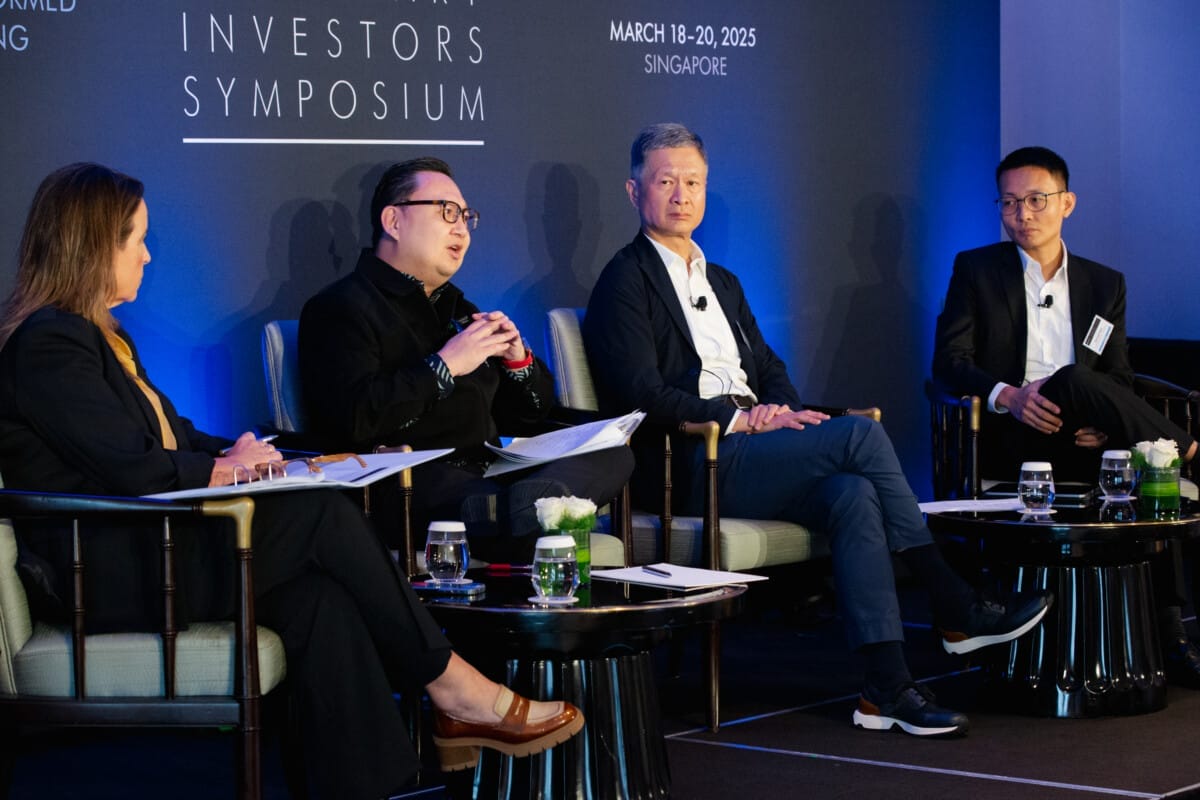
L-R: Amanda White (Conexus Financial), Wai Seng Wong, Christopher Chan, and Bernard Wee. Photo: Jack Smith

The radical shift in world geopolitics has prompted the Monetary Authority of Singapore to rethink its strategic asset allocation in favour of a more granular approach.

Bernard Wee, group head of markets and investment, Monetary Authority of Singapore, drew a parallel between current events and the 1940s and 1970s, which were also characterised by political uncertainty and conflict.

“Those are exactly the same forces, the same things that are happening right now,” he said on a panel session during the Fiduciary Investors Symposium in Singapore. “If we think that our strategic asset allocations are something that we can just set and forget, that’s something that I would not presume to be true for the coming few years.”

The Trump administration’s focus on trade restrictions and national security has quickly brought geopolitical risk to the fore. Wee said taking a more granular approach would be important for investors, using the differences between major emerging market economies China – with its rapidly ageing population – and India as an example.

“Some of these differentiated characteristics make for a standalone allocation to China versus an EM ex-China, and you can apply the same lens to DM, right, because the US has a very different demographic profile from Europe and Japan.”

Wai Seng Wong, head, strategy, Khazanah Nasional Berhad said the distinction between emerging markets and developed markets was no longer as useful in this “multi-polar world”. He also said the Malaysian sovereign wealth fund needed to be more granular about its exposure.

Sponsored Content

The fund had a relatively low 40 per cent portfolio exposure to the US and had planned to lift its developed markets exposure – which was largely North American-based – to about 80 per cent.

“This whole discussion, as well, makes us take a pause really. Is that 80 per cent goal that we had earlier the right way to think about it? Probably not anymore.”

Nonetheless, the fund was ready to opportunistically invest more in the US.

“We just have to be ready for US opportunities if it arises – or when it arises – in terms of valuation, in terms of a downturn and whatnot.”

Also presenting on the panel was Christopher Chan, chief investment officer, public markets, at the Hong Kong Monetary Authority.

Leave a Comment

The world in flux and Trump’s role in a new equilibrium

The world in flux and Trump’s role in a new equilibrium

The second Trump administration has so far brought a lot of things: market shocks, volatile trade policies, and turbulent foreign relationships. But beyond the chaos, renowned geopolitics expert Stephen Kotkin says Trump has an unwitting role to help the world rebalance and reach a “new equilibrium” in the global order.

Sort content by

Why the energy transition won’t die with Trump 2.0

Despite the uptick in anti-ESG sentiment that’s come with Donald Trump’s return to the White House, large institutional investors are certain that innovations in transition technology will continue and that the broader world has not changed course on the journey to decarbonisation.  

How Asia-Pacific investors can navigate Trump’s America first plan

President Trump is dramatically reshaping geopolitics, creating new risks and opportunities for investors across the Asia-Pacific.

How new technologies are changing the game in private markets

With the ability to uncover hard-to-find information and enable more frequent trading in traditionally illiquid asset classes, new technologies like artificial intelligence and tokenisation could be the biggest disruption most private markets investors will see in their lifetime. 

How capital markets became a weapon of choice in great power conflict

Capital markets continue to be a key battlefield of power between Beijing and Washington, and whether the yuan has a serious chance of taking over the dollar as the international currency is the next big question for the world economic order. 

Investors brace for life after the US dollar 

A world where the US dollar is no longer the reserve currency seems increasingly likely by the day, and institutional investors are wary that it could fundamentally change the way they construct portfolios. 

Future of Asia now ‘a more difficult story’ as multilateralism crumbles

The global environment in which small Asian economies have thrived over the past seven decades is being dismantled as the US retreats as an advocate of multilateralism, globalisation and internationalism, warned leading geopolitics academic and economist Danny Quah.



