
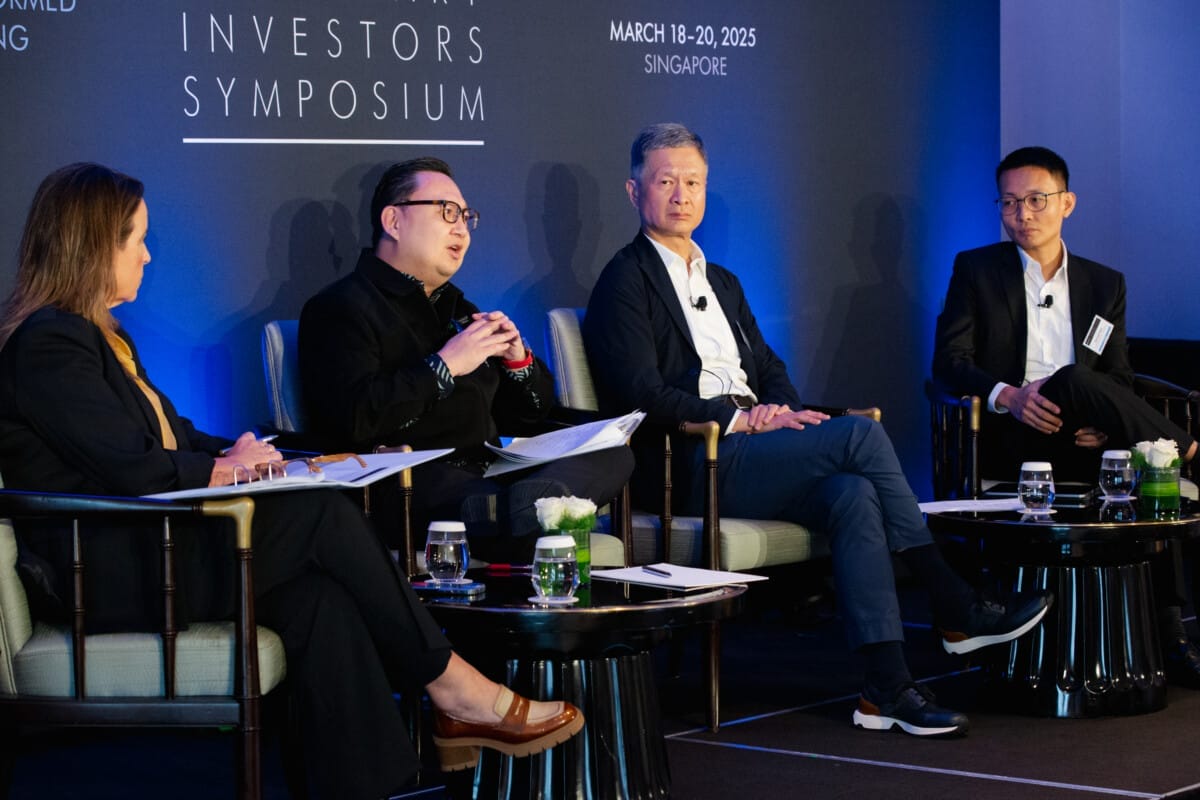

The radical shift in world geopolitics has prompted the Monetary Authority of Singapore to rethink its strategic asset allocation in favour of a more granular approach.
Bernard Wee, group head of markets and investment, Monetary Authority of Singapore, drew a parallel between current events and the 1940s and 1970s, which were also characterised by political uncertainty and conflict.
“Those are exactly the same forces, the same things that are happening right now,” he said on a panel session during the Fiduciary Investors Symposium in Singapore. “If we think that our strategic asset allocations are something that we can just set and forget, that’s something that I would not presume to be true for the coming few years.”
The Trump administration’s focus on trade restrictions and national security has quickly brought geopolitical risk to the fore. Wee said taking a more granular approach would be important for investors, using the differences between major emerging market economies China – with its rapidly ageing population – and India as an example.
“Some of these differentiated characteristics make for a standalone allocation to China versus an EM ex-China, and you can apply the same lens to DM, right, because the US has a very different demographic profile from Europe and Japan.”
Wai Seng Wong, head, strategy, Khazanah Nasional Berhad said the distinction between emerging markets and developed markets was no longer as useful in this “multi-polar world”. He also said the Malaysian sovereign wealth fund needed to be more granular about its exposure.
The fund had a relatively low 40 per cent portfolio exposure to the US and had planned to lift its developed markets exposure – which was largely North American-based – to about 80 per cent.
“This whole discussion, as well, makes us take a pause really. Is that 80 per cent goal that we had earlier the right way to think about it? Probably not anymore.”
Nonetheless, the fund was ready to opportunistically invest more in the US.
“We just have to be ready for US opportunities if it arises – or when it arises – in terms of valuation, in terms of a downturn and whatnot.”
Also presenting on the panel was Christopher Chan, chief investment officer, public markets, at the Hong Kong Monetary Authority.








Leave a Comment
You must be logged in to post a comment.
Login