
How new technologies are changing the game in private markets

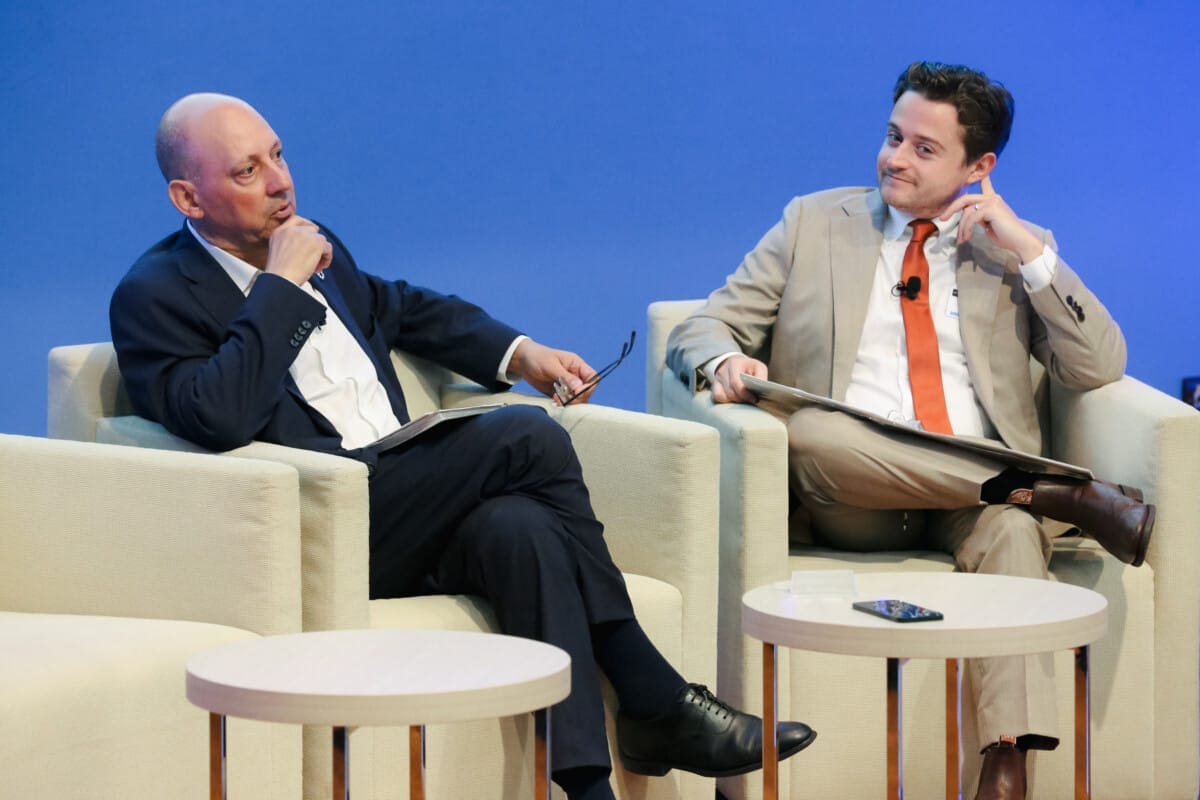
Eduard van Gelderen (L) and David Stratford (Conexus Financial). Photo: Jack Smith

With the ability to uncover hard-to-find information and enable more frequent trading in traditionally illiquid asset classes, new technologies like artificial intelligence and tokenisation could be the biggest disruption most private markets investors will see in their lifetime. 

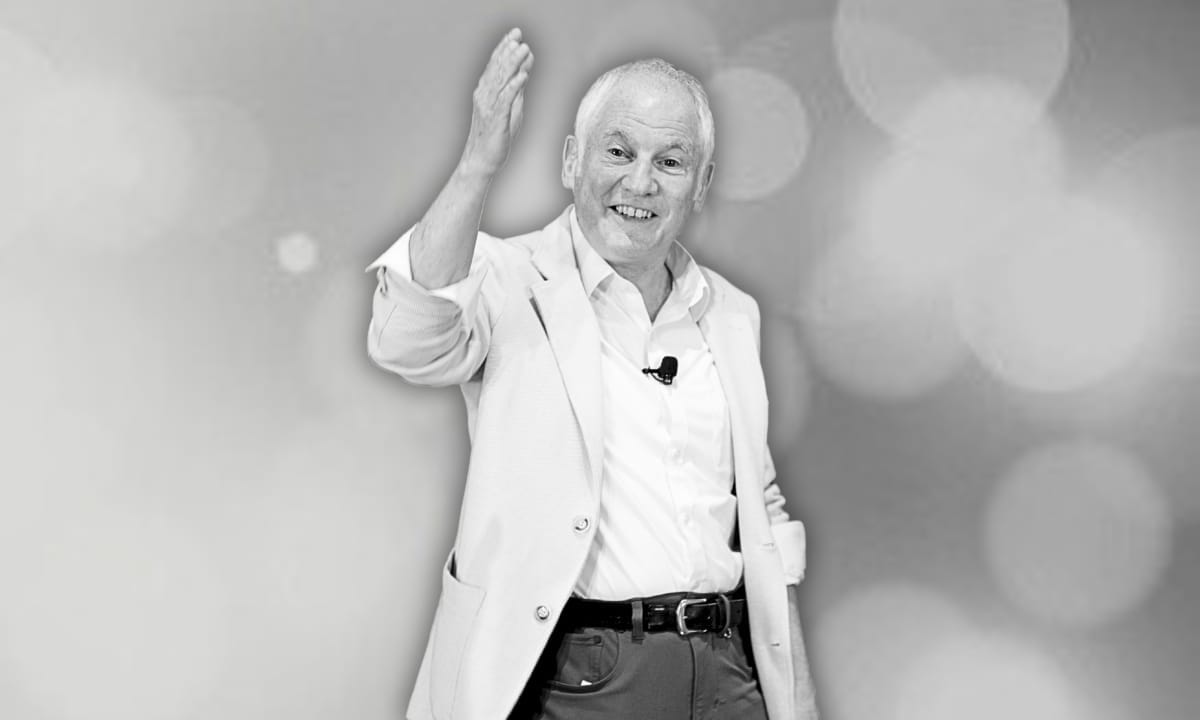
At the Top1000funds.com Fiduciary Investors Symposium, head of research at FCLTGlobal Eduard van Gelderen said the digitisation of private market information that is taking place will have big consequences for investors. For one, data will cost less.  

“There is already a lot of data out there related to private markets. But is it readily available? No,” the former PSP Investment chief investment officer told the symposium in Singapore.  

“Unfortunately, some of those [private market] databases are still very expensive, but the data is there. And the reason why the data is there, is because this whole society is full of sensors. Everything is monitored. 

“It’s a question of time before that data really becomes available.” 

Secondly, technologies will change what investors do with the data. If private markets were to become like public markets with the volume of information available, van Gelderen said the biggest problem for investors then having too much data to make effective investment decisions.  

Sponsored Content

One thing AI is particularly good at, at least in short-term strategies, is sorting through noise and identifying the underlying market signals, said van Gelderen. 

“If you look at what is available now in practice, but also in academic research, then what you see is that AI is actually a very helpful tool in getting profitable investments strategies in place – alpha generation,” he said. 

Another technology with private market applications that van Gelderen is bullish on is tokenisation – the process of converting an asset or the ownership of an asset to a digital form using blockchain. And there have already been tokenisation experiments in private equity.   

Last year, Citigroup, with asset managers Wellington Management and WisdomTree, completed a simulation exploring how private equity funds can be tokenised while staying compatible with existing bank systems. 

There are several appeals of tokenising private assets, van Gelderen said. Apart from increased liquidity, tokenisation can enable the ownership of small fractions of an asset, which could lower the barrier to entry for retail investors, and allow for faster and automated transaction processes that complete in minutes, if not seconds. 

“When people talk about tokenisation, immediately, they think trading Bitcoins … that respect, I find pretty irrelevant,” van Gelderen said.  

“What is important is the technology of blockchain, and blockchain is actually very dependent on tokenisation.” 

He believes tokenisation will be a key method for boosting trading in private markets in the future.  

“[The likes of] secondary markets, it’s great that it’s there, but at the end of the day, it’s still very traditional. There’s a seller and we have to look for a buyer, and then we start to negotiate stuff. 

“I’m a firm believer that tokenisation will make private markets or private assets liquid going forward.” 

Leave a Comment

The world in flux and Trump’s role in a new equilibrium

The world in flux and Trump’s role in a new equilibrium

The second Trump administration has so far brought a lot of things: market shocks, volatile trade policies, and turbulent foreign relationships. But beyond the chaos, renowned geopolitics expert Stephen Kotkin says Trump has an unwitting role to help the world rebalance and reach a “new equilibrium” in the global order.

Sort content by

Why the energy transition won’t die with Trump 2.0

Despite the uptick in anti-ESG sentiment that’s come with Donald Trump’s return to the White House, large institutional investors are certain that innovations in transition technology will continue and that the broader world has not changed course on the journey to decarbonisation.  

How Asia-Pacific investors can navigate Trump’s America first plan

President Trump is dramatically reshaping geopolitics, creating new risks and opportunities for investors across the Asia-Pacific.

How capital markets became a weapon of choice in great power conflict

Capital markets continue to be a key battlefield of power between Beijing and Washington, and whether the yuan has a serious chance of taking over the dollar as the international currency is the next big question for the world economic order. 

Investors brace for life after the US dollar 

A world where the US dollar is no longer the reserve currency seems increasingly likely by the day, and institutional investors are wary that it could fundamentally change the way they construct portfolios. 

Future of Asia now ‘a more difficult story’ as multilateralism crumbles

The global environment in which small Asian economies have thrived over the past seven decades is being dismantled as the US retreats as an advocate of multilateralism, globalisation and internationalism, warned leading geopolitics academic and economist Danny Quah.

Geopolitical uncertainty forces investors to adopt more granular approach

The radical shift in world geopolitics has prompted investors like the Monetary Authority of Singapore, Khazanah Nasional Berhad and the Hong Kong Monetary Authority to rethink their strategic asset allocations in favour of a more granular approach.