Sustainability among key industry’s tagged for China’s growth

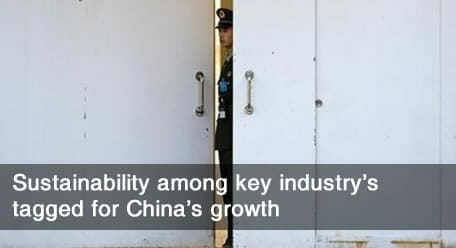
It’s not very salubrious but it’s secure. The four-star Jingxi Hotel in Beijing (pictured), which is owned by the People’s Liberation Army, hosted the annual plenum of the Communist Party’s Central Committee to draft the country’s next five-year plan.

The 12th five-year plan, nutted out by about 300 committee members, will be put to the National People’s Congress in March for ratification. The key themes in the latest plan are sustainability and reducing inequalities between provinces.

Analysts are predicting a lower GDP-growth target to be discussed between now and March, with details of the plan coinciding with a surprise 25bps point rise in the official interest rate last week – the first in China for three years.

A research note from HSBC Global Banking and Markets says more growth is likely to have to come from private consumption which has dropped from 50 per cent of total GDP to an estimated 36 per cent in the past 20 years.

“Expect further efforts to boost household incomes, primarily through higher minimum wages, as well as lower personal taxes,” the bank says.

Notwithstanding the stated concern for poorer provinces, the latest plan intends to speed the demographic shift to the cities, which will further boost consumption.

Sponsored Content

After the meeting, the Government confirmed a list of emerging strategic industries to be at the forefront of a “higher quality” of economic growth. They are: energy-saving and environmental protection firms, next generation IT, biotech, high-end manufacturing, new energy, new materials and composites, and clean-energy cars.

According to Shanghai Securities News, the group of industries currently make up only 3 per cent of GDP but are expected to contribute at least 15 per cent by 2020.


Leave a Comment

Sort content by

The cost of bad asset allocation

A study of 300 US pension funds by CEM Benchmarking reinforces the importance of asset allocation, highlighting the performance of asset classes, as well as new evidence on correlations between asset classes. Alex Beath, author of the study, discusses the implications for asset allocation with Amanda White. A CEM Benchmarking study “Asset Allocation and Fund

The OECD’s plan for long-term investment

G20 financial ministers and central bank governors welcomed the findings of the G20/OECD roundtable on institutional investors and long-term investment last month, which included clear plans to incentivise institutional investors to undertake more long-term investments. The roundtable, “From solutions to actions: implementing measures to encourage institutional long-term investment financing”, held in Singapore recognised that long-term

Why long-horizon investors should adopt factor-based asset allocation

Long-horizon investors can withstand macro-economic volatility and so should tilt towards strategies that are exposed to that, including value, small cap and momentum. Oleg Ruban, vice president in the applied research team at MSCI says this validates factor-investing and factor-based asset allocation for these investors.   Appropriate asset allocation requires explicit attention be paid to

The case for long-termism

Keith Ambachtsheer’s lead article in the Fall 2014 edition of the Rotman International Journal of Pension Management, takes readers through an historical and logical journey that supports the case for long-termism. Importantly he validates this with four high-profile investor case studies which demonstrate that a long-term view benefits society but also the investors, willing to

Investors alter allocations because of climate risks

A number of large institutional investors, including AP1, the Environment Agency and AustralianSuper, made changes to their strategic asset allocation as a result of Mercer’s 2011 study on climate risks, and now the consultant is working with a new raft of investors to assess forward-looking climate change scenarios against their current allocations. Meanwhile one of

Real estate sector continues to lead on sustainability: GRESB

This year’s Global Real Estate Sustainability Benchmark (GRESB) reveals that sustainability reporting has improved in coverage and quality of data, with the average overall score increasing due to increasing implementation and measurement. The average score is now 47 (out of 100) which is up nine points this year. The benchmark collects data from 637 listed

Previous



