Sustainability among key industry’s tagged for China’s growth

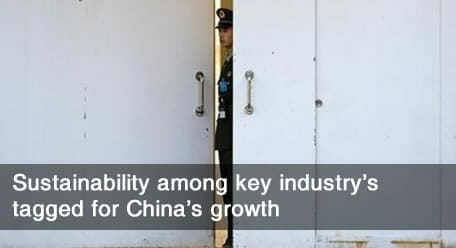
It’s not very salubrious but it’s secure. The four-star Jingxi Hotel in Beijing (pictured), which is owned by the People’s Liberation Army, hosted the annual plenum of the Communist Party’s Central Committee to draft the country’s next five-year plan.

The 12th five-year plan, nutted out by about 300 committee members, will be put to the National People’s Congress in March for ratification. The key themes in the latest plan are sustainability and reducing inequalities between provinces.

Analysts are predicting a lower GDP-growth target to be discussed between now and March, with details of the plan coinciding with a surprise 25bps point rise in the official interest rate last week – the first in China for three years.

A research note from HSBC Global Banking and Markets says more growth is likely to have to come from private consumption which has dropped from 50 per cent of total GDP to an estimated 36 per cent in the past 20 years.

“Expect further efforts to boost household incomes, primarily through higher minimum wages, as well as lower personal taxes,” the bank says.

Notwithstanding the stated concern for poorer provinces, the latest plan intends to speed the demographic shift to the cities, which will further boost consumption.

Sponsored Content

After the meeting, the Government confirmed a list of emerging strategic industries to be at the forefront of a “higher quality” of economic growth. They are: energy-saving and environmental protection firms, next generation IT, biotech, high-end manufacturing, new energy, new materials and composites, and clean-energy cars.

According to Shanghai Securities News, the group of industries currently make up only 3 per cent of GDP but are expected to contribute at least 15 per cent by 2020.


Leave a Comment

Sort content by

The changing nature of fixed income

As the fixed income asset class undergoes rapid change and the opportunity set expands, unconstrained bond funds have become popular. But as this article examines, with that expanded opportunity set comes new considerations including a wider risk/return spectrum among managers.   Trends in the global investment universe tend to come around every six months or

McKinsey’s tips on sustainability integration

More companies are recognising sustainability as a core business issue, but according to McKinsey and Company they are still failing to capture its full value, in particular struggling with incorporating it into organisational processes such as performance management. A McKinsey global survey, garnering responses from 3,344 executives from the full range of regions, company size

Long term investing and infrastructure

There has been some ambiguity about what being a long-term investor means. For Australia’s Future Fund it means focusing on a few key aspects of our investments: understanding value, the ability to make and implement portfolio decisions and manager alignment. In this speech at the ASFA Global Investment Forum on infrastructure and long-term investment, Raphael

Where does the next generation of fund managers come from?

According to Malcolm Gladwell’s Outliers, at least 10,000 hours of practice is needed to be a success at your chosen profession. This means that a fund manager will hit their strides around age 40. But the London Business School is giving its students a leg up in that quest to find success. They have real-life

The meaning of fiduciary duty

The UK Law Commission has delivered its final report on how the law of fiduciary duties applies to investment intermediaries and an evaluation of whether the law works in the interests of the ultimate beneficiaries. The project was commissioned by the Department for Business, Innovation and Skills (BIS) and the Department for Work and Pensions

New leadership prompts strategy review at ICPM

A decade since the formation of the Rotman International Centre for Pension Management is a good time to review the organisation’s raison d’etre. Amanda White spoke to ICPM chair, Barbara Zvan, chief investment risk officer of Ontario Teachers’ Pension Plan, and the outgoing and incoming executive directors, Keith Ambachtsheer and Rob Bauer.   “There is

Previous



