Sustainability among key industry’s tagged for China’s growth

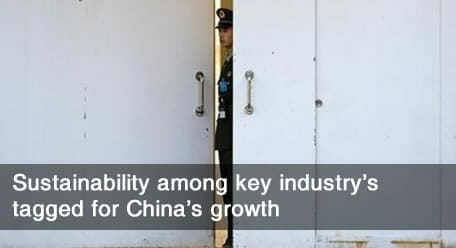
It’s not very salubrious but it’s secure. The four-star Jingxi Hotel in Beijing (pictured), which is owned by the People’s Liberation Army, hosted the annual plenum of the Communist Party’s Central Committee to draft the country’s next five-year plan.

The 12th five-year plan, nutted out by about 300 committee members, will be put to the National People’s Congress in March for ratification. The key themes in the latest plan are sustainability and reducing inequalities between provinces.

Analysts are predicting a lower GDP-growth target to be discussed between now and March, with details of the plan coinciding with a surprise 25bps point rise in the official interest rate last week – the first in China for three years.

A research note from HSBC Global Banking and Markets says more growth is likely to have to come from private consumption which has dropped from 50 per cent of total GDP to an estimated 36 per cent in the past 20 years.

“Expect further efforts to boost household incomes, primarily through higher minimum wages, as well as lower personal taxes,” the bank says.

Notwithstanding the stated concern for poorer provinces, the latest plan intends to speed the demographic shift to the cities, which will further boost consumption.

Sponsored Content

After the meeting, the Government confirmed a list of emerging strategic industries to be at the forefront of a “higher quality” of economic growth. They are: energy-saving and environmental protection firms, next generation IT, biotech, high-end manufacturing, new energy, new materials and composites, and clean-energy cars.

According to Shanghai Securities News, the group of industries currently make up only 3 per cent of GDP but are expected to contribute at least 15 per cent by 2020.


Leave a Comment

Sort content by

Breaking bad habits: why investors aren’t good at asset allocation

Institutional investors act like momentum investors, chasing returns, even over longer time horizons according to Asset Allocation and Bad Habits, a new research paper that looks at the impact of past returns on asset allocation. The paper commissioned by Rotman-ICPM and authored by Amit Goyal professor at Univeriste de Lausanne, Andrew Ang professor at Columbia Business

Is in-house management the future for large asset owners?

The allure of potentially higher net returns from portfolios precisely tailored to values, beliefs and risk appetite is hard for any asset owner to ignore, yet needs to be balanced against the many challenges associated with managing assets in-house. To this end, it is worth outlining the key benefits that in-house asset management can offer.

Addressing shortcomings in current corporate reporting

Investors don’t have access to all the information they need today. Raj Thamotheram, Mark Van Clieaf and Alan Willis ask: why aren’t investors (and their clients) demanding it? Without relevant, timely and reliable information, investors are unable to make informed long-term investment decisions. The efficiency of capital markets in allocating invested funds – the only real value of

To invest in China today you must be at the head of the kewfie

Regulatory proposals announced in April mean that in October foreign investors will be able to buy the top shares listed on the Chinese mainland stock exchange within annual quota limits. The momentum of market liberalisation is such that MSCI is considering using such A shares in its emerging market indices, a move that will take Chinese

Chinese SWFs need co-investors

China’s biggest sovereign wealth funds need, and want, co-investment opportunities in real assets and private equity and are open to new partnerships with international investors of the right credentials, and the longer term the partnership the better. This is the feedback of Michael Wadley, a specialist lawyer of Australian origin based in Shanghai, who runs

Foundations and endowments flock to long duration

The risk of a US equity market decline and concerns over the future direction of interest rates has been driving US foundations and endowments’ asset allocation decisions in the past year, with a distinct move away from US equity to global allocations and away from US-focused core to longer duration and high yield. The latest

Previous



