Sustainability among key industry’s tagged for China’s growth

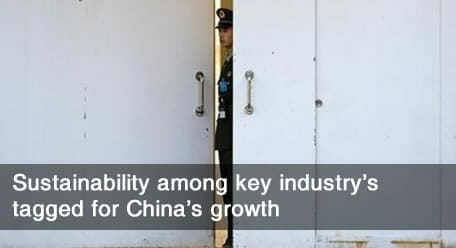
It’s not very salubrious but it’s secure. The four-star Jingxi Hotel in Beijing (pictured), which is owned by the People’s Liberation Army, hosted the annual plenum of the Communist Party’s Central Committee to draft the country’s next five-year plan.

The 12th five-year plan, nutted out by about 300 committee members, will be put to the National People’s Congress in March for ratification. The key themes in the latest plan are sustainability and reducing inequalities between provinces.

Analysts are predicting a lower GDP-growth target to be discussed between now and March, with details of the plan coinciding with a surprise 25bps point rise in the official interest rate last week – the first in China for three years.

A research note from HSBC Global Banking and Markets says more growth is likely to have to come from private consumption which has dropped from 50 per cent of total GDP to an estimated 36 per cent in the past 20 years.

“Expect further efforts to boost household incomes, primarily through higher minimum wages, as well as lower personal taxes,” the bank says.

Notwithstanding the stated concern for poorer provinces, the latest plan intends to speed the demographic shift to the cities, which will further boost consumption.

Sponsored Content

After the meeting, the Government confirmed a list of emerging strategic industries to be at the forefront of a “higher quality” of economic growth. They are: energy-saving and environmental protection firms, next generation IT, biotech, high-end manufacturing, new energy, new materials and composites, and clean-energy cars.

According to Shanghai Securities News, the group of industries currently make up only 3 per cent of GDP but are expected to contribute at least 15 per cent by 2020.


Leave a Comment

Sort content by

What does an effective board look like?

Pension fund boards are complex, evolving, collective bodies and the individuals that serve them face unique challenges. The Rotman-ICPM Board Effectiveness Program is a week-long course designed specifically for pension fund trustees that showcases how an effective board looks and behaves. Pension management beneficiaries are delegating to a body that then delegates to an executive,

ESG rethink can add 40 basis points per month: Hermes

Rigorous Environmental, Social and Governance (ESG) management can deliver an extra 40 basis points per month according to Saker Nusseibeh, CEO and head of investment at Hermes Fund Managers. “Where it [ESG] really matters for performance is in consistently avoiding bad governance. You can add 40 basis points per month… Per month!” Nusseibeh told a

International reaction to QSuper’s innovation

Australian fund, QSuper’s creation of eight different investment cohorts for its 440,000 default fund members this month has sparked curiosity and admiration from defined contribution experts in the US, the UK and New Zealand. The investment strategies for each group will be focussed on an estimated retirement outcome for that segment, taking into account the

Investors ignore liability matching at their peril

Two high profile pension funds, ATP of Denmark and HOOPP of Canada, have been very successful in managing their assets in two distinct portfolios. But the practice of fund separation, a portion of the portfolio for liability hedging and another for alpha generation, is not common in pension management. It should be. For these two

Home bias in corporate engagement revealed

Investors should take care in selecting corporate engagement firms to ensure the engagement reflects their portfolio holdings, warn academics at Oxford and Maastricht Universities following a new study which reveals a home bias in such activity. As the investment portfolios of large institutional investors become increasingly global, it is particularly important that they carefully select

The power of benchmarking: GRESB comes of age

Now in its fifth year GRESB, the benchmark that measures the sustainability performance of real estate portfolios, has been influential in changing the sector’s performance and environmental impact. Now Nils Kok, executive director of GRESB and associate professor in finance at Maastricht University, says that infrastructure and private equity assets are ripe for a benchmark

Previous



