Sustainability among key industry’s tagged for China’s growth

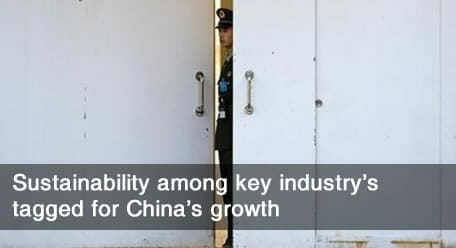
It’s not very salubrious but it’s secure. The four-star Jingxi Hotel in Beijing (pictured), which is owned by the People’s Liberation Army, hosted the annual plenum of the Communist Party’s Central Committee to draft the country’s next five-year plan.

The 12th five-year plan, nutted out by about 300 committee members, will be put to the National People’s Congress in March for ratification. The key themes in the latest plan are sustainability and reducing inequalities between provinces.

Analysts are predicting a lower GDP-growth target to be discussed between now and March, with details of the plan coinciding with a surprise 25bps point rise in the official interest rate last week – the first in China for three years.

A research note from HSBC Global Banking and Markets says more growth is likely to have to come from private consumption which has dropped from 50 per cent of total GDP to an estimated 36 per cent in the past 20 years.

“Expect further efforts to boost household incomes, primarily through higher minimum wages, as well as lower personal taxes,” the bank says.

Notwithstanding the stated concern for poorer provinces, the latest plan intends to speed the demographic shift to the cities, which will further boost consumption.

Sponsored Content

After the meeting, the Government confirmed a list of emerging strategic industries to be at the forefront of a “higher quality” of economic growth. They are: energy-saving and environmental protection firms, next generation IT, biotech, high-end manufacturing, new energy, new materials and composites, and clean-energy cars.

According to Shanghai Securities News, the group of industries currently make up only 3 per cent of GDP but are expected to contribute at least 15 per cent by 2020.


Leave a Comment

Sort content by

How to estimate the equity risk premium

Given the importance of equity risk premium, it is surprising how haphazard the estimation of equity risk premiums remains in practice. This paper by Aswath Damodaran at the New York University Stern School of Business examines a number of different approaches to determining the equity risk premium and why different approaches yield different values. It

Are there enough credit opportunities to go around?

Investors are all talking about the same thing –that alpha will come from selective opportunities and implementation techniques within sectors, and the next year will be less about strategic or beta bets. Specifically credit opportunities remain front and centre of the collective investors’ radar. Managers, it turns out, are all also talking about the same

Integrating ESG in private equity

The PRI has launched a guide for ESG integration among general partners in private equity,  looking at ESG within a GP organisation and within its investment process. The guide provides suggestions on how to incorporate ESG factors into ownership practices and processes, including seeking appropriate disclosure from these companies on ESG risks and opportunities and

What consolidation means for the AP funds

The five Swedish AP buffer funds will be reduced to three, a new responsible body will be set up to formulate long-term return targets and a reference portfolio, and limits on unlisted investments will be lifted under the new plan put forward by the Swedish Government. These are the findings of The Pension Group, which

Predicting equity returns with rising rates

The impact of higher rates on equity returns is a concern for investors and to some extent an unknown. But by applying the concept a threshold correlation, as done with bond portfolios with a duration targeting framework, it is possible to better understand the complex interactions between equity returns and interest rate movements. The latest

Funds must embrace data to win

Superannuation funds in Australia are not putting enough emphasis on data and technology as a tool to strengthen member engagement or as a platform for their business. There is plenty they can learn from Rayid Ghani, chief scientist for the Obama for America 2012 campaign, who was the keynote at the Conference of Major Superannuation Funds

Previous



