Sustainability among key industry’s tagged for China’s growth

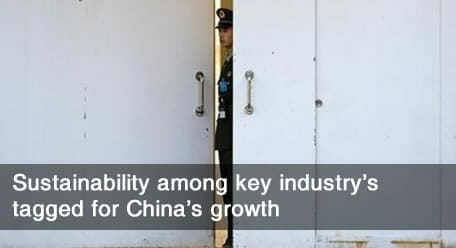
It’s not very salubrious but it’s secure. The four-star Jingxi Hotel in Beijing (pictured), which is owned by the People’s Liberation Army, hosted the annual plenum of the Communist Party’s Central Committee to draft the country’s next five-year plan.

The 12th five-year plan, nutted out by about 300 committee members, will be put to the National People’s Congress in March for ratification. The key themes in the latest plan are sustainability and reducing inequalities between provinces.

Analysts are predicting a lower GDP-growth target to be discussed between now and March, with details of the plan coinciding with a surprise 25bps point rise in the official interest rate last week – the first in China for three years.

A research note from HSBC Global Banking and Markets says more growth is likely to have to come from private consumption which has dropped from 50 per cent of total GDP to an estimated 36 per cent in the past 20 years.

“Expect further efforts to boost household incomes, primarily through higher minimum wages, as well as lower personal taxes,” the bank says.

Notwithstanding the stated concern for poorer provinces, the latest plan intends to speed the demographic shift to the cities, which will further boost consumption.

Sponsored Content

After the meeting, the Government confirmed a list of emerging strategic industries to be at the forefront of a “higher quality” of economic growth. They are: energy-saving and environmental protection firms, next generation IT, biotech, high-end manufacturing, new energy, new materials and composites, and clean-energy cars.

According to Shanghai Securities News, the group of industries currently make up only 3 per cent of GDP but are expected to contribute at least 15 per cent by 2020.


Leave a Comment

Sort content by

Rethinking investment performance attribution

As asset owners move away from silo-based investment decision making, their performance attribution systems also need to evolve. The Alberta Investment Management Corporation AimCo, the C$70 billion arm’s length investment manager for public sector assets in Alberta, Canada, has implemented a new performance attribution system based on how managers actually make their investment decisions.  

Benchmark design for an active investment process

Choosing the appropriate benchmark for active managers is a common debate among institutional investors. Norges Bank Investment Management has produced a “discussion note’ on the benchmark design for an active investment process, in which it introduces a flexible modelling framework that aims to incentivise each portfolio manager to utilise their stock-picking skill.   The benchmark

SSgA focuses on innovation not assets

For Scott Powers, president and chief executive of State Street Global Advisors, assets under management is not a measure of success – the manager is currently the world’s fourth largest with around $2.5 trillion. Instead it is the ability to provide value for clients in meeting their objectives – whether it be matching liabilities, creating

Pension funds put pressure on G20 tax reform

Pension funds are becoming vocal ahead of the G20 leaders summit next week, reiterating the need for action over tax reform, and encouraging world leaders to consider financial reform that encourages long-term investing. The UK’s Local Authority Pension Fund Forum, which is a collaborative shareholder engagement group of 61 local authority pension funds with combined

G20 urged to develop policies to support long-term investment

The Fiduciary Investors Symposium (FIS) at Harvard University has identified several of the key barriers to pension funds, endowments and sovereign wealth funds adopting more effective long-term and sustainable investment strategies, and is preparing a communiqué to the upcoming meeting of the G20 to convey its concerns and its policy requirements. FIS, organised and hosted

Future Fund focuses on finding the best people

Australia’s sovereign wealth fund, the A$101 billion Future Fund, has just upped the stakes in not only attracting the best co-investment deals from fund managers, but in its bid to attract the world’s best investment professionals. Two months ago the fund’s long serving chief investment officer, David Neal, become chief executive in name (following the

Previous



