
AustralianSuper contemplates foreign outposts

Australia’s largest superannuation fund, AustralianSuper, is considering whether it should have its own investment management and currency hedging teams based in Europe and America.

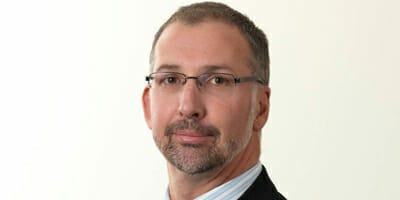
Due to the mandatory nature of the system in Australia, the current rate of funds under management growth means assets are doubling every four to five years. Peter Curtis, head of investment operations at the A$85 billion fund is awed by the change in investment operations model it would need to match this growth.

“The capability of what you need within a super fund to meet this wall of money is quite phenomenal,” he says.

He argues that to respond to this challenge a greater level of self-management was inevitable. In many cases the money held by AustralianSuper in individual asset classes was greater than the total assets under management of the specialist managers it used. Secondly, if the fund did not build internal capabilities when it had the scale to do so, it would be only contributing to the sometimes great profits of providers such as investment banks.

“Do we help investment bankers upgrade their Ferrari every four to five years or do we do more in-house?”

As part of this expansion of managing money in-house it is considering where it sets up operations and offices, with one of the functions most in need is currency hedging.

Sponsored Content

The fund has increased its international equities from 25 per cent in 2013 to 34 per cent today, and by the end of 2015 AustralianSuper is planning to start managing its first slice of these international equities with a nine person team in Melbourne.

“AustralianSuper is committed to building its global capabilities to lower external management costs and deliver the best returns for members over the coming years,” Curtis says.

AustralianSuper aims to manage about 40 per cent of its assets in-house within three years. It already has in-house teams overseeing some of its Australian equities, infrastructure, property and cash holdings and has just hired two managers for Australian small cap investing.

Reducing reliance on external fund managers is expected to deliver savings of around $140 million annually over the coming years.

“The global equities team of around 10 people – which is currently being recruited – will be based in Melbourne and have a mix of Australian and international managers. This will ensure the team operates in close conjunction with the wider investment team and understands the unique culture of ‘Members First’ that underscores every decision taken by AustralianSuper. International equities currently comprise 34 percent of the fund’s assets, while Australian shares make up 27 per cent. This has changed from 25 per cent in international shares and 29 per cent in Australian equities in June 2013,” he says.

The fund now has  279 staff  and manages 15 per cent in house, and aspires to manage 40 per cent in house by 2018.

Curtis says as the allocation grows in proportion and size, AustralianSuper will end up  running a “massive currency hedging book”, that might be more efficiently run in the model of large Canadian pension plans that have set up offices in different time zones.

Notably the Canadian Pension Plan Investment Board has overseas investment offices in Hong Kong, London, New York and Sao Paulo on the rationale that a local presence and local talent ensures it has “the right knowledge and relationships to make the best investment decisions possible” in Asia, Europe, North and South America.

AustralianSuper already carries out its own economic analysis on the Chinese economy from a three person team in an office in Beijing.

Meanwhile Australia’s largest institutional fund, the A$109 billion Future Fund does not have the regular input of contributions from the public, having been set up from several individual payments from government coffers. It has explored the rationale of a New York office, but decided against it.

David Neal, chief executive of the Future Fund, said an infrastructure team in New York would inevitably end up doing deals from that office contrary to the fund’s bid to have a purely objective approach to investment opportunities.

“We do not have an allocation to US infrastructure. We have an allocation to our best ideas at any one point in time,” said Neal.

He describes the negative effect as a “cultural dilution” of the fund’s process which regularly sees all senior members of the team meeting around the table in its main Melbourne based boardroom.

“Yesterday, we had all the senior people sitting here talking about our entire private equity portfolio in significant detail. You make sure that those sector heads have a very deep understanding of what the private equity sector offers. We do that with all the sectors,” he says.

The purpose of this close scrutiny of each sector is that the whole team knows what constitutes a good idea for the fund, and fully understands what the fund has most of.

“If you have someone sitting in New York looking for opportunities, I do not know how you get them as integrated. We would rather get on planes, which is tiring and expensive, but we think it is worth it.”


Leave a Comment

Sort content by

Slavery victims look to financial world

Speaking at the PRI in Person in Paris in a panel to highlight the role of finance in addressing social issues, Ghanaian James Kofi Annan, sold into slavery at the age of six, told his story.

Pizza and diversity: How funds move dial

Empowering long-term influential asset owners to invest responsibly is the key to hastening take-up in responsible investment. Delegates heard how some leading asset owners are doing this through their diversity and ESG practices.

Responsible FI promotes good markets

Responsible investment has assumed an increasingly central role in fixed income portfolios and in the experience of Jørgen Krog Sæbø CIO, fixed income, and Lars Tronsgaard deputy managing director at Folketrygdfondet, which manages the Government Pension Fund Norway, one part of Norway’s Government Pension Fund, adopting a responsible investment focus builds more integrated understanding and deeper insight into companies.

At a glance: FIS Cambridge day three

An overwhelming number of delegates at the Fiduciary Investors Symposium said the funds management industry was not doing well in innovationMartin Gilbert, who started Aberdeen Standard Investments in 1983 and is now chair, said industry participants needed to innovate and disrupt themselves.

Climate change risk to spur stress test

Mercer has quantified a ‘low-carbon transition’ premium in the sequel to its seminal climate change report, showing that a 2⁰C scenario equates to 11 basis points per annum to 2030 in a typical growth portfolio.

ATP’s approach to ESG

The giant Danish fund, ATP, takes a comprehensive approach to ESG including voting and engagement, as well as a large investment in green bonds. Ole Buhl is vice president and head of ESG at ATP explains.

Previous




