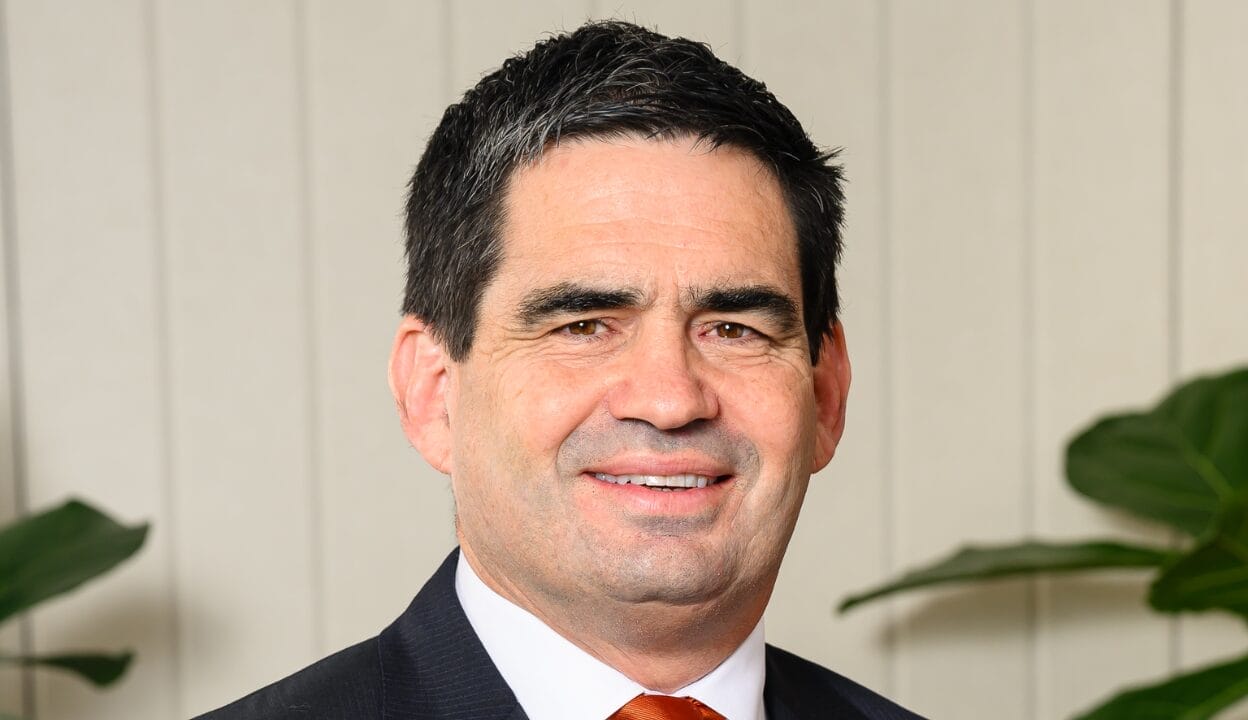

AustralianSuper’s newly crowned chief investment officer Shaun Manuell has a $295 billion job to do.
The largest pension fund in Australia – which was once treated as the gold standard by local peers, regulators and members – has come under pressure on the investment and member experience fronts following several years of lukewarm performance.
To the end of last June, the one-year performance for AustralianSuper’s balanced option stood at 9.5 per cent, while around three quarters of the 39 peer growth funds, measured by superannuation ratings house Chant West, secured double-digit returns, putting AustralianSuper firmly in the lower quartile.
It’s also suffered through some very public bad calls and losses, including the A$1.1 billion ($790 billion) write-down of its private equity and private credit investment in US software company Pluralsight in 2024, and a flat-footed late tilt to the digital and AI thematic in US equities which outgoing CIO Mark Delaney himself acknowledged was “frustrating” and weighed on returns.
To be fair, AustralianSuper’s 10-year performance has remained solid, coming fourth in the peer group after UniSuper, Hostplus and Australian Retirement Trust.
But all of this means Manuell has inherited a big turnaround job from Delaney. The latter’s name has been synonymous with AustralianSuper’s explosive growth since Australian Retirement Fund (ARF) and Superannuation Trust of Australia (STA) merged to form the entity in 2006. As the fund’s inaugural and only CIO so far, Delaney deserves credit for shaping the then A$16 billion fund into the biggest and most sophisticated pension investor in Australia.
But Manuell has taken over at an even more pivotal moment for the fund. The complexity and scale of the change that has taken place in AustralianSuper’s investment team since 2006 is dizzying, with more than 400 investment professionals now spread across four countries – the US, UK, China and Australia.
Manuell, a well-respected stockpicker and active owner in Australian capital markets, is no doubt up for the challenge. He has been running the A$107 billion ($76 billion) Australian equities book – the second largest component of the portfolio – for almost six years, adding 2.6 per cent alpha over the benchmark per annum since he became the asset class head, AustralianSuper said in a statement.
Before then, he spent more than a decade as head of asset management at Equity Trustees and managed Australian equities at private bank JBWere and wealth manager Cazenove in London.
Private markets playbook
What remains to be seen is how well Manuell’s pedigree in listed markets translates to his ability to oversee AustralianSuper’s sprawling private markets portfolio. Unlisted assets represent around 20 per cent of the total assets under management at the end of 2025, with real estate and infrastructure the biggest piece of that pie ($44 billion).
The internal capability build-out is perhaps the most consequential challenge. About 60 per cent of AustralianSuper’s portfolio is internally managed now but, as it looks to push its total internalisation rate to above 75 per cent by 2030, the harder yards will lie in private markets, where internal management will require on-the-ground deal sourcing talent and even more elaborate operational infrastructure.
In fact, the fund was reportedly considering a return to external pooled funds in infrastructure over direct investment last October, due to questions around performance and the speed at which it can deploy large amounts of capital, in a demonstration of unlisted markets’ complexity.
Still, the CIO role is as much about people management as it is investment management. In an interview with Top1000funds.com last year, London-based deputy CIO Damian Moloney said the team’s redistribution is a natural evolution of AustralianSuper investing more of its capital overseas.
Asset class leadership positions remapped to other global offices include head of private credit Nick Ward, who was deployed to its New York office from Melbourne, as well as head of international and private equity Mark Hargraves and head of global equities Bob Debi-Tewari who are now both based in London.
Last July, it nabbed former deputy CIO at the New York City retirement system Eneasz Kądziela, who is now AustralianSuper’s head of private equity funds based in New York.
Meanwhile, asset allocation and portfolio strategy roles remain local, including head of asset allocation Alistair Barker and head of portfolio strategy and risk Justine O’Connell.
Senior portfolio managers Luke Smith and Andrew Smith will jointly the Australian equities portfolio while the fund looks for a permanent replacement for Manuell.
For Manuell, the task is clear even if the path is not. As AustralianSuper targets A$1 trillion in assets under management by 2035, the next phase will not be defined by growth in AUM, but whether it can stay operationally sharp, globally coordinated and high-returning.


Leave a Comment
You must be logged in to post a comment.
Login



