
A new card for an old infrastructure hand


With more than $A5 billion ($5.3 billion) invested in infrastructure through some 120 different types of assets, AustralianSuper is examining whether diversity is all its cracked up to be when it comes to infrastructure investing.

Sponsored Content

The $45-billion fund has ambitious plans to double both its infrastructure holdings and its size of its overall portfolio in five years.

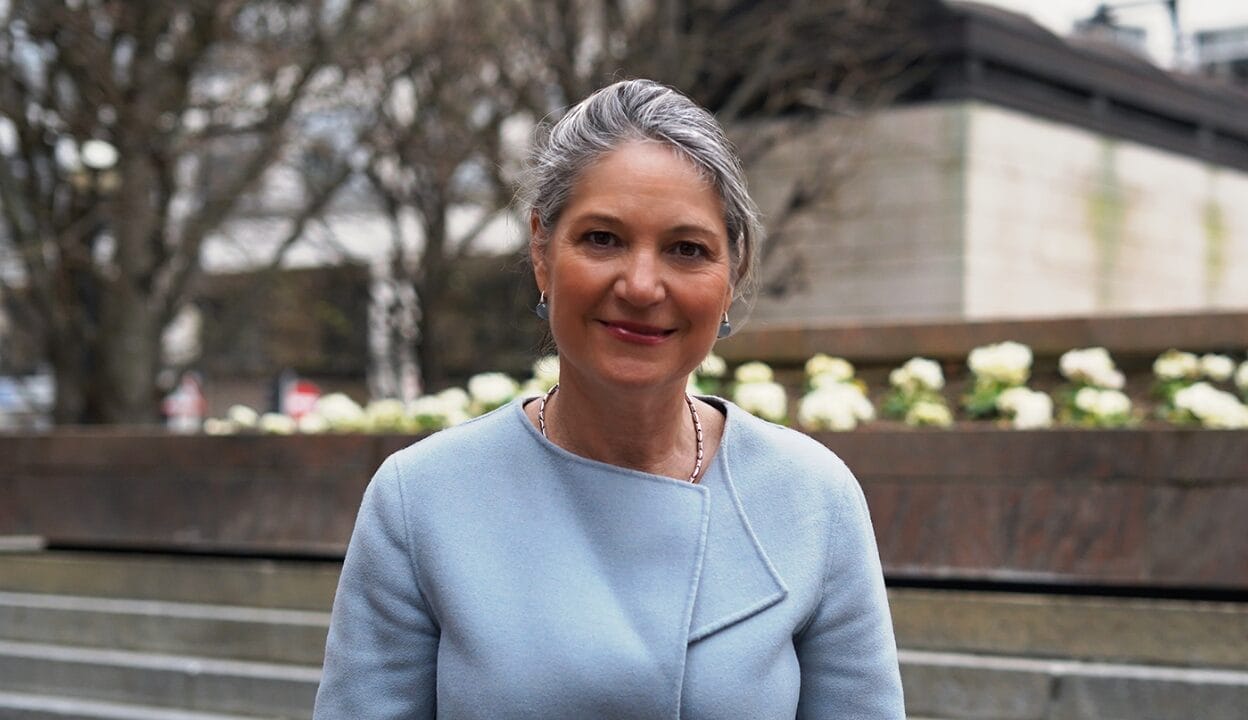
As it looks to potential investments today, AustralianSuper’s head of infrastructure, Jason Peasley, explains that the investment team is looking for opportunities that will provide meaningful scale for what could be a much bigger sized fund down the track.

“Infrastructure involves active management. It is not just a beta play – there are alpha opportunities as well,” Peasley says.

If we are too diversified we risk having a portfolio that will do just the median; it is just going to be a beta return. The way our managers are structured, the fees we pay, we do expect opportunities to generate some alpha and our value add is valuing the managers and opportunities that will give that, given a certain risk profile… We should probably look at concentrating our portfolio a little more than diversifying further.”

New capital will drive increasing allocations and Peasley says that the fund is looking to invest directly in infrastructure.

According to Peasley, the “lion’s share” of the $5.3 billion invested in infrastructure is in 20 key assets, with the remaining 100 assets a “long tail” of smaller investments.

Direct investment would give the fund the flexibility and scale it needs to shape a portfolio that both complements its current holdings and also provides other avenues to market, allowing it to grow quickly.

“We see a strong role for more direct investment methods in our arsenal and we think they will compliment our existing platform and existing core managers quite well.”

AustralianSuper’s has the most infrastructure assets under management with managers Industry Funds Management (IFM) and Hastings Funds Management.

Its biggest investment is in Pacific Hydro, a company that has renewable energy projects in Brazil, Chile and Australia and makes up 13.53 per cent of AustralianSuper’s infrastructure portfolio.

AustralianSuper also has more than 18 per cent of its infrastructure investments in the growth asset of airports located in the Australian cities of Melbourne, Brisbane and Perth.

Asset Owner:AustralianSuper

Leave a Comment

Nest favours institutional-first managers as retail exodus pressures private credit

Nest favours institutional-first managers as retail exodus pressures private credit

Nest, the largest workplace pension in the UK, says that private credit managers who prioritise institutional clients will be more favourably viewed. The £61 billion ($82 billion) fund has awarded a £450 million ($605 million) US direct lending mandate to Crescent Capital this month, citing the manager's institutional-client-first approach as a key attraction.

Sort content by

Temasek’s gaze fixed on China

China is the largest investment destination for Temasek Holdings, with Bank of China and China Construction Bank two of its most significant holdings. Finding investment opportunities in Asia is also the key focus for the Singaporean investment company.mrec4inarticleinline Sponsored Content scnative1 scnative2 scnative3

The Development of Local Debt Markets in Asia

This IMF working paper makes an assessment of the progress made in developing local debt markets in emerging Asia. Market development has been limited by hurdles confronting borrowers and lenders, current and potential liquidity providers, and insufficient support from government policies and regulations. The papers says, with rapid economic growth in Asia, a key challenge

Turbulence and outflows signal emerging markets drawdowns

A new paper by State Street Associates looks at signals for determining emerging markets currency depreciation as part of an overarching theme that concentrates on the enhanced value of combining indicators of risk and behaviour. Amanda White spoke to one of the authors, David Turkington. mrec4inarticleinline Sponsored Content scnative1 scnative2 scnative3

Investors see the forest for the trees

Timber is increasingly attractive for institutional investors as part of an alternatives exposure, with benefits including diversification and inflation-hedging. To date most of the investments have been in the US, but a new report predicts this will move to emerging countries including those in Asia, with consultants advising investors spread their timber exposures to capture

The new era of infrastructure investing

This collaborative research looks at the constraints preventing institutional investors from taking their theoretical place of prominence in the market for private infrastructure. It offers insight into how institutional investors can establish internal programs, and details about the challenges of direct investment programs. But, it also concludes that funds managers will still have a crucial

That’s what I’m talking about …

When a consortium of investors, which included the Canada Pension Plan Investment Board, bought a majority stake in Skype from eBay in September 2009, it was valued at $2.75 billion. This week Microsoft agreed to buy Skype for $8.7 billion in cash. mrec4inarticleinline Sponsored Content scnative1 scnative2 scnative3

Previous



