
Germany’s largest pension fund VBL ups diversification; invests more abroad

VBL/Schafgans DGPh

VBL/Schafgans DGPh

Diversification is the new byword at Germany’s €70 billion pension provider Versorgungsanstalt des Bundes und der Länder, VBL, founded nearly 100 years ago.

The country’s largest pension fund for public sector employees will steadily build out its allocation to private debt and equity, and is allocating more to foreign real estate after years of just buying property in Germany. VBL and has also increased its tilt to international equities over European stocks.

The diversifying strategy has come alongside a strategic overhaul that has transformed the team, organisation and investment process at the growing pension fund, however it deliberately avoids any uptick in risk or change to VBL’s net target rate of return of 5 per cent over time.

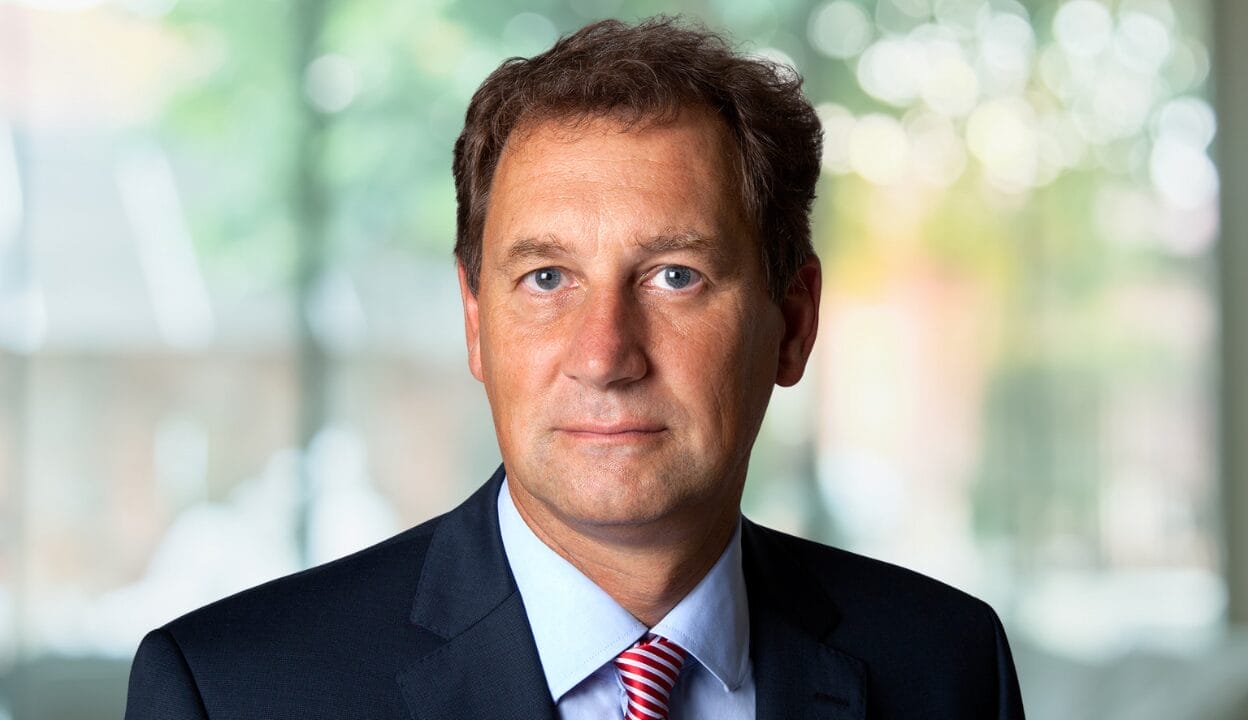
“We could target a higher return; we could take more risk, but it’s not necessary and this way we can increase the portfolio’s security,” says Michael Leinwand, VBL’s chief investment officer, speaking from the fund’s Karlsruhe offices in Baden-Württemberg.

The 21 per cent allocation to equity,  tweaked in favour of a larger allocation to international exposure and reduced exposure to European stocks, is now divided 40:40 between Europe and the US with the remaining 20 per cent of the allocation invested in Asia. Equally split between active and passive strategies, Leinwand says over time the ratio will likely tip to favour more active management.

“More active equity managers might be onboarded if they deliver alpha consistently,” he says.

Sponsored Content

In a similar vein, VBL has diversified its €10 billion allocation to real estate by increasing the international allocation. For many years, the pension fund almost exclusively invested in German residential property and retail premises like domestic grocery chain Aldi.

“We have defined a new strategy which means we will shift more and more to international markets. In the next five years, we expect to be in a situation where 60 per cent of the real estate allocation is in Germany, 25 per cent in Europe ex-Germany and the rest in the US with a little bit in Asia.”

In another source of diversification, the long-standing 4 per cent allocation to commodities, which is wholly invested in gold, may also be increased. Invested in Exchange Traded Commodities the portfolio is already a source of diversification as an alternative to government bonds, and an inflation hedge.

“We only  assume an inflation compensation as a yield component to gold; it serves predominantly as  a diversifier. It could be increased to 5-6 per cent of the portfolio without having sleepless nights.”

Manager selection

VBL’s entire portfolio is managed externally apart from a 17 per cent allocation to sovereign bonds – although this is about to be handed over to external managers too. It means manager selection is a key focus for the team and shaped by a rigorous process.

VBL only invests with “leading investment management organisations” and avoids boutiques; it picks partners based on market performance, their extensive research capabilities and the ability to deliver alpha through the cycle. In return, managers benefit from a long-term partnership involving substantial mandates that also give VBL impressive pricing power.

“We don’t pick any assets ourselves,” he explains. “We set guidelines, define mandates and select the manager, but which assets they buy and sell, that is the duty of the asset manager.”

He argues that investment managers play an important role in risk mitigation too, especially at smaller pension funds.

It’s an issue that has come to the fore following the collapse of Germany’s dentists’ pension fund, €2.2 billion Versorgungswerk der Zahnärztekammer Berlin (VZB). The fund has begun legal action following losses in private market, naming its advisers, auditors, former executives and the state of Berlin over alleged governance and oversight failures.

“Governance and oversight is difficult at smaller pension organisations,” reflects Leinwand.

“Staff need to know what is happening in the asset class and have the same level of education as external asset managers; the pension funds need the backing of a proper organization and risk culture and have diversified asset classes in the portfolio to reduce the likelihood of accidents. It’s essential to bring people in with expertise, because at some point, these smaller pension funds will need the knowledge of professional asset managers.”

IS VBL increasing its allocation to defence? not really

After decades of spending as little as 1 per cent of GDP on defence, the German government plans to spend €650 billion on defence between 2025 and 2030 in response to today’s new geopolitical reality, opening up opportunities for pension funds to invest more in the sector.

Leinwand reflects that defence stocks already sit in the equity allocation. Another way to gain exposure to the sector is via buying government bonds, and he notes exposure also comes via the infrastructure equity allocation that could include allocations to companies in cybersecurity.

“This is the type of portfolio company that one of our fund managers could be invested in,” he says, mulling the possibility of establishing a specific defence mandate, although this is not on the agenda yet.

“My view is that it wouldn’t be easy for us to create a dedicated defence bucket – although one way we could do so is via buying and ring fencing a portfolio of equities.”

Leave a Comment

The twin forces rewriting the rules of investing

The twin forces rewriting the rules of investing

Portfolios built for the old world will be severely tested as emerging forces rewrite the rules of investing. The Fiduciary Investors Symposium heard that geopolitical and macroeconomic upheaval, together with the disruption wrought by AI, should force asset owners to rethink the structure and composition of portfolios.

Sort content by

China tech rivalry is ‘existential’ for the US – and diversification

Decades of US economic and financial supremacy have made diversification away from it a drag on returns for many investors, but the forces that have underpinned that supremacy may now be coming to an end.

AustralianSuper built scale – now its new CIO needs to make it work

The $295 billion AustralianSuper has spent two decades building scale, but Shaun Manuell's task as the fund's new chief investment officer is to ensure Australia's largest pension fund can operate effectively with it. As short-term performance pressure mounts on the fund and its assets set to hit A$1 trillion ($718 billion) by 2035, the local equities boss-turned-CIO will see his legacy defined by whether he can transform AustralianSuper from a domestic giant to a global leader.

Why Asian equities’ growth will outlast the AI-driven semiconductor cycle

In the latest episode of the Fiduciary Investors Series, Liao spoke with Top1000funds.com Asia Pacific correspondent Darcy Song on why the convergence of innovation, demographics and improving shareholder returns makes Asian equities an increasingly compelling diversification trade for asset owners navigating a geopolitically fractured world.

How CPP is evolving risk management for a faster, more interconnected world

In an environment where multiple risks are emerging and their effects are compounding on the portfolio, CPP Investments' chief risk officer Priti Singh says the $572 billion fund is rethinking risk management from the ground up, shifting from reaction to preparation and embedding risk thinking earlier in investment decisions. She speaks to Amanda White about the fund's risk approach.

Pension funds confront the question of who owns AI

As the use of AI within asset owners evolves, organisations are grappling with the governance question of where the strategy and accountability sit. Darcy Song looks at the treatment of AI organisationally within a number of high-profile funds, including OTPP, AustralianSuper, CPP and Norges Bank.

URS bets on nuclear to power AI and lower emissions

Next-generation nuclear energy, and the money pouring into it, will truly change the world, according to CIO of Utah Retirement System John Skjervem. It’s a lonely position as the CIO of a public pension fund but one Utah is embracing as it builds out early-stage investments in nuclear energy as part of its alternative energy portfolio. He speaks to Sarah Rundell in an exclusive interview about how investing in transformational energy technologies can be part of prudent investment management.



