
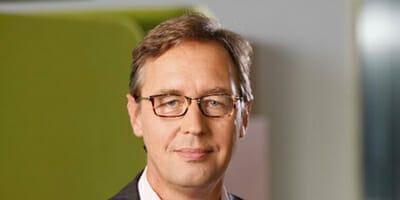

PFZW, the €150 billion ($205 billion) Dutch pension fund for the health care industry, has created a new investment framework which is the result of an 18-month soul-searching journey under a project called “The White Sheet of Paper”. The framework will translate into policy and implementation steps starting from 2015. Jaap van Dam, PGGM´s chief strategist, explains.
After the Global Financial Crisis, PFZW´s board wanted to think afresh about its investment principles: “What if we could start investing from scratch?”.
This question led to an 18-month process in which the board took the helm to redesign the PFZW Investment Framework from the outside in. I acted as their tour guide, helping them to find literature and people in order to find answers to their questions.
Questions that had arisen from the GFC ranged from: “is the efficient market paradigm still relevant to us” to “what should be our role as a large fiduciary capital owner in society” and “do we really need all the complex investments we have and can we be in control of them?”
The key question of the project was formulated as follows: “How can we invest in a way (1) suited to the financial ambition of the plan (2) in which sustainability is fully integrated, and (3) that is intelligible and controllable?”
The process to answer these questions was almost literally a journey. The board interviewed more than 30 external experts, peers and consultants on sub-topics of the three major questions, including people like Roger Urwin, Keith Ambachtsheer and Antti Ilmanen.
Also, “contrarian thinkers” were asked on stage to reflect very explicitly on what PFZW should keep doing, change, or stop doing altogether. In a number of stages all the outcomes of this process were reduced to a 12 page document, The Investment Framework, in which 16 high level investment principles are formulated.
Key changes
There are a number of key elements in the framework on which I will expand here:
1. Think in a limited number of sources of return and thus reduce the complexity of the investment solution;
2. Recognise the time variance of risk premia and be prepared to change the policy if they change in a significant way
3. Assume responsibility for both the economic and the sustainable footprint the fund makes and use the steering power of money to reduce it.
Think in a limited number of sources of return.
One of the central challenges of the board is being able to be in control of the investment solution.
The framework recognizes that there is only a limited number of fundamentally different sources of return. PFZW has identified four of them.
Therefore, the investment solution can be comprised of a limited number of building blocks.
Within a return source, let´s say equities, we will distinguish between a simple, liquid form; a liquid alternative or “smart” form and a private form.
As the simple, liquid form is typically cheap to implement and easy to control, there should be strong arguments to move from the simple form to the other forms, because typically they will be more complex and much more expensive.
Therefore, there should be significant gains in terms of adding to the ambition (return, diversification) or the sustainability of the fund.
Moreover, the allocation to each of the building blocks should be material in order to move the meter. Both the limitation of the number of building blocks and the explicit role that each of the building blocks has, will help the board to be in control.
Recognise the time variance of risk premia
A second new element in the framework is the recognition of the need for a potentially dynamic allocation as a function of major economic imbalances or extreme valuations.
This principle was absent in PFZW’s former thinking, and therefore no mechanisms or processes existed to change the policy when relevant circumstances changed.
Such mechanisms are part of policy determination rather than policy implementation, so, no TAA but rather dynamic policy.
The expectation is that extreme valuations or imbalances will lead to a change in policy something like two times per decade, so this is really a “management by exception” mechanism.
Take responsibility for footprint
The PFZW investment beliefs and principles on sustainability are based on the idea that PFZW assumes a responsibility for contributing tangibly to a sustainable world and that, at the same time, a sustainable world is a necessary condition for generating adequate returns over long investment horizons.
In other words, taking the long view, PFZW cannot afford to see a sustainable world as an externality.
This idea goes beyond the typical ESG framework: the health of the entire financial system is at stake.
The large amount of capital entrusted to PFZW makes it a responsible party.
Moreover, given its size, PFZW can make a serious impact – we call the “the steering power of money.”
The consequence of this is that PFZW will deviate from available market indexes in order to diminish its negative footprint or to invest in companies or sectors it considers to be the front runners on positive change, eg on climate change or water scarcity.
Next steps
Going forward all investment-related activity, both related to policy making and implementation, will be referenced against the framework. In the coming years, both policy and implementation will move in the direction of the dot on the horizon painted by the framework. In 2015, the first steps in terms of policy setting and implementation will be taken.
A more comprehensive description of both the White sheet of Paper process and the resulting Investment Framework can be found in the Rotman International Journal of Pension Management (Spring 2014 issue): “Rethinking Investing from the Ground Up: How PFZW and PGGM are Meeting this Challenge” by Jaap van Dam








Leave a Comment
You must be logged in to post a comment.
Login