
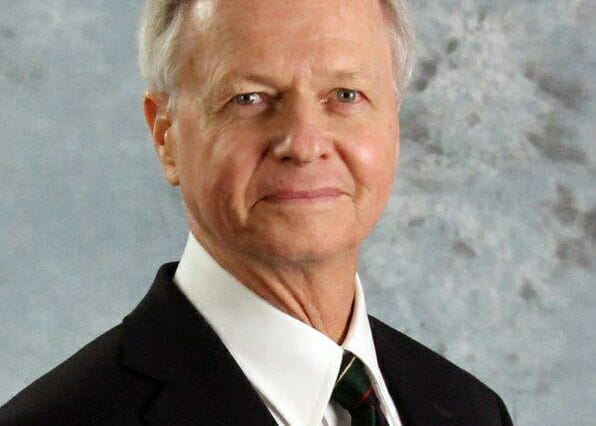

The $37 billion Utah Retirement Systems (URS) has invested in private equity since 1983, yet that is the only asset class where the pension fund still doesn’t control manager selection.
Rather than go direct, strategy for the 9 per cent target allocation has focused on fund-of-funds investment via segregated accounts.
Now, in a bid to improve risk-return in its best-performing asset class, the fund is finally switching to picking its own managers in private equity, as it does across all other allocations.
This will involve reducing its manager roster and focusing on bigger investments in more concentrated portfolios. URS is still unsure about the number of key manager relationships it will whittle down to for private equity – which has returned 10.9 per cent for the fund over 10 years – but knows it has way too many now.
The switch demands a strong value proposition and branding for URS, especially in today’s market, where general partners (GPs) hold all the cards.
“Managers say, ‘I can take money from anywhere, so why should I take it from you?’ ” says URS chief investment officer Bruce Cundick, in a joint interview with deputy chief investment officer Jason Morrow. “We are going to lose in the fee game and in aligning interest if we can’t give them a value proposition.”
Luckily, URS is convinced it can.
Why it matters
Utah has invested in alternatives since the early 1980s, so it has a long tail of lessons it has learnt. This has taught Cundick, who has been at the fund since 2001, that success in the alternatives allocation depends greatly on implementation. The fund has 40 per cent across private equity, real assets and absolute return.
The bulk of the alternatives portfolio, including a chunky 16 per cent hedge fund allocation, is invested with GPs, although URS does have 60 per cent of its real estate and agriculture allocation managed in-house.
While success in public markets is linked to simply having exposure, in private markets, exposure to an asset class is no guarantee of success, Morrow continues.
“As dispersion increases, the ‘average’ or median experience can become less and less representative of anyone’s actual experience,”he says.
In short, success in alternatives involves much more than “just putting money in, like you can the S&P 500”, Cundick says.
It calls for expertise, risk systems, getting on planes and, most importantly, aligning interests with GPs, via that jostling negotiation between manager and investor that takes into account the value each party brings to the table.
Alignment in hedge funds
The fund views its history of maintaining long-standing manager relationships and a strong balance sheet as one of its key values.
“We are hesitant to do anything unless we can see a multi-year relationship,” explains Morrow, who draws on the hedge fund portfolio – structured to cater to URS’s ‘downside quick recovery’ model – to illustrate the mutual benefits of longevity in action.
The portfolio is designed not to compete with equity but to provide diversification and capital preservation, and to enhance the total return – although all three rarely come together. Its primary function is to ensure a quicker bounce-back than equity after market falls, Cundick says.
“After 2008, it took five years for equity markets to get back to their high-water mark, but it took our hedge funds 14 months,” Cundick recalls. “What we are interested in is how that hedge fund allocation performs in down markets and how quickly it recovers.”
He recently tested the entire current portfolio with a “2008 scenario” to measure how it would perform under similar circumstances today.
“We asked if our portfolio today [would fall less and recover more quickly] under 2008 circumstances, and the current scenario testing suggests it does,” he says.
The hedge fund portfolio runs on a beta of between 0.1 and 0.2, with a low volatility that means there is never enough risk or equity beta to compete with the equity allocation. In the hedge fund allocation, most of URS’s relationships now have multi-year incentive fees.
URS’s hedge funds felt the benefits of its sticky capital in the 2008 financial crisis, when the pension fund doubled down on a handful of struggling funds that were close to folding because they couldn’t meet liquidity calls as scared investors pulled out.
Eighteen months later, URS made a killing, but the real value of ploughing in that money has come from the pension fund’s reputation for having a strong balance sheet now. URS is one of the most sought-after LPs among hedge funds, giving a real edge when it comes to aligning interests and negotiating fees with about 30 managers, a number recently reduced from 50.
Now it’s time to play catch up in private equity.
Nimble governance
An ability to be nimble, thanks to the fund’s governance structure, is another trait they value. The seven-member board, staffed by professional investors, sets the asset allocation, actuarial rate of return and contribution rates, which employers are legally compelled to meet. The only politician on the board is the state treasurer and all implementation and manager selection is delegated to the investment teams; no board members sit on the three investment committees.
“We can move quickly,” Cundick says. This is evident in a process Morrow calls the fire drill, whereby URS is prepared to pre-commit to future capital calls with high-conviction managers when opportunities come up, bypassing two to eight weeks of underwriting.
Skin in the game
URS expects a few things in return. Primarily that managers invest their personal capital. Observing managers’ reactions to the fund’s insistence on this point is insightful, Cundick says.
“If a manager says it isn’t going to put money into a fund it’s trying to sell, it shows me that it’s not motivated enough to be on our side of the table and it’s better for us to walk away,” Cundick says.
Equally important is measuring the amount managers put in relative to their wealth.
“They may put in $10 million personally but that’s a drop in the bucket if they are a billionaire.”
The amount of skin a manager has in the game can also influence the amount of risk it’s prepared to take, Morrow notes.
URS’s manager due diligence involves in-depth qualitative research modelling new managers’ returns onto URS’s portfolio to analyse how that strategy will affect risk.
“We scenario-test every manager to see what they will contribute on a risk basis,” Cundick explains.
It’s part of a ‘risk first’ philosophy. The fund spends more time considering an asset’s risks than it does potential returns. URS risk budgets its entire portfolio and scenario-tests every month to determine correlations.
Alignment involves other areas, too, like insisting managers take on the duties that assure their good behaviour.
“We would struggle to understand how someone would outright refuse to be a fiduciary to the fund they manage,” Cundick says.
URS doesn’t invest in products with investment banks because of the potential conflict of interest and tends to steer clear of managers or funds with multiple products.
“We want that fund to be the only fund that the manager has,” Morrow says. “As soon as you have that kind of manager, you have more alignment of interest.”
The pension fund also prefers not to invest in organisations that include outside owners, because it is hard to see what drives decisions.
Finally, with regard to fees, negotiation hinges on meeting three basic principles.
“Is it fair? Is it well aligned? And how capable is the manager?” Morrow says.
He notes that the ability to negotiate fees is cyclical – ebbing and flowing with competition for assets – and that fees have become a much larger percentage of returns in a lower-return environment.
Morrow says the fund is prepared to pay high fees in funds where operating costs are high, if the objectives are still clearly aligned.








Leave a Comment
You must be logged in to post a comment.
Login