
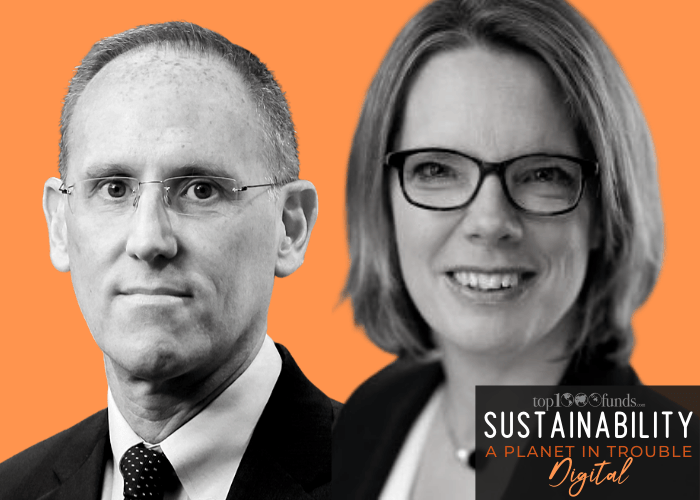

Two of the world’s most influential institutional investors are hitting a brick wall in their attempts to engage with Amazon’s board on workplace safety. Every time the Netherland’s APG and the office of New York City Comptroller, fiduciary to New York city’s five pension funds, try to engage with the board at the tech giant in which they own a combined $6.5 billion they get push back from management.
The duo began engaging with the company about a year ago, in search of a better understanding of Amazon’s workplace safety during the pandemic. Their priority remains exploring the disconnect between what they have heard from workers and in the press, and the information the company puts out, explained Anna Pot, head of responsible investment, Americas, at APG and Mike Garland, assistant comptroller, NYC Comptroller’s office speaking at “Sustainability Digital; A Planet in Trouble.”
The institutional investors want to know what metrics the board is using to ensure staff are safe as a consequence of the company’s well documented investment in measures like masks and COVID tests.
“We have tried to correspond with the board, but every time we try, we receive a response from management,” said Garland. “We have been told in a letter from management that [board] directors meet with investors, but can’t honour all requests.”
APG’s engagement with Amazon has involved reaching out to the company and looking at the measures it is taking to safeguard the workforce. The process has revealed that the company has invested a significant amount in social distancing measures, masks and associated health benefits, said Pot.
“It is great to see these measures, but what are the outcomes?” she questioned. Both investors want to see what methods the company uses to oversee the effectiveness of the measures it has put in place; last December they compiled a shareholder proposal, but it didn’t “get the response” they sought.
Garland told delegates that because “the same person” was speaking for the board and management, it was impossible for the investors to have a window into the board’s oversight.
Describing APG as an engaged investor and its stake in Amazon as “significant” with ensuing responsibility and leverage, Pot said the asset manager would continue to engage.
“We want Amazon workers to be safe,” she said. Adding that APG “won’t stop” here but will continue to engage on improving labour conditions in a commitment to progress. Moreover, Pot said she believed engagement will ultimately yield access to the board for further discussions.
“We started a year ago and the company is responding to our requests,’ she said. “They are opening up a bit.”
Both investors’ engagement activity is also focused on the auto sector. Here dialogue is based around how companies are supporting their workforce in the transition to a green economy. A low carbon economy holds consequences for the future size of the sector’s workforce, and the investors are asking questions around how companies are equipping workers with new digital skills and how workers can become part of fast-changing companies.
Garland concluded that although all companies tout their workers as their most important asset, few disclose information about what this means, and how they actually manage their human capital.








Leave a Comment
You must be logged in to post a comment.
Login