
GIC: ‘Profound uncertainties’ challenge investor assumptions

Photo: Jack Smith

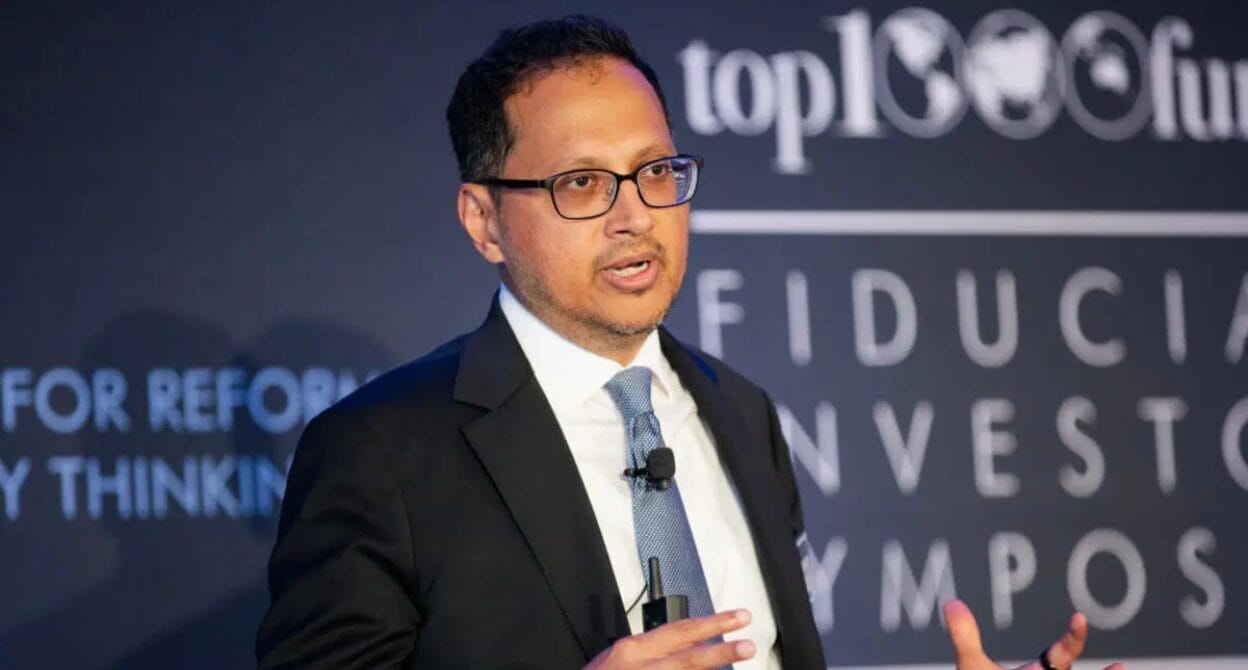
Investors are operating in a period of “profound uncertainty” characterised by more volatile inflation and real economy activities, as well as unpredictable policy impact, according to GIC chief economist Prakash Kannan. It is intrinsically different from anything investors have lived through in the past few decades, and for some their entire investing lifetimes.  

This means asset owners can no longer take existing assumptions about the investing environment for granted, including the relatively unconstrained ability to move capital across borders, trust in contracts and a peace dividend.  

Prakash, who is also GIC director of economics and investment strategy, said these uncertainties will challenge asset owners’ investment models. For example, he suggested organisations incorporate more agility and inflation risk management, in expectation of a new inflation pattern that is more “spiky” and “episodic” in the future.  

“I think where most people…misunderstand is that a regime of high inflation doesn’t mean that inflation goes from two [per cent] in the past to four [per cent] in the future, like that’s it,” he told the Top1000funds.com Fiduciary Investors Symposium in Singapore.  

“Fundamentally, what we’re going to experience is this kind of very episodic, spiky inflation because the nature of the shocks over the last 20 years have been very much coming from the demand side.”  

But current shocks in the economy come largely from the supply side such as trade wars and decarbonisation needs. “You’re going to have inflation and growth moving in the opposite directions,” Prakash said. 

Sponsored Content

This would impact asset allocation in at least two ways, Prakash said. Firstly, real return for clients and members becomes an even more important objective in a high-inflation world, which means funds need to think hard about inflation protection in their strategic asset allocation.  

Secondly, avoiding large drawdowns in a high, spiky inflation environment requires a more nuanced allocation approach.  

“Not all inflation shocks are the same,” Prakash said. “Commodities may not respond the same way to an inflation shock, if it’s alongside a weaker growth environment.” 

“Gold is doing well right now, but it is traditionally a more monetary-led, inflation-type of asset. 

“The inflation linkers – which performed terribly in 2022 in an inflation shock because of the duration exposure – if you actually enter a stagflation world, that’s a really good asset to have. 

“That kind of agility in this world where I think we’re going to be facing a lot more supply shocks has to be part of the investment process.” 

Globally-minded

Aside from investment, Prakash also urged asset owners to re-evaluate aspects of their operating model amidst changing global dynamics. For example, ensuring compliance with local regulations is evermore essential for organisations operating across the globe. 

Other issues for asset owners include paying more attention to sectors intersecting with national interests, as well as reviewing counterparties and being conscious of where their assets are invested.  

Prakash also urged investors to be geopolitically aware. He acknowledged that geopolitical events are hard to foresee but the idea is not to predict the conflicts but to minimise any potential impacts on the portfolio.  

“Ultimately, for long-term [asset] owners, we don’t care about volatility [in the short-term] – what we care about is permanent impairment. And I think the risk of permanent impairment has gone up,” he said. 

“If you’re putting assets in a country, how do you know that you’re going to get your capital back? How do you incorporate that kind of uncertainty into your underwriting process?  

“The reason why investors haven’t paid attention [to these questions] is because we’ve lived in this peace dividend period. So frankly, they were right not to care about it, because it didn’t matter. 

“Today, I think this becomes fundamentally much more important.” 

Leave a Comment

The world in flux and Trump’s role in a new equilibrium

The world in flux and Trump’s role in a new equilibrium

The second Trump administration has so far brought a lot of things: market shocks, volatile trade policies, and turbulent foreign relationships. But beyond the chaos, renowned geopolitics expert Stephen Kotkin says Trump has an unwitting role to help the world rebalance and reach a “new equilibrium” in the global order.

Sort content by

Geopolitical uncertainty forces investors to adopt more granular approach

The radical shift in world geopolitics has prompted investors like the Monetary Authority of Singapore, Khazanah Nasional Berhad and the Hong Kong Monetary Authority to rethink their strategic asset allocations in favour of a more granular approach.

How AI will propel quant 2.0

Pictet Asset Management head of quantitative investment David Wright said at FIS Singapore that AI will not only provide drastic efficiency gain for traditional stock pickers but also will be a defining part of “quant 2.0”. 

Asset owners prepare portfolios for a brave new world

As waves of geopolitical risk and economic protectionism roil global markets, asset owners are beginning to realise that tomorrow will look very different from today. But the big question is what they can do about it.

Investors ponder secondaries’ role in portfolios amid PE stress

The past two years have been a challenging time for private equity investors thanks to low deal activities, falling distributions and tough exit environment. At FIS Singapore, a panel of investors examine how secondaries can help alleviate the asset class stress in portfolios.

Investors overlook APAC private credit despite attractive returns

Institutional investment in private credit across the Asia-Pacific is failing to keep pace with the region's strong economic growth and more attractive interest rate environment, according to a panel of investors at the Fiduciary Investors Symposium.

Photo gallery: FIS Singapore 25

Delegates and speakers at the Fiduciary Investors Symposium, Singapore 2025.