Taking the future into account

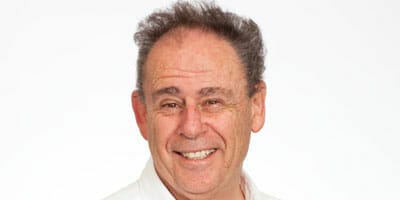
At the International Centre for Pension Management’s biannual meeting in London, Jack Gray and Generation’s David Blood had a tête à tête on sustainability.

An academic at the Paul Woolley Centre for Capital Market Dysfunctionality at the University of Technology Sydney, Gray has written a paper, Misadventures of an Irresponsible Investor, that at its core suggests that there is an opportunity cost to not doing something else by spending a disproportionate amount of time on “responsible investment”.

David Blood, former chief executive of Goldman Sachs Asset Management, has built a business around sustainability at Generation Investment Management, alongside royalty of sorts – the former US vice president Al Gore and Mark Ferguson, son of Manchester United manager, Sir Alex Ferguson.

Sustainability, it seems, is working out OK for Blood, with the UK press reporting he took home more than £10 million pay in 2009 alone.


Blood and Gore vs Gray

Gore and Blood do have some sensible investment tenets, in my opinion, based on long-term incentives being the antidote to the short-term greed that many attribute with causing the recent crisis.

Sponsored Content

Gray, on the other hand, is confused.

Most would describe Gray as an intelligent man. And I would now add brave to that description.

To admit, in front of a peer group of leading investment minds and the largest institutional investors in the world, that you “don’t get it” takes courage.

In the closed session, delegates – mostly pension funds and some academics – were asked a simple question. Were they long green or long brown?

The audience vote showed that 30 were long green, and 20 were long brown.


The metamorphosis of “responsible”

While this is a blunt investment question, in reality it is not that simple. Many funds say they have dual incentives.

But Gray’s philosophy is that markets are not driven by morality and, in any case, society is not that moral as a collective. But he also admits he is confused.

“I abhor the view that companies’ motives are to only drive profits. But when it comes to pension funds, I flip over and think that is their only reason for being,” he says. “I’m confused.”

What Gray does object to is the use of the word “responsible” for what he sees as an investment analytical approach that started as the enhanced analytics initiative named by Raj Thamotheram, then at USS.

This initiative ran for four years between 2004 and 2008 with the aim of stimulating sell-side analysts to produce research that incorporates ESG issues in such a way as to enable fund managers to integrate them into their investment decisions. It was claimed a success and a stimulant for exponential growth in this research.

Somehow enhanced analytics has morphed into responsible investment or sustainability or ESG, depending on who you talk to.


Flowing into the mainstream

Nomenclature in this sector is a problem.

Even the latest biennial sustainable and responsible-investments research by the European Forum for Sustainable Investment (EUROSIF) concedes that the judgment of whether something is SRI is “very much coloured by the cultural and historical diversity of Europe”.

At this stage, the report says, there is no consensus on whether a unified definition of SRI exists within Europe, regardless of whether that definition focuses on the processes used, societal outcomes sought or the depth and quality of ESG analysis applied.

It’s a challenge for investors to understand the various product offerings, and for service providers it may mean national distribution is required depending on country preferences.

The sustainability-driven Generation has a concentrated low-turnover portfolio, focusing on long-term advantages.

There is an argument that this type of investment doesn’t need a label, but should be just part of good analysis.

Gray says infrastructure managers, for example, have always taken social and environmental factors into account.

The Economist reported recently that we may have reached our “peak car” use. Infrastructure investors would take that into account when they are valuing a toll road. Property guys have also always done it.”

Personally, I believe in sustainability. But I don’t believe in marketing.

Taking into consideration themes such as water and other resource scarcity (a big theme of Gray’s former employer, Jeremy Grantham), growing and ageing populations, peak car use, climate change, good management practices, governance and decision making should not be viewed as ESG screens, tilts, implementation, overlays or philosophy.

These are the practices that investors should expect from funds managers. It is simply taking into account the future in assessing the price of assets now.


One response to “Taking the future into account”

  1. Tim MacDonald

    Might Mr. Gray’s confusion be cleared up if we did a little thought experiment?

    Let’s take the Fund Manager out of the equation, hypothetically, and ask ourselves what the agreement would look like if a Pension fund made an equity investment directly into the means of production, partnering directly with business to recover principal and earn at least minimum threshold returns. in increments, over time, from an agreed split in the revenues to be generated in consequence of the investment to be made, with residual sharing thereafter in whatever additional revenues may be earned, as they may be earned, more or less forever (or at least to the limit of the economic useful life of the enterprise invested in).

    To avoid misunderstanding, let’s agree that the Pension fund would be acting through third party investment professionals contracted for their expertise in putting together investments that work (as is already the case, for example, in Real Estate, Real Assets and Infrastructure). That is to say, this thought experiment is not about in-sourcing or out-sourcing. It is just about the values that would come out of a direct agreement between a Pension, or other institutional investor acting as the custodian of other people’s money under a charter of trust, and the organizers of an enterprise for the creation of value in the commercial markets. We still need professionals.

    I think the agreement would not be a simple agreement on price. Instead, the Institution would want agreement on many points of value, some financial, others societal. The enterprise would, as well.

    So, in this experiment, a contract for investment directly into the means of production might address principal protection, programmed performance, threshold returns, constancy, transparency, alignment of interests, sustainability and social responsibility.

    The details, of course, would be custom-crafted to fit the charter of trust for the particular Institution, as a steward of the present and future financial security of its constituents. It may address, among other things, climate stability, resource stewardship, social mobility, financial integrity, global community and economic adaptability. These are all issues of increasing importance for both business and investors in a real economy that has already become truly global, in both scale a limit: a messy place where profit-seeking has to make accommodations for the political, social and other complex issues of being a person.

    Now, let’s re-introduce the Fund Manager, but not a Real Estate or Infrastructure Fund Manager. A Public Equities or Hedge Fund Manager. This manager will securitize the means of production, so that it can buy a securitized asset at a price, for resale, at a later time, or in another market, for another price. It’s a clean, clinical transaction. Mathematical, really. All the values, other than asset price, get pushed out. The investment is commoditized.

    This experiment shows us that it is only the Capital Markets whose “motives are only to drive profits”, and their profits are measured by a single point of value: the market clearing price for securitized assets.

    According to this experiment, allowed to deal direct, neither enterprise nor investment would be so clinically single-minded.

    So here’s the question for our next thought experiment: How do we reconcile the messy complexity of sustainability in the real world with the clinical cleanness of speculative trading on future movements in the market-clearing price for securitized assets in the commoditized environment of the Capital Markets?

    I wonder what Mr. Gray would have to say.

Leave a Comment

Sort content by

….as TRS reports its largest ever return

An overweight position to global equities and credit has contributed to the Teachers’ Retirement System of Texas recording its best ever investment return: 35 per cent for the year to March 2010. mrec4inarticleinline Sponsored Content scnative1 scnative2 scnative3

“Korrupter” boss arrested at Swiss BVK fund

The chief investment officer for the Swiss Government’s Zurich cantonal pension fund, BVK, has been dismissed following his arrest on various “corruption” charges. mrec4inarticleinline Sponsored Content scnative1 scnative2 scnative3

North Carolina in need of ALM study, staff

The North Carolina Retirement System is in need of a formal asset liability study and is fundamentally understaffed, according to an independent review by Ennis Knupp commissioned by the State Treasurer. mrec4inarticleinline Sponsored Content scnative1 scnative2 scnative3

CalPERS internal team rivals external providers

Following a restructure of the team along functional lines, the CalPERS internal passive equity team is now able to handle any risk or complexity in the portfolio at least as well as any external manager, according to a review by its consultant Wilshire, although some extra coding of the Charles River system for compliance purposes

CalPERS to link pay with performance

The CalPERS board will have the discretion to reduce or eliminate investment staff performance pay in years of negative performance of the fund, in a revised compensation plan to be presented to the board this week, chief investment officer Joe Dear told conexust1f.flywheelstaging.com. mrec4inarticleinline Sponsored Content scnative1 scnative2 scnative3

Three strategies to beat the not-so-good future: GMO

There are only two asset classes really worth investing in for the “seven lean years” ahead, according to Jeremy Grantham (pictured), co-founder and strategist at famously bearish funds manager GMO.   mrec4inarticleinline Sponsored Content scnative1 scnative2 scnative3

Previous




