
USS calls time on emissions reporting

The UK’s largest pension fund, USS, is going to spend more of its energy in engagement with government and corporates than producing emissions reports.

Between 2019 and 2023 University Superannuation Scheme, USS, the £78 billion pension fund for employees in the United Kingdom’s university and higher education sector reduced the carbon footprint of its portfolio by 35 per cent.

Well-documented strategies include tilts to climate-friendly assets, reduced exposure to companies that are poorly positioned to adapt, and direct investments in renewables, all carefully backstopped by the complex and time-consuming process of measuring and reporting emissions across the portfolio.

Yet global emissions have climbed relentlessly higher.

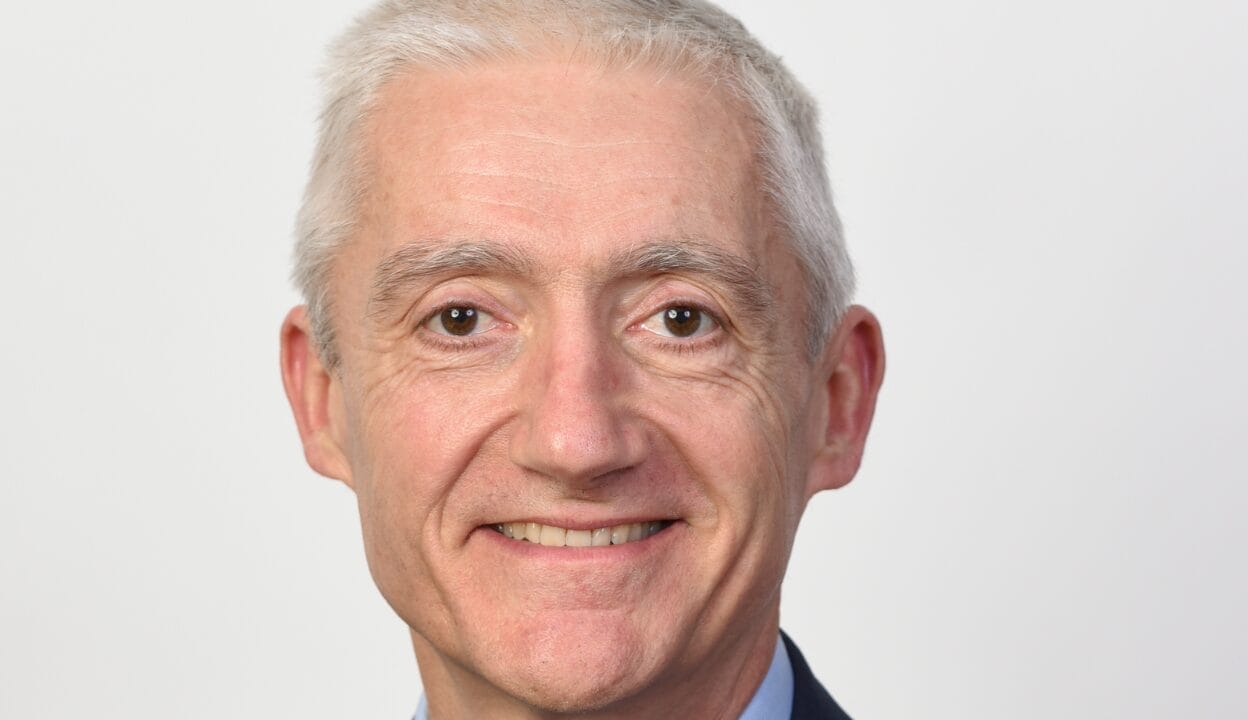
In an interview with Top1000funds.com, CEO of USS Simon Pilcher says the carbon reporting burden is distracting from more useful strategies like engagement to encourage others to act as long-term players. USS will continue to measure its carbon emissions and plans to produce at TCFD report this year. But going forward the investor will spend more of its energy in engagement with government and corporates than producing reports.

“Our portfolio has decarbonised significantly, but to put it bluntly, it’s not made a jot of difference in the real world and our focus is on a real-world impact rather than window dressing of our own portfolio,” says Pilcher.

Sponsored Content

Time to step up the pressure

USS’s decision to divert time spent reporting to ratcheting up pressure on policymakers coincides with the link between carbon, temperature rises, and extreme weather becoming one of the most worrying and urgent investment themes for the universal owner and long-term investor.

Pilcher says a hot world in 20 to 30-years- time will result in “horrible returns” for pension funds that own small slices of everything and are unable to sidestep or diversify a way around. “All assets will struggle in a four degrees world, and we have realised in the last 12-18 months that we need to seek to influence not just the stocks we choose, but the environment in which we all operate.”

Policy change is a precursor to meaningful corporate change and USS wants to help create a landscape and economic framework within which corporates and consumers can choose lower carbon options. It’s not worth expending energy trying to persuade companies to do the right thing when the economic incentives remain so strong to continue to do the wrong thing, Pilcher continues.

“We encourage long term approaches, but it is daft to ask companies to do things that make little economic sense as they won’t do it. We need an environment where it makes economic sense to do sensible things, and one that removes the financial barriers to doing sensible things.”

Pilcher turns to the barriers USS has met battling to green one of its own infrastructure assets to illustrate how the UK’s planning system actively encourages companies to do the wrong thing.

The UK needs more electric vehicle charging infrastructure if the country is going to successfully increase uptake of electric cars. Yet there is currently a 10-12 year wait to get green power to motorway services like USS-owned Moto, the country’s largest motorway service station network. “We need a planning regime that will speed up the connection of offshore wind to the grid and the delivery of electricity to where it is needed.”

Elsewhere he points to energised colleagues who want to install air source heat pumps in their home but have given up because local authority planning makes it impossible.

Will they listen?

Pilcher reports a strong willingness from the government to listen and an understanding amongst policy makers of the need for long term investors to have policy certainty to deliver long term and sustainable benefits. Describing the conversations as constructive, sensible and calm, he says the government grasps that open pension schemes like USS offer real scale and draw international investors interested in partnering with them to the UK.

“Asset owners like USS don’t have much control but can and should talk to and encourage policymakers to create a landscape and economic framework within which corporates and consumers can choose lower carbon options. It may have got harder in North America, but that doesn’t mean the rest of us shouldn’t continue to speak calmly on this issue.”

However, he’s under no illusions that the absence of long term thinking makes achieving change difficult. Politicians are focused on four-to-five year re-election cycles which are now backdropped by geopolitical uncertainty and the prevalence of more extreme political positions in the US and across Europe that would not have been popular 20 years ago.

Corporates and asset managers are similarly focused on the short-term. Corporate management turns over every 5-10 years and companies are reluctant to take actions that will cost them money and risk shareholder discontent. Investment managers are also focused on making short-term profits, he says.

That lack of alignment with asset managers is one reason USS manages over three quarters of its assets internally. Managing assets internally allows for a clarity of investment strategy that is hard to replicate via a third-party mandate, he says. “We are not interested in market indices. We are interested in assets that meet our needs.”

It is also materially cheaper to manage private assets in house.

Around 10 per cent of the allocation to private assets is managed externally yet that 10 per cent allocation costs the same as it does managing the other 90 per cent of the portfolio – not only the other 20 per cent invested in private assets that are managed internally, but all the public assets in the portfolio, some of which are also externally managed.

“It gives you a feel for how much better value it is to do it in house,” he says, “When we look at the value to our members, we think our model is strongly aligned to our members needs.”

Testimony to his belief in internal management, USS will build out the 75-person investment team with another ten hires over the next three years. He has no plans to build out the allocation to private markets any further.

Pilcher says the portfolio is prepared for the shift in trade flows and end of “peak trade,” and has gradually moved to reflect this long-term structural reality to protect the portfolio. Last year the fund increased levels of inflation protection in the scheme by buying inflation linked bonds in the UK and US. Meanwhile higher interest rates have helped USS swing from deficit into a £9 billion surplus.

Leave a Comment

Silver is the new gold: France’s UMR targets opportunities in ageing economy

Silver is the new gold: France’s UMR targets opportunities in ageing economy

French pension organisation UMR has launched a multi-asset thematic program that will target opportunities in Europe’s ageing economy. It’s part of a broader strategy to increase diversification in private markets where it sees secondary markets as an increasingly important tool.

Sort content by

NZ Super cuts benchmark return expectation on US valuation concerns

A view that the US stock market is overvalued and equity risk premia will be lower over the long term has driven New Zealand Super to lower the return expectations for its reference portfolio following its recent five-yearly review of the benchmark. Co-chief investment officer Brad Dunstan also flags underweight commodity exposure as an area to address and explains why the fund remains sceptical of illiquidity premia despite seeing a growing case for private markets.

Sampension: Why there are many reasons to be optimistic

Now is not the time to reduce risk, argues Henrik Olejasz Larsen, chief investment officer of Sampension, Denmark’s $50 billion pension fund for public and private sector employees. In an interview with Top1000funds.com, he says corporate profits have not deteriorated, and although the market has been tested from multiple directions, the underlying optimism driving equities is strong enough to overrule the negative impact of geopolitical risk.

France’s Banque des Territoires looks for data centre opportunities

France’s Banque des Territoires, a subsidiary of Caisse des Dépôts, the country’s €323 billion state-owned financial institution, plans to invest more in data centres in France. The push is in line with government policy to build out AI infrastructure off the back of the country's access to cheap, green, nuclear energy that uniquely positions France to provide power to the AI industry while maintaining net zero credentials.

Why NYC pensions CIO hasn’t drunk the ‘TPA Kool-Aid’

Three decades of investing have given Monte Tarbox sharp eyes for recognising risk and opportunities, and he’s putting it to use as the new permanent chief investment officer of the $306 billion NYC Bureau of Asset Management. In an interview with Top1000funds.com, Tarbox outlines his vision for the fund, why he’s bullish on infrastructure but “nervous” on PE, and why he hasn’t drunk the TPA “Kool-Aid”.

How CPP is evolving risk management for a faster, more interconnected world

In an environment where multiple risks are emerging and their effects are compounding on the portfolio, CPP Investments' chief risk officer Priti Singh says the $572 billion fund is rethinking risk management from the ground up, shifting from reaction to preparation and embedding risk thinking earlier in investment decisions. She speaks to Amanda White about the fund's risk approach.

URS bets on nuclear to power AI and lower emissions

Next-generation nuclear energy, and the money pouring into it, will truly change the world, according to CIO of Utah Retirement System John Skjervem. It’s a lonely position as the CIO of a public pension fund but one Utah is embracing as it builds out early-stage investments in nuclear energy as part of its alternative energy portfolio. He speaks to Sarah Rundell in an exclusive interview about how investing in transformational energy technologies can be part of prudent investment management.




