Sustainability among key industry’s tagged for China’s growth

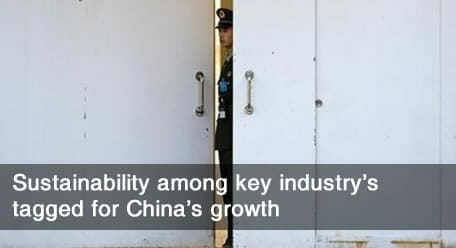
It’s not very salubrious but it’s secure. The four-star Jingxi Hotel in Beijing (pictured), which is owned by the People’s Liberation Army, hosted the annual plenum of the Communist Party’s Central Committee to draft the country’s next five-year plan.

The 12th five-year plan, nutted out by about 300 committee members, will be put to the National People’s Congress in March for ratification. The key themes in the latest plan are sustainability and reducing inequalities between provinces.

Analysts are predicting a lower GDP-growth target to be discussed between now and March, with details of the plan coinciding with a surprise 25bps point rise in the official interest rate last week – the first in China for three years.

A research note from HSBC Global Banking and Markets says more growth is likely to have to come from private consumption which has dropped from 50 per cent of total GDP to an estimated 36 per cent in the past 20 years.

“Expect further efforts to boost household incomes, primarily through higher minimum wages, as well as lower personal taxes,” the bank says.

Notwithstanding the stated concern for poorer provinces, the latest plan intends to speed the demographic shift to the cities, which will further boost consumption.

Sponsored Content

After the meeting, the Government confirmed a list of emerging strategic industries to be at the forefront of a “higher quality” of economic growth. They are: energy-saving and environmental protection firms, next generation IT, biotech, high-end manufacturing, new energy, new materials and composites, and clean-energy cars.

According to Shanghai Securities News, the group of industries currently make up only 3 per cent of GDP but are expected to contribute at least 15 per cent by 2020.


Leave a Comment

Sort content by

Pension funds to talk climate change with the Prince

The P8, a group of 12 of the world’s largest pension funds tasked with influencing policy makers on climate change, will meet in London next week for a two-day conference convened by its patron, Prince Charles, in the last meeting of the group before the Copenhagen conference of political leaders. mrec4inarticleinline Sponsored Content scnative1 scnative2

Investors need to factor in inflation – Wurts

It may still be the right time to allocate to distressed real estate and debt-related strategies as deleveraging continues around the world and capital remains in short supply. But a significant factor likely to impact on portfolios in the medium term, according to US asset consultancy Wurts & Associates, is inflation. mrec4inarticleinline Sponsored Content scnative1

AustralianSuper rethinks hedge funds

The A$28 billion ($25.5 billion) AustralianSuper, has reduced its allocation to hedge funds from 3.5 per cent to 1.5 per cent, as part of a process of analysing the sources of beta within the overall investment portfolio. mrec4inarticleinline Sponsored Content scnative1 scnative2 scnative3

Hedge fund responds to crisis with backdoor listing

Hedge fund managers are moving to improve their capital base in the wake of the financial crisis, as well as their risk processes and asset/liability alignment for liquidity purposes. mrec4inarticleinline Sponsored Content scnative1 scnative2 scnative3

Constitutionality of Cuomo’s Common Fund reforms challenged

New York’s State Comptroller, Thomas DiNapoli, has hinted the constitutionality of legislation to create a board of trustees for the State’s Common Retirement Fund may be challenged. mrec4inarticleinline Sponsored Content scnative1 scnative2 scnative3

Correlations and the lesson, finally, learned

US-based quant shop AQR Capital has pioneered the notion of hedge fund beta as an investable product. With first-year performance numbers now in, Greg Bright spoke with the firm’s managing and founding principal, Cliff Asness. mrec4inarticleinline Sponsored Content scnative1 scnative2 scnative3

Previous



