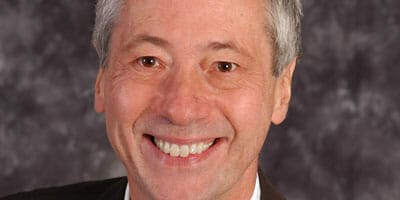
State Street’s Probyn into 2013

The current equity rally is not predicated on a shift in economic performance, according to chief economist at State Street, Chris Probyn, who says it would be reasonable to say the market may “pause for thought”.

Probyn says the move from fixed income to equities has been fostered by some of the “economic areas for concern” being eliminated.

These include the avoidance of a hard landing in China, and a disorderly breakup of the euro, proactive policy responses in Japan and the avoidance of the US fiscal cliff.

“These have all been ticked off,” he says. “But still growth is not great. The fourth quarter earnings reports have been good, with the notable exception of Apple, so there is some fundamental support for equities. But there is no fundamental upshift, so the size and speed of the rally is a little surprising.”

Probyn’s outlook for 2013 is for 0.25 per cent global growth, driven by a 0.5 per cent growth in emerging markets.

His economic outlook for developed markets is zero growth, which he partly attributes to fiscal policy decisions.

Sponsored Content

“We have reinvented economics, when the economy is weak we stop government spending, it is a failure of policy and we are repeating the mistakes of the 1920s,” he says.

Probyn also attributes the equity rally to a certain psychological behaviour.

“People have worry fatigue, they are tired of worrying about the same things,” he says.

State Street doesn’t have a big economics department, three people in fact. One emerging markets specialist plus two who look at the G8, defined as the G7 plus Australia (because of State Street’s presence in that country).

Probyn believes that in order to understand certain asset classes there needs to be an understanding of the global economic story, such as the relationship between resources and China.

He admits that for most economists it is difficult to predict exact growth numbers, but it’s more important to get “the overall story right”. Last year that overall story was further growth moderation, and that is the outlook for 2013 as well.


 

Leave a Comment

Sort content by

Ag investors release responsible investment principles

A group of eight institutional investors has launched a guiding set of principles for responsible investment in farmland, which forms part of a UN-backed Principles for Responsible Investment (PRI) push to provide practical guidelines for specific asset classes.mrec4inarticleinline Sponsored Content scnative1 scnative2 scnative3

Norges Bank forges closer research links

Some of the brightest investment minds gathered recently in Oslo for the first Financial Research Conference, conducted by the asset management arm of Norway’s central bank.mrec4inarticleinline Sponsored Content scnative1 scnative2 scnative3

Property survey highlights green stars

The Global Real Estate Sustainability Benchmark (GRESB) is being actively used by its investor supporters, including PGGM, to make service providers accountable for ESG performance, with the second annual survey finding a larger proportion of managers in the top quadrant this year. mrec4inarticleinline Sponsored Content scnative1 scnative2 scnative3

Life’s lessons can be applied to pension reform

The UK’s London Pension Fund Authority issued a green paper this week outlining the key ingredients needed to build a better scheme and its successful implementation by 2015. In all corners of the world building a better pension scheme is on the agenda. What then are some of the universal principles for success that all funds can adopt regardless of geography?

UNPRI looks for new horizons

The UN-backed Principles for Responsible Investment (PRI) is focused on expanding into China, India and the Middle East and driving environmental, social and governance (ESG) integration beyond equities and property and into other asset classes, says PRI executive director James Gifford.mrec4inarticleinline Sponsored Content scnative1 scnative2 scnative3

Defined benefit still dominates largest funds

Defined benefit funds still dominate the structure of the largest 300 pension funds globally, and this troop of large funds now make up almost half of all pension assets around the world.mrec4inarticleinline Sponsored Content scnative1 scnative2 scnative3

Previous



