
Managers want more public companies

Asset management firms are concerned about the trend of companies going, or staying, private, warning that many investors could miss out on growth.

State Street president and chief operating officer Ron O’Hanley said some of the fastest-growing businesses in the 1980s and 1990s were small-cap technology companies, but now those companies don’t go public.

“We should be worried about this,” O’Hanley said. “This will contribute to income inequality, it’s part of the un-democratisation of markets.”

In part, the move to the private side is a way for companies to get out of the quarterly reporting limelight, he said.

“Regulation has had an impact,” MetLife executive vice-president and chief investment officer Steven Goulart said. “The burdens imposed on public companies are pretty significant.”

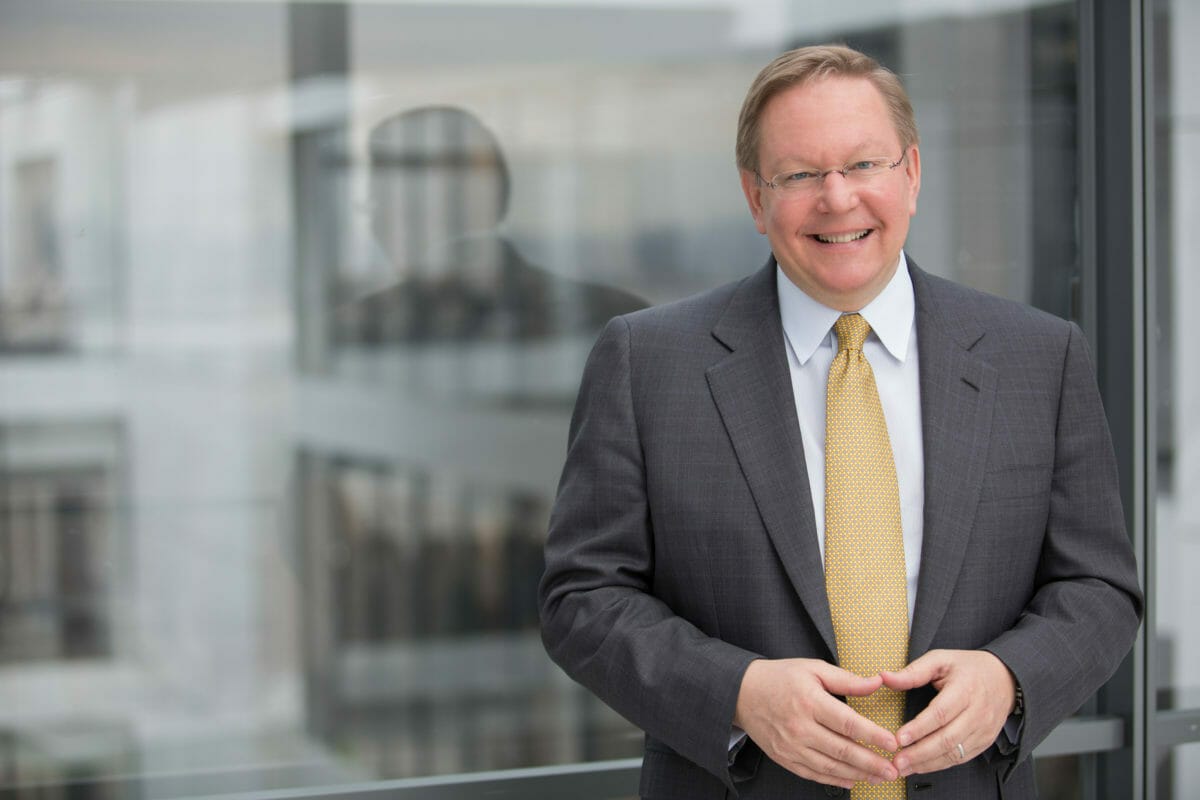
David Hunt, (pictured) president and chief executive of PGIM, which manages more than $1 trillion, said there were now half as many public companies as 15 years ago.

Sponsored Content

“This is troubling because individual investors can’t get access to high-growth tech companies,” Hunt said.

He predicted that in 2018 there would be an unprecedented number of public companies going private.

O’Hanley said there had also been a boom in private credit and that the ability to oversee that had been limited.

“Systemic risk has been taken out of banks successfully and distributed, but [there has been] massive growth and that needs to be regulated in some way,” he argued.

But Nobel Gulati, chief executive of systematic investment manager Two Sigma Advisers, believes regulators are aware the pendulum may have swung too far and he hopes there will be some balance in public/private assets.

The managers were speaking on a panel at the Milken Institute Global Conference in Los Angeles, traversing many aspects of the outlook for asset management.

They looked at the impact of artificial intelligence on their businesses and agreed the hype was bigger than the reality.

“The expectations are way ahead on what we can deliver on regarding AI,” PGIM’s Hunt said. “It is extremely difficult, and you can spend days coming up with false signals or start with data that is not clean. Technology is not necessarily the answer. Active management is about humans and how they interpret data.”

Two Sigma’s Gulati agreed, and called AI “over-hyped”.

“Our business is constantly evolving, so human context is extremely important,” he said. “We have 1400 people working at Two Sigma. AI has its limitations, we need humans.”

Also on the panel was Ron Mock, president and chief executive of the Ontario Teachers’ Pension Plan.

Mock said, in terms of innovation, OTPP was focused on investing in the “whole world” of technology, in particular buying companies before their initial public offering. But he was concerned with the technology revolution and the impact on the industry’s ability to attract talent.

“In our case, we are actively looking at the next decade of talent acquisition and the value proposition,” he said. “There is huge competition for talent, and if our industry is going to be more technologically driven, how do we compete? Every MIT class is being swallowed by Google and Facebook. How does the asset management industry compete? It’s not an insignificant problem.”

Leave a Comment

Sort content by

Montagnon defines investor engagement

There is scope for European legislation directing asset owners who issue mandates to service providers in Europe to say that they have “thought through” what they want their asset managers to engage with companies on, ICGN conference delegates heard. Peter Montagnon, senior investment adviser of corporate governance at the UK Financial Reporting Council, says there

Code of conduct for proxy voting industry

The European Securities and Markets Authority (ESMA) has developed a set of high level principles with the aim of encouraging the proxy voting industry to develop its own code of conduct. Speaking at the ICGN conference in Milan, the head of the investment and reporting division at ESMA, Laurent Degabriel, said it will set a

Breakfast with AQR’s Cliff Asness

Having a breakfast meeting with Cliff Asness is a wake-up call. He will let you know if you’re late – something he holds in very little regard. He admits he has to constantly remind himself that just because he’s 20 minutes early to everything that others are not automatically then 20 minutes late. Asness is

Tackling sustainability in emerging markets

Emerging market investing and sustainable investing easily rank as two of the most substantiated of the many investment trends of the past decade. However, the two styles of investing are far from natural bedfellows. Christian Ragnartz, as chief investment officer of the $17-billion-plus Swedish pension fund AP7 – which has 13 per cent of its

Ownership: a forgotten art?

While the responsible investment field has come a long way, the majority of investors are still treating it as an overlay, rather than truly integrating it into investment decision-making. This is not an ideal situation for the investment industry, not to mention society at large, but it presents an opportunity for those that do integrate

Maverick Series video: Gonski part I

In the first of a new series of video interviews featuring thought leaders in global institutional investment, chair of the $80 billion Australian Future Fund, David Gonski, outlines his views on governance. mrec4inarticleinline Sponsored Content scnative1 scnative2 scnative3

Previous




