
Managers want more public companies

Asset management firms are concerned about the trend of companies going, or staying, private, warning that many investors could miss out on growth.

State Street president and chief operating officer Ron O’Hanley said some of the fastest-growing businesses in the 1980s and 1990s were small-cap technology companies, but now those companies don’t go public.

“We should be worried about this,” O’Hanley said. “This will contribute to income inequality, it’s part of the un-democratisation of markets.”

In part, the move to the private side is a way for companies to get out of the quarterly reporting limelight, he said.

“Regulation has had an impact,” MetLife executive vice-president and chief investment officer Steven Goulart said. “The burdens imposed on public companies are pretty significant.”

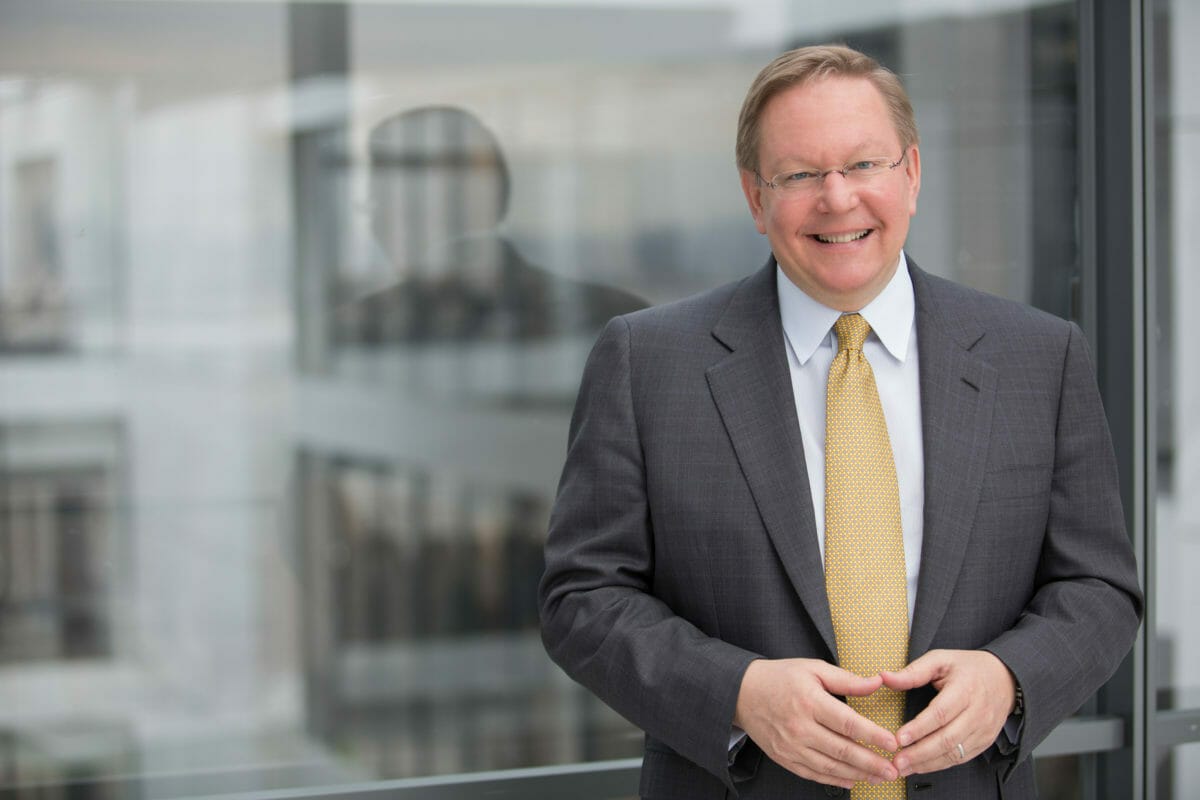
David Hunt, (pictured) president and chief executive of PGIM, which manages more than $1 trillion, said there were now half as many public companies as 15 years ago.

Sponsored Content

“This is troubling because individual investors can’t get access to high-growth tech companies,” Hunt said.

He predicted that in 2018 there would be an unprecedented number of public companies going private.

O’Hanley said there had also been a boom in private credit and that the ability to oversee that had been limited.

“Systemic risk has been taken out of banks successfully and distributed, but [there has been] massive growth and that needs to be regulated in some way,” he argued.

But Nobel Gulati, chief executive of systematic investment manager Two Sigma Advisers, believes regulators are aware the pendulum may have swung too far and he hopes there will be some balance in public/private assets.

The managers were speaking on a panel at the Milken Institute Global Conference in Los Angeles, traversing many aspects of the outlook for asset management.

They looked at the impact of artificial intelligence on their businesses and agreed the hype was bigger than the reality.

“The expectations are way ahead on what we can deliver on regarding AI,” PGIM’s Hunt said. “It is extremely difficult, and you can spend days coming up with false signals or start with data that is not clean. Technology is not necessarily the answer. Active management is about humans and how they interpret data.”

Two Sigma’s Gulati agreed, and called AI “over-hyped”.

“Our business is constantly evolving, so human context is extremely important,” he said. “We have 1400 people working at Two Sigma. AI has its limitations, we need humans.”

Also on the panel was Ron Mock, president and chief executive of the Ontario Teachers’ Pension Plan.

Mock said, in terms of innovation, OTPP was focused on investing in the “whole world” of technology, in particular buying companies before their initial public offering. But he was concerned with the technology revolution and the impact on the industry’s ability to attract talent.

“In our case, we are actively looking at the next decade of talent acquisition and the value proposition,” he said. “There is huge competition for talent, and if our industry is going to be more technologically driven, how do we compete? Every MIT class is being swallowed by Google and Facebook. How does the asset management industry compete? It’s not an insignificant problem.”

Leave a Comment

Sort content by

UniSuper defies accepted thinking

Mention any asset class to John Pearce, chief investment officer of Australian superannuation fund UniSuper, and he will doggedly set out the good and bad thinking around it. A common source of his ire is the sight of investors herding around a belief based on a lack of rigorous thinking. Good practice for him involves

OTPP deals with underfunding

Even the most successful and well run pension plans are facing underfunding challenges. The $129-billion Ontario Teachers’ Pension Plan is the latest to investigate solutions to solve the mismatch between the pension promise and the funds required to meet that, says Jim Leech, chief executive of the organisation . OTPP has appointed a taskforce – chaired

Fewer, bigger funds for UK?

Australia, the US, Canada and Denmark have all done it. Kazakhstan and even Oman are talking about it. Increasingly, public sector pension funds are merging or pooling their assets into fewer bigger schemes. It’s no surprise the debate is gathering momentum in the United Kingdom, ripe for consolidation with a Local Government Pension Fund Scheme

Scenario analysis: applicable to anything?

Attempts to apply a formula to asset allocation based on an asset’s historical volatility and relationship with other assets tend to fail when presented with black-swan events. Equities tend to rise along with commodities except when presented with political events such as the price hikes in oil in 1973 that sent equities into free fall.

Kurtzer on Holy Land of opportunity

The Middle East is in a state of dynamic flux, with positive change manifesting itself in the countries going through an economic and financial revolution as much as a political one. Institutional investors from all parts of the world have a role to play in that revolution, according to former US ambassador to Egypt and

CFA to lead industry out of crisis

Protecting the pension system is one of six key themes at the centre of the CFA Institute’s Future of Finance initiative as it aims to empower the investment industry to take leadership in restoring trust. Speaking at the sixty-sixth annual CFA Institute conference in Singapore this week, president and chief executive of the CFA Institute,

Previous




