
Managers want more public companies

Asset management firms are concerned about the trend of companies going, or staying, private, warning that many investors could miss out on growth.

State Street president and chief operating officer Ron O’Hanley said some of the fastest-growing businesses in the 1980s and 1990s were small-cap technology companies, but now those companies don’t go public.

“We should be worried about this,” O’Hanley said. “This will contribute to income inequality, it’s part of the un-democratisation of markets.”

In part, the move to the private side is a way for companies to get out of the quarterly reporting limelight, he said.

“Regulation has had an impact,” MetLife executive vice-president and chief investment officer Steven Goulart said. “The burdens imposed on public companies are pretty significant.”

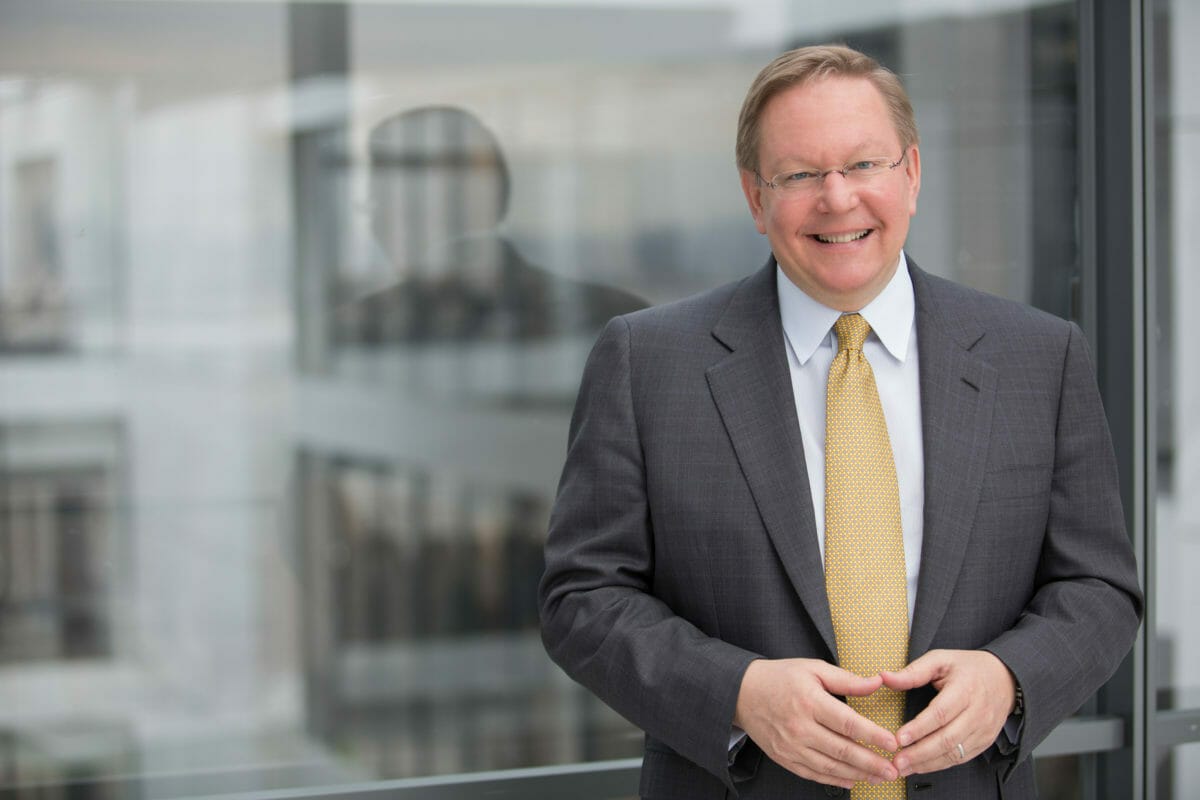
David Hunt, (pictured) president and chief executive of PGIM, which manages more than $1 trillion, said there were now half as many public companies as 15 years ago.

Sponsored Content

“This is troubling because individual investors can’t get access to high-growth tech companies,” Hunt said.

He predicted that in 2018 there would be an unprecedented number of public companies going private.

O’Hanley said there had also been a boom in private credit and that the ability to oversee that had been limited.

“Systemic risk has been taken out of banks successfully and distributed, but [there has been] massive growth and that needs to be regulated in some way,” he argued.

But Nobel Gulati, chief executive of systematic investment manager Two Sigma Advisers, believes regulators are aware the pendulum may have swung too far and he hopes there will be some balance in public/private assets.

The managers were speaking on a panel at the Milken Institute Global Conference in Los Angeles, traversing many aspects of the outlook for asset management.

They looked at the impact of artificial intelligence on their businesses and agreed the hype was bigger than the reality.

“The expectations are way ahead on what we can deliver on regarding AI,” PGIM’s Hunt said. “It is extremely difficult, and you can spend days coming up with false signals or start with data that is not clean. Technology is not necessarily the answer. Active management is about humans and how they interpret data.”

Two Sigma’s Gulati agreed, and called AI “over-hyped”.

“Our business is constantly evolving, so human context is extremely important,” he said. “We have 1400 people working at Two Sigma. AI has its limitations, we need humans.”

Also on the panel was Ron Mock, president and chief executive of the Ontario Teachers’ Pension Plan.

Mock said, in terms of innovation, OTPP was focused on investing in the “whole world” of technology, in particular buying companies before their initial public offering. But he was concerned with the technology revolution and the impact on the industry’s ability to attract talent.

“In our case, we are actively looking at the next decade of talent acquisition and the value proposition,” he said. “There is huge competition for talent, and if our industry is going to be more technologically driven, how do we compete? Every MIT class is being swallowed by Google and Facebook. How does the asset management industry compete? It’s not an insignificant problem.”

Leave a Comment

Sort content by

Tail risk parity, V 1.0

Just when you thought you were safe, the next reiteration of risk parity has arrived. AllianceBernstein’s tail risk parity takes the concept of risk parity, reallocating assets uniformly according to risk, but it uses tail risk, not volatility, as the core measure. The concept of risk parity is a portfolio diversified according to risk, rather

Retirement: a cause worth working on

There are two things that drive the newly appointed global chief operating officer of State Street Global Advisors, Greg Ehret, in his bid to improve the client experience: the retirement business is a cause worth working on and the clients are the reason the business exists. Ehret was appointed to the new position at SSgA,

Pension funds, where banks no longer go?

There continues to be potential for pension capital appearing where bank lending no longer wants to go. Commentators in the UK and continental Europe have heightened expectations that pension funds will step in to help fill the continent’s bank financing gap. Societe Generale, for instance, recently predicted further “disintermediation” by investors sidestepping banks and looking

Building consensus for investment beliefs at CalPERS

An investment-beliefs workshop for the CalPERS board, held in April, revealed five areas, including active management, where the views of the board and staff lacked consensus. The contentious, or unsettled, topics for discussion were active management, private asset classes, sustainability (environmental, social and governance), investment performance targets and stakeholder considerations. At the board workshop, Janine

Behind PGGM’s ESG index

In 2010 PGGM conducted a study to see if it was possible to reduce the number of companies it invested in from 4000 to 400, based on its environmental, social and governance leanings, and still maintain it’s beta risk/return profile. The idea was that the €133-billion ($174-billion) fund would better know and understand what it

Holland’s hybrid: defined ambition

Jan Tamerus, actuary director at PGGM, was instrumental in developing the new Dutch pension defined-ambition structure. Back in 2006, he was involved in looking at the sustainability of the defined benefit system and in concluding it was not in fact sustainable, the idea of defined ambition evolved. One of the key reasons for not going

Previous




