

A group of institutional investors are collaborating to address the G7 priorities of climate change, gender inequality and the infrastructure gap. They have agreed to commit resources, expertise and networks to these key areas.
Canada’s Caisse de dépôt et placement du Québec and Ontario Teachers’ Pension Plan (OTTP) lead the group, which also includes Alberta Investment Management Corporation, California Public Employees’ Retirement Scheme, Ontario Municipal Employees Retirement System, OPTrust and PGGM. They have all agreed to: prioritise speeding up the implementation of uniform climate-related disclosures; open opportunities for women in finance and investment; and enhance expertise in infrastructure financing and development in emerging and frontier economies.
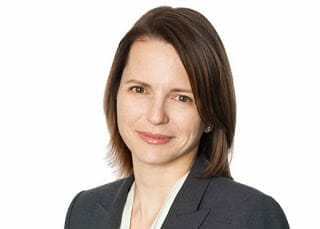
Commenting on the collaboration, Barbara Zvan, chief risk and strategy officer at OTPP and one of the key organisers of the global initiative, said the investors were “excited” and have developed practical programs to further these G7 priorities, including through capital commitments.
With regard to climate-related disclosures, the priority is to promote a common approach to adopting FSB Task force on Climate-related Financial Disclosures (TCFD)guidelines, to make disclosures easily comparable across institutions and companies.
Partner institutions will set up an advisory committee made up of their representatives, which will assess existing efforts to adopt the TCFD recommendations, leverage these into a unified approach, and publish guidance. They will also promote the adoption of the recommendations at portfolio companies.
With regard to gender diversity, Zvan says global investors’ size and reach make them well-positioned to exert a powerful influence over the industry.
To increase the number of women in investment management, the partner institutions have agreed to develop and implement diversity policies inspired by global best practice, including the 2016 International Finance Corporation report SheWorks: Putting Gender-Smart Commitments into Practice. Alongside the Canada Pension Plan Investment Board, partner institutions will also collaborate with the CFA Institute to set up an internship program for women studying in developing markets to gain experience in the investment industry.
“As investors, we all work with a lot of fund managers, and we will be asking them to set these policies, too,” Zvan says.
OTPP will insist managers have a diversity policy and measure them on adoption of it.
Describing the infrastructure gap, the group cites the fact that the world needs to invest $3.3 trillion in infrastructure annually through 2030 to keep pace with projected growth.
To tackle this problem, partner institutions will launch a fellowship program for senior public-sector infrastructure managers in emerging and frontier markets.
The fellowship will include a three-month intensive business school program and an internship on the infrastructure teams of some of the world’s leading investors.
Initially, the fellowship will be in partnership with York University’s Schulich School of Business, in Toronto. Other business schools in Canada and around the world will eventually participate.
The fellows will also receive advanced training on the Sustainable Infrastructure Foundation’s (SIF) platform for infrastructure project development. The number of fellows is expected to grow to more than 30.
“It’s really hard to buy emerging markets infrastructure, and it depends a lot on the relationships you have,” Zvan says. “We thought of the internship idea, with SIF, to help create better documentation for these projects. There are plenty of studies saying we need to invest trillions, so we wanted to look at how we could help get these projects created and funded.”
The internship will be aimed at engineers. It will help give them the ability to understand finance and create a network, then the pension funds can learn from them.
“It won’t solve the problem around infrastructure but will make a dent,” Zvan says.
These global initiatives were launched in June to coincide with Canada hosting the G7.








Leave a Comment
You must be logged in to post a comment.
Login