

CalPERS has adopted 10 preliminary investment principles following a board offsite in July, but a number of topics, including the role of active management, are still under debate ahead of the September board meeting that is the deadline for the principles’ adoption.
The $266-billion Californian fund began the process for establishing investment principles in January and the workshops have been guided by Towers Watson.
While many of the draft investment beliefs could be described as more generic investment-related principles – such as CalPERS articulating its investment goals and performance measures and ensure clear accountability for their execution – the fund has also adopted a unique view of its fiduciary duty.
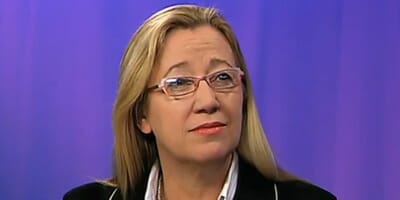
Anne Simpson, director of corporate governance at CalPERS, says it has wrapped a new framework of economy around the fund, including three forms of capital.
Specifically it states that “long-term value creation requires effective management of three forms of capital: financial, physical and human”.
“We have some old-fashioned economics to ground what we’re doing and why sustainability matters,” she says. “It is ground-breaking stuff this investment beliefs work. We want to be engaged owners. This is a transformation, it’s like the oil tanker turning around.”
Questioning duty
In the past CalPERS chief executive Ann Stausboll has also been vocal in questioning the fiduciary duty of pension funds.
At the Ceres conference in January 2012 she said the fiduciary duty of pension funds should extend to issues outside the parameters typically understood as being directly related to beneficiaries’ financial interests.
Stausboll said it is a fiduciary duty of investors not only to manage risk and look for opportunities associated with climate change, but also to push for business and government action to tackle environmental and sustainability issues.
“We’ve made enormous progress in just the past few years, but we need to keep up our continued engagement with companies and policymakers to help advance the transition to a sustainable global economy,” Stausboll said.
“As fiduciaries, it is our job to make sure investors, businesses and policymakers are responding aggressively and creatively to the risks and opportunities associated with climate change and other sustainability issues.”
This sentiment has now been reflected in one of the draft principles to come out of the July offsite: “CalPERS investment decisions may reflect wider stakeholder views, provided they are consistent with its fiduciary duty to members and beneficiaries”.
Woven right through
Simpson says the fund now has a goal of integration for sustainability, which is a long way from the “scattered initiatives” of a few years ago. “The thinking is woven right through,” she says. “We are thinking about future members and pensioners and encouraging managers to do the same.”
CalPERS will also be pushing its managers further on cost and disclosure issues.
Another principle is that “costs matter” and as part of this all costs should be transparent. But Simpson points out that this is difficult in the private asset classes. “In these asset classes there is no disclosure of carry. We are pushing the thinking on this.”
The July draft
The 10 investment beliefs, listed below, required a “super majority” or two thirds of the board votes, to move forward for consideration or adoption at the September investment committee, at which the fund’s investment beliefs will be finalised.
Since the April investment committee workshop, a number of topics have required additional discussion, that will continue until September. The issues for further discussion are: active management, investment performance targets and alignment of interests, the approach to integrating sustainability into investment decision making, and risk management and measurement.
The fund, which returned 12.5 per cent for the year to June 30, 2013, outperforming its benchmark by 1.5 percentage points, is also doing its triennial asset liability study.
Here are CalPERS’ draft investment beliefs asthey were in July 2013.
- Liabilities should influence the asset structure.
- A long time-investment horizon is a responsibility and an advantage.
- CalPERS investment decisions may reflect wider stakeholder views, provided they are consistent with its fiduciary duty to members and beneficiaries.
- Long-term value creation requires effective management of three forms of capital: financial, physical and human.
- CalPERS shall articulate its investment goals and performance measures and ensure clear accountability for their execution.
- Strategic asset allocation is the dominant determinant of portfolio risk and return.
- CalPERS will take risk only where we have a strong belief we will be rewarded for it.
- Costs matter and need to be effectively managed.
- Risk to CalPERS is multi-faceted and not fully captured through measures such as volatility or tracking error.
- Strong processes and teamwork and deep resources are needed to achieve CalPERS goals and objectives.








Leave a Comment
You must be logged in to post a comment.
Login