

Despite the uptick in anti-ESG sentiment that’s come with Donald Trump’s return to the White House, large institutional investors are certain that innovations in transition technology will continue and that the broader world has not changed course on the journey to decarbonisation.
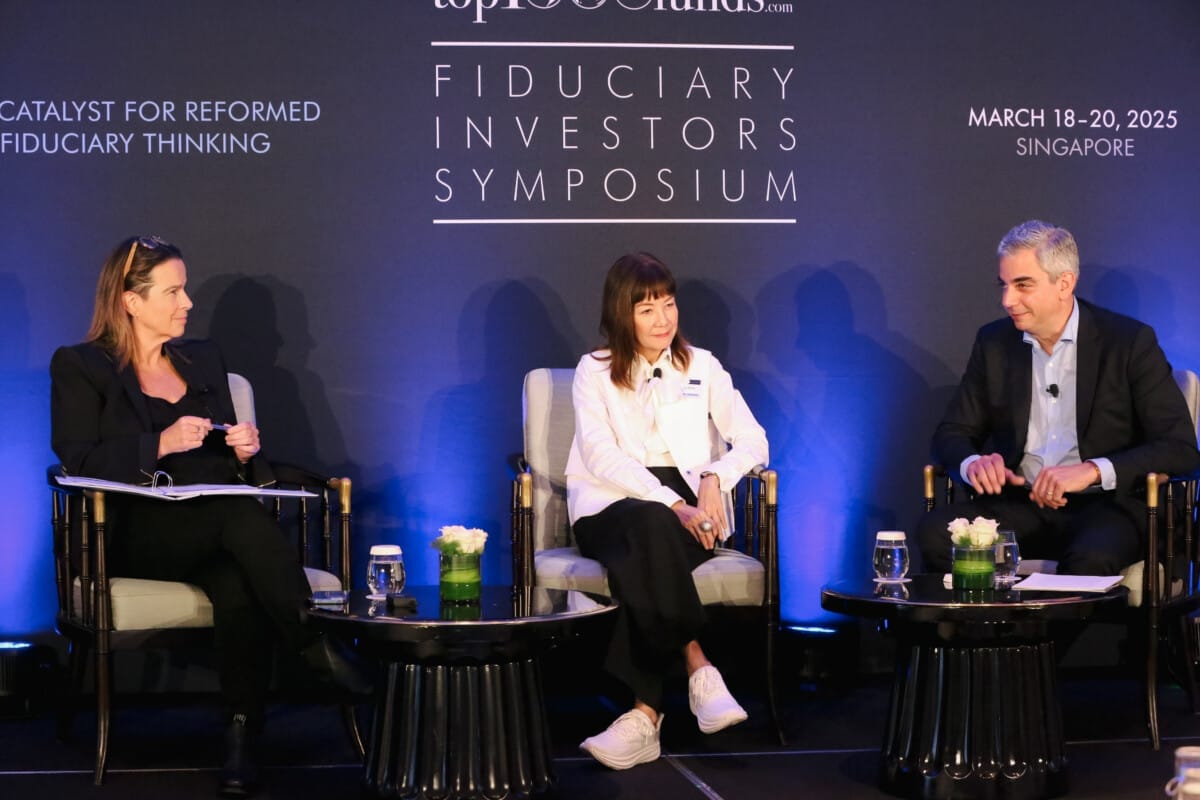
“It’s odd, and certainly you get mixed signals,” said T. Rowe Price’s US-based investment director of private equity, Orlando Gonzalez, at the Top1000funds.com Fiduciary Investors Symposium in Singapore.
“You get a lot of messaging around increasing drilling, increasing the use of fossil fuels, reducing subsidies for individual taxpayers for electric vehicles, and we’ve seen that for some time across some of the red states in our country.
“But then you are also seeing…a Tesla dealership being set up on the South Lawn of the White House.”
T. Rowe Price’s private equity unit has significant investments in late-stage venture capital – firms that are two to four years to an IPO. Its sustainability-related private investment is US-centric and includes areas like battery storage.
But despite the uncertainties stemming from politics, Gonzalez said the US is slowly but surely increasing its EV adoption rate, while in other areas of the world like China and some parts of Europe the adoption rate has surpassed 50 per cent.
“We’re heading in that [electrification and decarbonisation] direction, albeit it’s going to be a bumpy ride for the next just under four years,” he said.
The C$473 billion Caisse de dépôt et placement du Québec (CDPQ) is also firm in its position that all significant investments need to pass through its sustainable investing approach.
The Canadian pension investor has a target of investing C$54 billion in low-carbon assets by this year, which it is on track to meet. Managing director and head of Asia Pacific Wai Leng Leong said there has been no shortage of sustainability-oriented opportunities for CDPQ to meet its commitments, with a focus on decarbonising the real economy.
One example is réseau express métropolitain (REM) which is a public-private partnership between CDPQ’s subsidiary – CDPQ Infra – and the governments of Quebec and Canada to design, build and operate a 67km light speed rail system across greater Montreal. It is entirely electrified and automated and is reportedly the least expensive new public transit system built in North America.
“A lot of us are here sitting in Asia thinking ‘what’s the big deal’? But it is a very big deal in Quebec, because that’s the largest public infrastructure project in over 50 years,” Leong said.
T. Rowe Price’s Gonzalez observed the needs for similar kinds of public-private partnerships in the US, especially across water, transportation and electric infrastructure.
“[Infrastructure] has really been an area where we’ve under invested for decades,” he said. “One, it creates lots of jobs in the [US] economy – which is doing well, but could certainly do better.”
“[Secondly], it’s an area where we’re bleeding a lot of resources. By improving the infrastructure, we could really have an important climate impact as well.”







Leave a Comment
You must be logged in to post a comment.
Login