
The five factors aligning to support EM debt outperformance

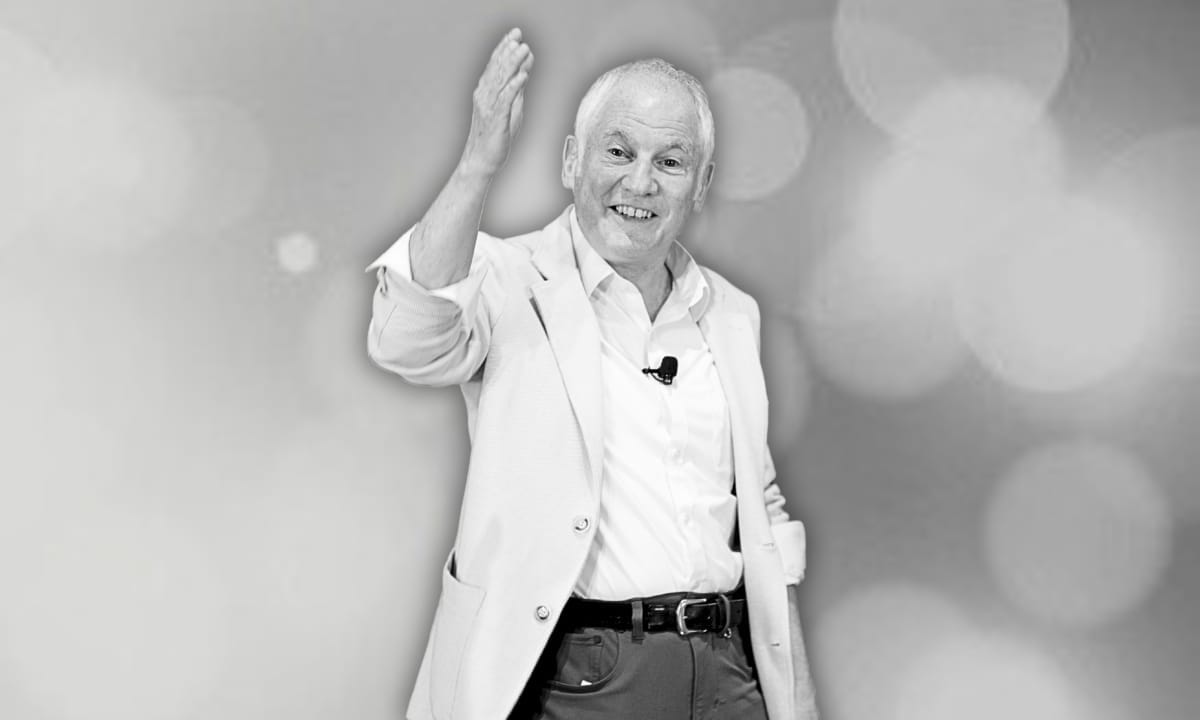
For more than a decade, emerging markets (EM) debt has, in aggregate, lagged its developed market counterpart. But a constructive macro backdrop echoing the commodities super-cycle that began in the 2000s means that could be about to change, according to Patrick Zweifel, chief economist at Pictet Asset Management.

“Since the peak in April 2011, there’s been a slight underperformance, a slight loss of 0.1 per cent annualised,” Zweifel told the Top1000Funds Fiduciary Investors Symposium in Singapore. “And this is when emerging market local debt started to clearly underperform developed market [debt] as well as US Treasuries, and that has lasted for more than 10 years.”

“So the question that is often raised from investors is, is it still an asset class worth investing in?”

Zweifel thinks the answer is “yes”. But to understand why, it first makes sense to group different EM countries by the macroeconomic factors they’re exposed to: commodity exporting countries versus manufacturers; creditors versus debtors; open economies versus traders; and China, which sits alone.

“The main important distinction when we talk about emerging market debt is the distinction that we make between creditors and debtors,” Zweifel said.

“The reason why they’re very different is because the debtors economies would be much more sensitive to higher global rates and much more sensitive to the dollar, because part of their debts are actually issued in dollar terms.”

Sponsored Content

During the commodity boom, Zweifel said, commodity-exporting countries returned an annualised 18 per cent while debtor countries returned an annualised 15 per cent as the dollar declined and the US 10-year bond yield declined by more than seven basis points. During the lost decade that followed – when the dollar and 10-year bond yield both rose – the growth of both debtors and commodity exporters declined sharply.

Pictet looks at five macro factors to figure out what will drive the performance of the EM set. Local policy rates are at levels not seen since the commodity boom and are now declining towards neutral levels; global trade is rising, driven largely by EM countries (and Zweifel thinks that, as was the case with Trump 1.0, tariffs won’t curtail global trade but “redistribute” it, because EM markets now trade more and more with each other); and the relative strength of China’s exports.

The US dollar also looks overvalued, Zweifel said, with a possible trigger for reversion coming in the form of policy and growth divergence between the EM and DM countries, while a rebound in local manufacturing supported by rate cuts would be supportive of commodity prices.

“[In the super commodity cycle] all those five factors were positive,” he said.

“When all those factors are positive, it’s a super boom. We now have three out of two – which is not too bad – and two are neutral.”

Zweifel also discussed the outlook for India, the markets of which have become an increasingly popular destination for global capital as investors are drawn to its growth story. Zweifel pointed out that India is a closed economy, highly indebted and heavily indexed to manufacturing, and that, in terms of its debt, it “wouldn’t be the ideal country in which we would be right now”.

“But in terms of its evolution – the reason why you invest in emerging markets is to capture the gross dividend and because of the idea that a poor country will converge towards a richer one,” he said.

“India starts from a very, very, very low level. So despite the fact that it’s, again, a big economy and growing fast, it has a lot of catching up to do. I think there’s this long-term story regarding India that has made it very attractive, because they’re far from being even where China was in the early 2000s. It’s a very long-term story.”

Leave a Comment

The world in flux and Trump’s role in a new equilibrium

The world in flux and Trump’s role in a new equilibrium

The second Trump administration has so far brought a lot of things: market shocks, volatile trade policies, and turbulent foreign relationships. But beyond the chaos, renowned geopolitics expert Stephen Kotkin says Trump has an unwitting role to help the world rebalance and reach a “new equilibrium” in the global order.

Sort content by

Why the energy transition won’t die with Trump 2.0

Despite the uptick in anti-ESG sentiment that’s come with Donald Trump’s return to the White House, large institutional investors are certain that innovations in transition technology will continue and that the broader world has not changed course on the journey to decarbonisation.  

How Asia-Pacific investors can navigate Trump’s America first plan

President Trump is dramatically reshaping geopolitics, creating new risks and opportunities for investors across the Asia-Pacific.

How new technologies are changing the game in private markets

With the ability to uncover hard-to-find information and enable more frequent trading in traditionally illiquid asset classes, new technologies like artificial intelligence and tokenisation could be the biggest disruption most private markets investors will see in their lifetime. 

How capital markets became a weapon of choice in great power conflict

Capital markets continue to be a key battlefield of power between Beijing and Washington, and whether the yuan has a serious chance of taking over the dollar as the international currency is the next big question for the world economic order. 

Investors brace for life after the US dollar 

A world where the US dollar is no longer the reserve currency seems increasingly likely by the day, and institutional investors are wary that it could fundamentally change the way they construct portfolios. 

Future of Asia now ‘a more difficult story’ as multilateralism crumbles

The global environment in which small Asian economies have thrived over the past seven decades is being dismantled as the US retreats as an advocate of multilateralism, globalisation and internationalism, warned leading geopolitics academic and economist Danny Quah.