
How a 15-minute survey helped Singapore become an AI superpower

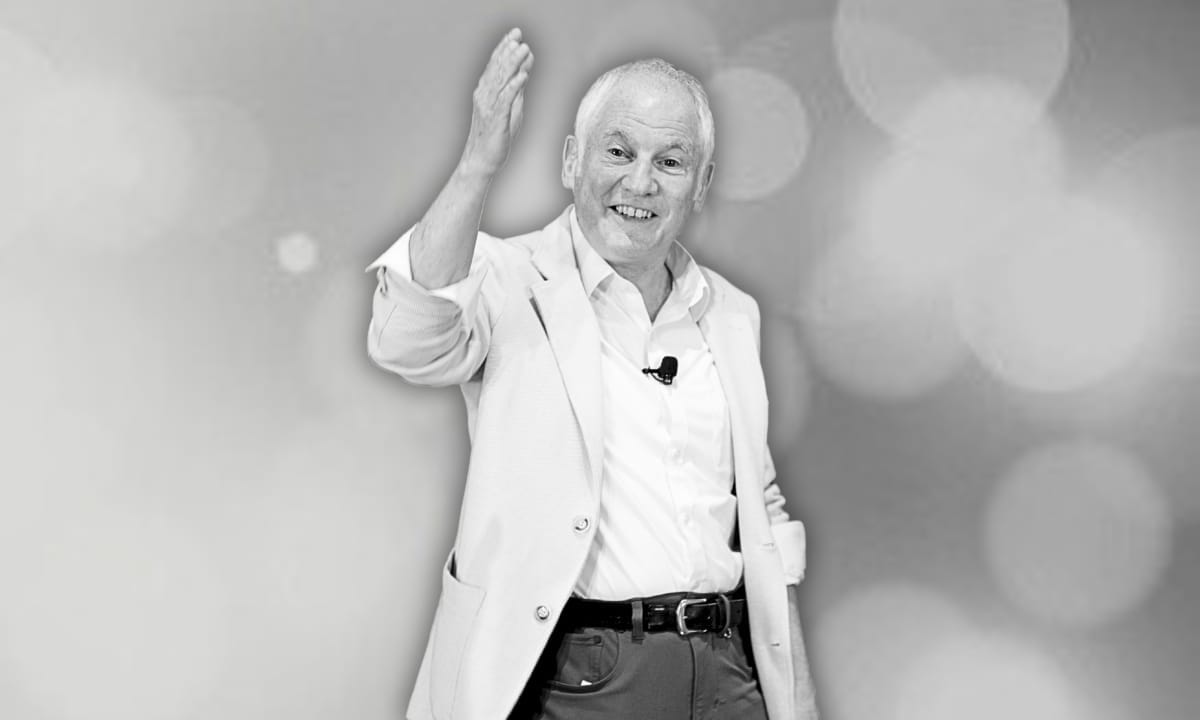
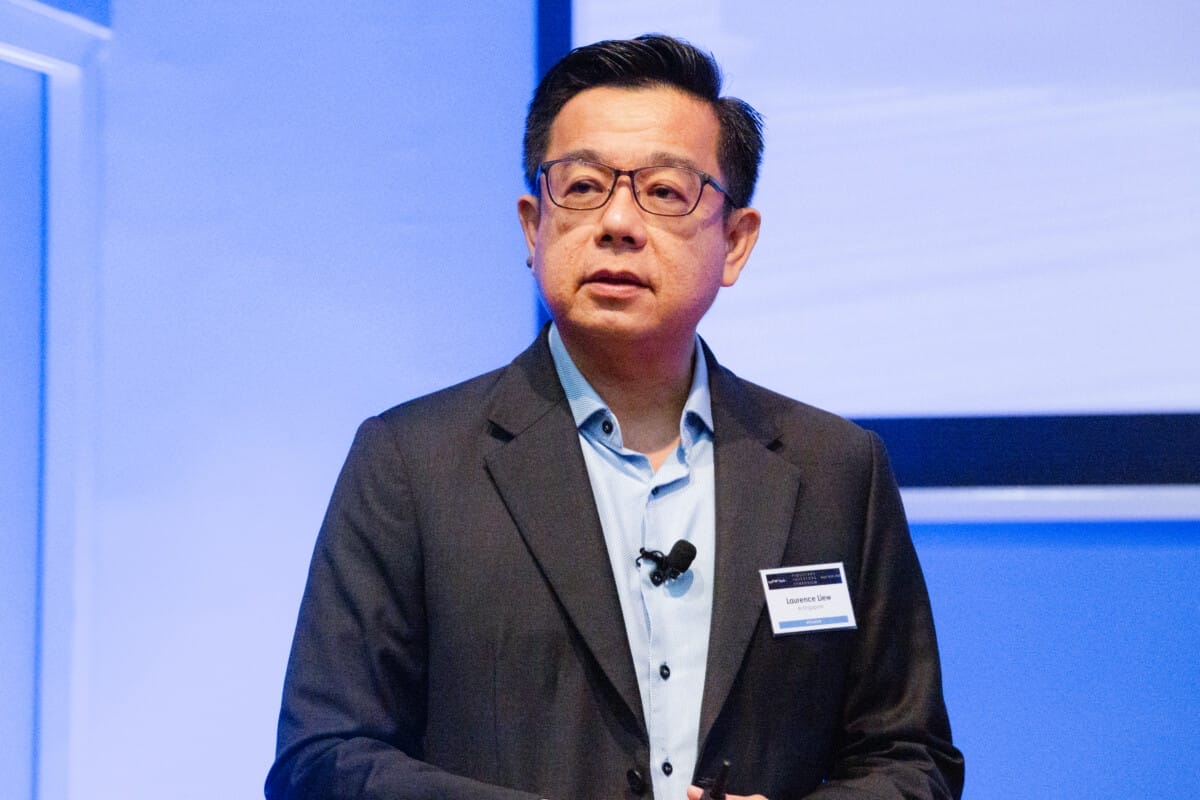
Laurence Liew. Photo: Jack Smith

A short, 10-to-15-minute survey can help pinpoint how ready an organisation is to adopt artificial intelligence (AI) into its systems and processes, the Top1000funds.com Fiduciary Investors Symposium has heard. 

The so-called AI Readiness Index (AIRI) was developed by AI Singapore (AISG) to help it decided which organisations that approach it for help with AI implementation projects are likely to proceed to completion. The survey is available online for any organisation to take. 

It’s an approach that helps AISG fulfil its mandate of creating collaboration between researchers and industry to develop and, most importantly, to implement AI solutions, and has seen the nation of just 5.6 million people ranked behind only the US and China as a global AI power. 

Laurence Liew, director of AI innovation at AISG, said the survey helps it grade an organisation as AI-unaware, AI-aware, AI-ready or AI-competent. 

“This AI Readiness Index, the framework that we use to engage with customers, was something that we developed back in 2018, 2019 because we were spending too much time, I felt, talking to customers that, in the end, did not lead to an outcome,” Liew said. 

“For those that AI Singapore will do AI projects with, they have to be AI-ready. So this survey started off as a way to shorten my sales process, my sales cycle. It was a very selfish reason, but eventually it became a very powerful tool to allow us to quickly scan through and determine which companies to work with.” 

Sponsored Content

Liew said AISG assesses a business’s readiness on five issues – organisational; ethics and governance; business value; data; and infrastructure – that it thinks will “determine how successful an organisation is in terms of its AI journey”.  

Business value readiness means there must be a minimum expected ROI on investing in an AI project; data readiness means the data for the project must be sufficient and relevant; infrastructure relevance means having the infrastructure to run the project on  (“not a laptop”); and ethics and governance means recognising there’s a big difference between knowing if you can do something and whether you should do something. 

But the most important, he said, is organisational readiness, and that’s where the survey comes in. 

“All our projects have a requirement [that] if we support you, we co-create a project with you, it has to go into deployment,” Liew said. 

“So even before we start the project, there is an agreed scope of work to be done. So it’s very deliberate.” 

Liew says AISG’s mission is to make the organisations it works with at least AI-aware. 

“We get a lot of requests from people who say you have all these high-end, very advanced courses, can we do more training and so on and so forth, can AI Singapore go and teach Python to everyone?” he said. 

“If you have been in Singapore long enough, you even hear of some politicians saying everyone must go and learn Python programming. My message is: please stop learning Python programming. 

“It does not make sense today for the audience. If you are a super geek, please go ahead, it’s your hobby. But if you think you want to learn Python because you want to analyse some data, it’s a waste of time.” 

Liew said there are much better tools to use, including uploading datasets to ChatGPT and asking it to do the required analysis. 

“What they need [instead], is half an hour, an hour, or one and half hours, introduction to what is AI. That’s about it, so that they are not fearful of AI, they are open and willing to use AI tools.” 

Educating employees about the use and benefits of Ai is critical, Liew said, to avoid HR and other employment-related issues cropping up later on, driven by individuals fearful of the impact AI may have on their jobs. 

“I’m sure all of you will have read in the US, when the US ports wanted to bring in automation, they had the port workers went on strike and so on,” Liew said, said. 

“As more and more companies bring in automation, the first thing that we have learned that you need to do is actually educate the staff about AI, so [raise] AI literacy. If not, you’re going to get a revolt.  

“And obviously you have to have management policies and so on, for retraining, upskilling and so on and so forth.” 

Organisations AISG assesses as AI-competent have sufficient and relevant data to support the project, employ people who can take over the project from AISG on completion, and have a clear ROI target. 

“I’m going to spend $150,000 of taxpayers’ money, how much is Singapore going to get back?” Liew said. 

“What’s your ROI? If it’s one or two-times, I’m not really interested. At least has to be three, five, 10, and so on and so forth.” 

Liew said if AISG goes ahead with a project, it throws considerable resources at it. 

“For every project that has been approved, AI Singapore will co-invest $150,000 in kind. That means our engineers, researchers. The company must put in $150,000, of which 30 per cent must be cash, 70 per cent in kind. Cash comes to us, and that, combined together, allows me to put together a team to work on the company’s project for six months.” 

Liew said AISG’s teams work full-time on companies’ projects, which “not like a typical university where the professor will say, yes, I’ll do the project for you [but] he may only look at your project once a month”.  

“These teams, Mondays to Fridays, nine to six, do nothing but the company’s project,” Liew said. 

“It’s a full-time thing.” 

Leave a Comment

The world in flux and Trump’s role in a new equilibrium

The world in flux and Trump’s role in a new equilibrium

The second Trump administration has so far brought a lot of things: market shocks, volatile trade policies, and turbulent foreign relationships. But beyond the chaos, renowned geopolitics expert Stephen Kotkin says Trump has an unwitting role to help the world rebalance and reach a “new equilibrium” in the global order.

Sort content by

Geopolitical uncertainty forces investors to adopt more granular approach

The radical shift in world geopolitics has prompted investors like the Monetary Authority of Singapore, Khazanah Nasional Berhad and the Hong Kong Monetary Authority to rethink their strategic asset allocations in favour of a more granular approach.

How AI will propel quant 2.0

Pictet Asset Management head of quantitative investment David Wright said at FIS Singapore that AI will not only provide drastic efficiency gain for traditional stock pickers but also will be a defining part of “quant 2.0”. 

Asset owners prepare portfolios for a brave new world

As waves of geopolitical risk and economic protectionism roil global markets, asset owners are beginning to realise that tomorrow will look very different from today. But the big question is what they can do about it.

GIC: ‘Profound uncertainties’ challenge investor assumptions

Investors are operating in a period of “profound uncertainty” intrinsically different from anything they have lived through in the past few decades and for some, their entire investing lifetimes, according to GIC's top economist and investment strategist Prakash Kannan.

Investors ponder secondaries’ role in portfolios amid PE stress

The past two years have been a challenging time for private equity investors thanks to low deal activities, falling distributions and tough exit environment. At FIS Singapore, a panel of investors examine how secondaries can help alleviate the asset class stress in portfolios.

Investors overlook APAC private credit despite attractive returns

Institutional investment in private credit across the Asia-Pacific is failing to keep pace with the region's strong economic growth and more attractive interest rate environment, according to a panel of investors at the Fiduciary Investors Symposium.