
Costs cast increasing doubt over hedge fund relevance

The inability to scale hedge fund exposures and risks, has led many large investors, like CalPERS this week and ATP last year, to exit their hedge fund programs. Complexity continues to be a drain on the relevancy of hedge funds, but importantly cost is driving the agendas of these investors. As AQR’s Cliff Asness admits, the hedge fund industry needs to re-invent itself to remain relevant to investors.

CalPERS’ decision to eliminate its $4 billion, 24 manager, hedge fund program, as part of an ongoing effort to reduce complexity and costs, is consistent with many other very large asset owners which can’t scale such investments.

Last year the Danish fund, ATP, decided to re-unite its alpha and beta where formerly it had a number of risk-taking teams managing long-short equity, equity market neutral, and global macro.

One of the reasons for ATP’s move was that with a large number of small teams it was difficult to scale the size of the total risk in the alpha exposure. And there was risk of over-diversification. Because of the difficulties in scaling the efforts it was expensive to run.

Other large investors, such as the $65 billion AustralianSuper, do not have any hedge funds in their portfolio.

With both ATP and CalPERS the hedge fund programs in isolation were a success. But while ATP’s alpha team added $310 million, the impact of that was drowned out by the total fund size of $122 billion.

Sponsored Content

Similarly the $297 billion CalPERS has not based its decision to exit hedge funds on the performance of the program it began in April 2002.

But costs sure played a part. In its absolute return program last year (to June 30, 2013) CalPERS paid $60.7 million in management fees and $55 million in performance fees. That’s a total amount of $115.7 million on 2 per cent of the portfolio.

This compares with external management fees of $41.7 million and $46 million in external performance fees in equities (both domestic and global) which makes up about 50 per cent of the portfolio.

The total investment-related expenses, including all consultant, custody, legal and tax fees, at CalPERS came to $1.39 billion last year at a management expense ratio of 0.51 per cent.

In 2013 the board, and executive, went through an an extensive process to determine its investment beliefs, with the idea those beliefs would guide, among other things, investments, at the fund.

Two of those beliefs now include:

  • CalPERS will take risk only where we have a strong belief we will be rewarded for it
  • Costs matter and need to be effectively managed.

These beliefs helped guide the decision to exit hedge funds.

“We are always examining the portfolio to ensure that we are efficiently and cost-effectively achieving our risk-adjusted return goals,” said Ted Eliopoulos, CalPERS interim chief investment officer.

“Hedge funds are certainly a viable strategy for some, but at the end of the day, when judged against their complexity, cost, and the lack of ability to scale at CalPERS’ size, the ARS program is no longer warranted.”

Increasingly costs are the focus of large pension funds around the globe.

A survey of 19 of the world’s largest funds from CEM Benchmarking, which rates large funds on their costs, showed the funds on average spend 46.2 basis points on their external management compared to 8.1 basis points on internal investment capabilities.

One reason for the increasing focus on costs is that staff actually have some control over them, and can rely on them. In an environment that is made up of low-returns, low-contributions and high-promise-to-beneficiaries this is important.

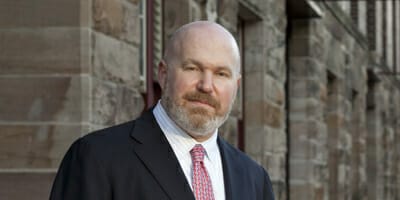
With the news of CalPERS exit from hedge funds, AQR’s Cliff Asness has taken the opportunity to reiterate a couple of arguments he and his colleagues have been making for some time including whether hedge funds actually hedge, arguing that they are too correlated and that they are too expensive.

Because of this he’s not surprised that some have found the broad universe of hedge funds is not an attractive enough proposition.

Asness does believe that hedge funds, and active managers in general, do pursue some strategies that are very good – such as value investing, momentum investing, trend following, merger and convertible arbitrage; value, momentum, and carry applied to macro portfolios – but “more often than not, they charge too much for these straightforward, non-magic strategies and package them, again, with too much net long exposure”.

“We don’t dismiss that some fund managers may have real skill worthy of very high fees, and that some funds that aggressively pursue many of the strategies we list above, in diversified ways, also can justify high fees. But, all considered, we are not surprised that some have found that the broad universe of hedge funds, and thus likely any very large diversified portfolio of them, is not an attractive enough proposition.”

Hedge fund managers can argue all they like about whether they are performing, but as Asness importantly says the end investor is not getting enough of that, either in terms of a fair fee or enough diversification.

The news of CalPERS’ exit from hedge funds, hopefully, will be a wake-up call to managers to become more relevant to the needs of investors.


Leave a Comment

Nest favours institutional-first managers as retail exodus pressures private credit

Nest favours institutional-first managers as retail exodus pressures private credit

Nest, the largest workplace pension in the UK, says that private credit managers who prioritise institutional clients will be more favourably viewed. The £61 billion ($82 billion) fund has awarded a £450 million ($605 million) US direct lending mandate to Crescent Capital this month, citing the manager's institutional-client-first approach as a key attraction.

Sort content by

Time to walk: AP3 turns away from Europe despite bullish equity outlook

“Europe is great at discussion and regulation, but rather poor at actually doing business,” says Sweden's AP3 CIO, Jonas Thulin. “The equity market is harsh, and when it votes it walks out the door. This has been happening for a long time in Europe.”

DeepSeek-triggered rout highlights equities’ diversification dilemma

The emergence of DeepSeek and the potential undoing of Nvidia’s dominance, even momentarily, is a stark reminder of the need for diversification and the fragility of markets. Top1000funds.com takes a look at what the market rout means for long-term portfolios.

PUBLICA builds alternatives through partnerships

In the latest development of its private market portfolio, Swiss pension fund PUBLICA is investing in infrastructure equity in a partnership with three other Swiss pension funds and Dutch pension investor APG.

Finland’s VER reflects on how to enliven European venture capital

Statistics show that Europe outperforms the United States when it comes to 10-year venture capital returns, but European investors struggle to access the market. Finnish State Fund VER's CEO Timo Löyttyniemi suggests how the market could develop.

Church Commissioners: Managing historic real assets for the future

The jewel in the crown of the Church Commissioners’ portfolio, the London-based asset manager for the historic assets of the Church of England, is its allocation to real assets, which contributes to returns used to support the work and specific needs of the church, alongside clergy pensions.

How Brightwell combines external credit managers and in-house LDI

Brightwell, asset manager for the BT Pension Scheme, explains why it manages its liability-driven investment strategy in-house but has turned to external managers in its cash flow-driven strategy.​​​​​​​

Previous



