Sustainability among key industry’s tagged for China’s growth

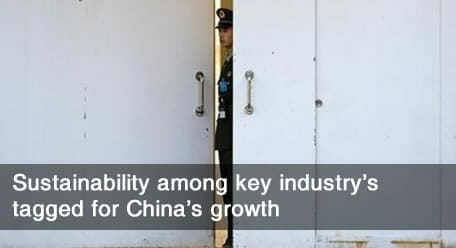
It’s not very salubrious but it’s secure. The four-star Jingxi Hotel in Beijing (pictured), which is owned by the People’s Liberation Army, hosted the annual plenum of the Communist Party’s Central Committee to draft the country’s next five-year plan.

The 12th five-year plan, nutted out by about 300 committee members, will be put to the National People’s Congress in March for ratification. The key themes in the latest plan are sustainability and reducing inequalities between provinces.

Analysts are predicting a lower GDP-growth target to be discussed between now and March, with details of the plan coinciding with a surprise 25bps point rise in the official interest rate last week – the first in China for three years.

A research note from HSBC Global Banking and Markets says more growth is likely to have to come from private consumption which has dropped from 50 per cent of total GDP to an estimated 36 per cent in the past 20 years.

“Expect further efforts to boost household incomes, primarily through higher minimum wages, as well as lower personal taxes,” the bank says.

Notwithstanding the stated concern for poorer provinces, the latest plan intends to speed the demographic shift to the cities, which will further boost consumption.

Sponsored Content

After the meeting, the Government confirmed a list of emerging strategic industries to be at the forefront of a “higher quality” of economic growth. They are: energy-saving and environmental protection firms, next generation IT, biotech, high-end manufacturing, new energy, new materials and composites, and clean-energy cars.

According to Shanghai Securities News, the group of industries currently make up only 3 per cent of GDP but are expected to contribute at least 15 per cent by 2020.


Leave a Comment

Sort content by

In pursuit of the perfect fee model

Matteo Dante Perruccio and Mark Barker, chief executive and co-chief investment officer of Hermes BPK, the boutique fund of funds majority-owned by Hermes Fund Managers in turn owned by the BT Pension Scheme, speak to Amanda White about the benefits of focusing on investment management, and not asset gathering, in the hedge fund game and

CalPERS to hold public board meetings

CalPERS’ remaining board meetings for the year, in May, July and September, will be open to the public as the fund deliberates a full asset-liability assessment, culminating in a potential change to the benchmark rate of return in December. mrec4inarticleinline Sponsored Content scnative1 scnative2 scnative3

The Netherlands leads charge into government bonds

The Netherlands, an innovator in pension investment management, is leading a renaissance into government bonds at the expense of corporate bonds, as other European countries further reduce their domestic equities allocation, according to Mercer Investment Consulting’s 2010 European asset allocation survey. mrec4inarticleinline Sponsored Content scnative1 scnative2 scnative3

Flexible in-house thinking pays dividends for Canada’s HOOPP

A strategic shift into equities during 2009 and the completion of a multi-year strategy to bring all assets in house, has resulted in the Healthcare of Ontario Pension Plan (HOOPP) returning 15.18 per cent return for 2009, positioning it as one of very few pension funds around the globe to be fully funded. mrec4inarticleinline Sponsored

Australia’s UniSuper launches first internal capabilities

The $A25 billion ($23 billion) UniSuper will ramp up its internal funds management capabilities, with four of its own portfolios set to be running by the end of the year, in conjunction with a project that will see its defined benefit and defined contribution sections adopt differing investment strategies for the first time. mrec4inarticleinline Sponsored

CalSTRS cost breakdown supports internal savings…

A breakdown of CalSTRS’ investment costs confirms the cost savings of internal asset management, with the fund’s internal asset management costs making up only 0.07 per cent of the total portfolio management costs, but comprising 30 per cent of the total assets managed. mrec4inarticleinline Sponsored Content scnative1 scnative2 scnative3

Previous



