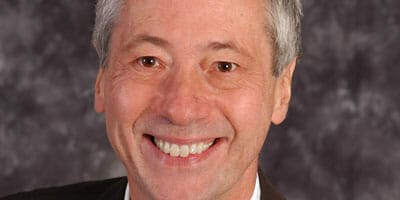
State Street’s Probyn into 2013

The current equity rally is not predicated on a shift in economic performance, according to chief economist at State Street, Chris Probyn, who says it would be reasonable to say the market may “pause for thought”.

Probyn says the move from fixed income to equities has been fostered by some of the “economic areas for concern” being eliminated.

These include the avoidance of a hard landing in China, and a disorderly breakup of the euro, proactive policy responses in Japan and the avoidance of the US fiscal cliff.

“These have all been ticked off,” he says. “But still growth is not great. The fourth quarter earnings reports have been good, with the notable exception of Apple, so there is some fundamental support for equities. But there is no fundamental upshift, so the size and speed of the rally is a little surprising.”

Probyn’s outlook for 2013 is for 0.25 per cent global growth, driven by a 0.5 per cent growth in emerging markets.

His economic outlook for developed markets is zero growth, which he partly attributes to fiscal policy decisions.

Sponsored Content

“We have reinvented economics, when the economy is weak we stop government spending, it is a failure of policy and we are repeating the mistakes of the 1920s,” he says.

Probyn also attributes the equity rally to a certain psychological behaviour.

“People have worry fatigue, they are tired of worrying about the same things,” he says.

State Street doesn’t have a big economics department, three people in fact. One emerging markets specialist plus two who look at the G8, defined as the G7 plus Australia (because of State Street’s presence in that country).

Probyn believes that in order to understand certain asset classes there needs to be an understanding of the global economic story, such as the relationship between resources and China.

He admits that for most economists it is difficult to predict exact growth numbers, but it’s more important to get “the overall story right”. Last year that overall story was further growth moderation, and that is the outlook for 2013 as well.


 

Leave a Comment

Sort content by

PRI calls for academics to fill ESG research gaps

Responsible investment research has reached a “tipping point” in its development, says the PRI’s director of strategic development, Rob Lake, and it needs to be more closely aligned to the practical needs of front-line investors.mrec4inarticleinline Sponsored Content scnative1 scnative2 scnative3

Top1000funds.com brings some of the world’s largest investors together in Beijing

More than 70 investors representing more than $3.1 trillion in pension, endowment and sovereign fund capital will converge on Beijing on Sunday for the first Top1000funds Fiduciary Investors Symposium.mrec4inarticleinline Sponsored Content scnative1 scnative2 scnative3

HOOPP splits investment functions as Keohane appointed to top job

The $35.7 billion Healthcare of Ontario Pension Plan (HOOPP) will split its chief investment officer function in two following the appointment of Jim Keohane to president and chief executive and the retirement of John Crocker.mrec4inarticleinline Sponsored Content scnative1 scnative2 scnative3

No rewards as systemic risk and turbulence ratings soar

The market is reflecting a high state of systemic risk and turbulence, and investors should adjust their allocation to growth assets accordingly, says Lucas Turton, chief investment strategist of Windham Capital Management.mrec4inarticleinline Sponsored Content scnative1 scnative2 scnative3

Why institutions trade their reputations for profit

It is a key assumption that financial institutions such as auditing firms and credit ratings agencies will act in an ethical way to protect their reputation because it is, ultimately, the source of their profitability. But groundbreaking work by Harvard University postdoctoral fellow Abigail Brown posits that institutions may actually be incentivised to cyclically “trade

How to avoid being the butt of a carbon price joke

Executive director of the Asset Owners Disclosure Project and business director of the Climate Institute, Julian Poulter, aruges the progress of carbon legislation in Australia is a wake-up call to asset owners around the globe. mrec4inarticleinline Sponsored Content scnative1 scnative2 scnative3

Previous



