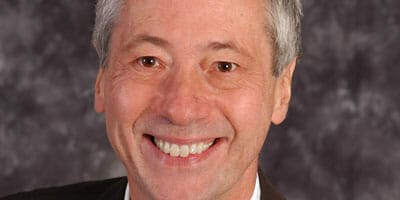
State Street’s Probyn into 2013

The current equity rally is not predicated on a shift in economic performance, according to chief economist at State Street, Chris Probyn, who says it would be reasonable to say the market may “pause for thought”.

Probyn says the move from fixed income to equities has been fostered by some of the “economic areas for concern” being eliminated.

These include the avoidance of a hard landing in China, and a disorderly breakup of the euro, proactive policy responses in Japan and the avoidance of the US fiscal cliff.

“These have all been ticked off,” he says. “But still growth is not great. The fourth quarter earnings reports have been good, with the notable exception of Apple, so there is some fundamental support for equities. But there is no fundamental upshift, so the size and speed of the rally is a little surprising.”

Probyn’s outlook for 2013 is for 0.25 per cent global growth, driven by a 0.5 per cent growth in emerging markets.

His economic outlook for developed markets is zero growth, which he partly attributes to fiscal policy decisions.

Sponsored Content

“We have reinvented economics, when the economy is weak we stop government spending, it is a failure of policy and we are repeating the mistakes of the 1920s,” he says.

Probyn also attributes the equity rally to a certain psychological behaviour.

“People have worry fatigue, they are tired of worrying about the same things,” he says.

State Street doesn’t have a big economics department, three people in fact. One emerging markets specialist plus two who look at the G8, defined as the G7 plus Australia (because of State Street’s presence in that country).

Probyn believes that in order to understand certain asset classes there needs to be an understanding of the global economic story, such as the relationship between resources and China.

He admits that for most economists it is difficult to predict exact growth numbers, but it’s more important to get “the overall story right”. Last year that overall story was further growth moderation, and that is the outlook for 2013 as well.


 

Leave a Comment

Sort content by

Pensioenfonds Vervoer defines a new fiduciary relationship

Fixed-fee compensation is one of the defining characteristics of the contract between Pensioenfonds Vervoer and its new fiduciary manager, Robeco, chief investment officer Patrick Groenendijk told delegates at the Fiduciary Investors Symposium in Beijing.mrec4inarticleinline Sponsored Content scnative1 scnative2 scnative3

Pimco’s predictions take a pessimistic turn

Pimco has warned that its outlook for the global economy has declined sharply in recent months, predicting the world will enter a two-to-five-year period of instability as governments seek to address economic imbalances.mrec4inarticleinline Sponsored Content scnative1 scnative2 scnative3

$20 trillion call for action on climate change

A joint statement from a group of 285 investors representing more than $20 trillion has called for a binding international legal framework that will provide the long-term certainty needed to encourage the large-scale private investment necessary to tackle climate change.mrec4inarticleinline Sponsored Content scnative1 scnative2 scnative3

News Corp faces down protest vote from CalPERS and CalSTRS?

Despite two of America’s largest pension funds, CalPERS and CalSTRS, calling for changes to the board of News Corp at the upcoming annual general meeting on Friday, Rupert Murdoch’s iron grip on the company means their efforts will likely amount to little more than a protest vote.mrec4inarticleinline Sponsored Content scnative1 scnative2 scnative3

Subtle charm in new asset allocation models

There is an over-abundance of literature about the failure of traditional asset allocation models, and the need for a new alternative that will solve all the world’s problems. But a new model by Morgan Stanley Alternative Investment Partners caught my cynicism by surprise this week.mrec4inarticleinline Sponsored Content scnative1 scnative2 scnative3

Washington reviews governance, pay and in-house investment

The pay levels, amount of in-house investment activity and governance structure of the $83 billion Washington State Investment Board (WSIB) may be under review following a rigorous debate that included a presentation to the board by KPA Advisory’s Keith Ambachtsheer.mrec4inarticleinline Sponsored Content scnative1 scnative2 scnative3

Previous



