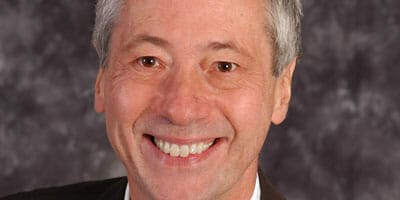
State Street’s Probyn into 2013

The current equity rally is not predicated on a shift in economic performance, according to chief economist at State Street, Chris Probyn, who says it would be reasonable to say the market may “pause for thought”.

Probyn says the move from fixed income to equities has been fostered by some of the “economic areas for concern” being eliminated.

These include the avoidance of a hard landing in China, and a disorderly breakup of the euro, proactive policy responses in Japan and the avoidance of the US fiscal cliff.

“These have all been ticked off,” he says. “But still growth is not great. The fourth quarter earnings reports have been good, with the notable exception of Apple, so there is some fundamental support for equities. But there is no fundamental upshift, so the size and speed of the rally is a little surprising.”

Probyn’s outlook for 2013 is for 0.25 per cent global growth, driven by a 0.5 per cent growth in emerging markets.

His economic outlook for developed markets is zero growth, which he partly attributes to fiscal policy decisions.

Sponsored Content

“We have reinvented economics, when the economy is weak we stop government spending, it is a failure of policy and we are repeating the mistakes of the 1920s,” he says.

Probyn also attributes the equity rally to a certain psychological behaviour.

“People have worry fatigue, they are tired of worrying about the same things,” he says.

State Street doesn’t have a big economics department, three people in fact. One emerging markets specialist plus two who look at the G8, defined as the G7 plus Australia (because of State Street’s presence in that country).

Probyn believes that in order to understand certain asset classes there needs to be an understanding of the global economic story, such as the relationship between resources and China.

He admits that for most economists it is difficult to predict exact growth numbers, but it’s more important to get “the overall story right”. Last year that overall story was further growth moderation, and that is the outlook for 2013 as well.


 

Leave a Comment

Sort content by

Top1000funds.com audience using social media for business

Thank you to all our readers who responded to the Top1000funds.com Audience Behaviour Survey. The survey’s overall aim was to allow us to better tailor our portfolio of products and events to you our readers. Some of the interesting findings included that our typical reader is aged between 41 and 50 and earns between $96,000

Global property lures investors

Property investors should look beyond the current languid growth in developed market economies and position their portfolios for a recovery in the world economy in 2013 and 2014, Mark Roberts the global head of RREEF Real Estate says. Roberts, who also chairs the National Council of Real Estate Investment Fiduciaries (NCREIF), points to initial yield

Why Global Investment Matters

The recent rally on global markets does not mean that the risk environment has abated Towers Watson’s global head of investment Carl Hess has warned. Speaking from New York prior to the launch of the consultant’s report Global Investment Matters, Hess says that while the risk of the imminent collapse of financial markets has lessened,

Extracting value from managers

Three funds find effective ways to get better value from staff, co-investment and private markets. The Danish ATP, Australian Sunsuper and the Teachers Retirement System of Texas are among the funds looking at innovative ways to extract value and interact with the managers of their private equity allocations. Institutional investors are increasingly seeking new ways

Limited partners hold fee-bargaining power

In a harsh capital-raising climate, ATP Private Equity Partners and TRS have different startegies on how to drive hard bargains on private equity fees. Institutional investors are gaining concessions on private equity management fees, with a near-record number of funds on the road seeking funds resulting in a shift in bargaining power to limited partners.

Infrastructure – fewer fees, please

Public pension funds make up almost a quarter of the world’s 100 largest institutional investors in infrastructure and, while still favouring unlisted funds, they are increasingly investing directly and pushing back on management fees, research reveals. The research by global alternatives research firm, Preqin, shows a record number of funds on the road seeking a

Previous



