

Focusing on ESG, benefits a company’s bottom line, the investment return and, of course, society. ESG measures were initially implemented in the equities investment context and the time has come to apply them to fixed income investment as well.
Responsible investment entails assessing ESG-related risk factors in order to improve returns and promote efficiency and transparency in the capital markets. Folketrygdfondet’s approach to responsible investment is not primarily about ethics, but rather, generating returns based on robust risk assessments that incorporate ESG considerations. This may appear obvious, but how can it be done in practice?
Folketrygdfondet’s objective is to achieve the highest possible returns over time. To succeed, we depend on our portfolio companies to create value. If we are to maximise the return on our fixed income portfolio, our credit analyses cannot avoid considering ESG risks.
Our portfolio companies must be able to service their debts. Whether they are prepared to address material ESG risks is a relevant consideration in this regard. The underlying theory is that if a company addresses the challenges it faces successfully, it is also more likely to achieve strong financial results. Equally, we try to avoid companies in which sub-optimal ESG management undermines creditworthiness.
As well as examining material ESG factors, responsible fixed income management entails taking an integrated approach across the investment chain. This includes contributing to the efficient functioning of the markets and improved allocation of capital. Folketrygdfondet is a large investor with a long-term perspective, and it is in our interest to promote well-functioning markets. Our investment strategy makes several contributions in this regard:
- Increasing the diversity of our portfolio helps broaden the market.
- Conducting robust, comprehensive credit analyses supports more efficient capital allocation.
- Investing in a wider range of, and less liquid, bonds fosters greater market liquidity.
- Counter-cyclical investment helps dampen market volatility.
In recent years, responsible investment has assumed an increasingly central role in fixed income portfolios. In our experience, adopting a responsible investment focus builds more integrated understanding and deeper insight into companies. This in turn facilitates better investment decisions and more efficient capital markets. We therefore warmly welcome further developments in this area.
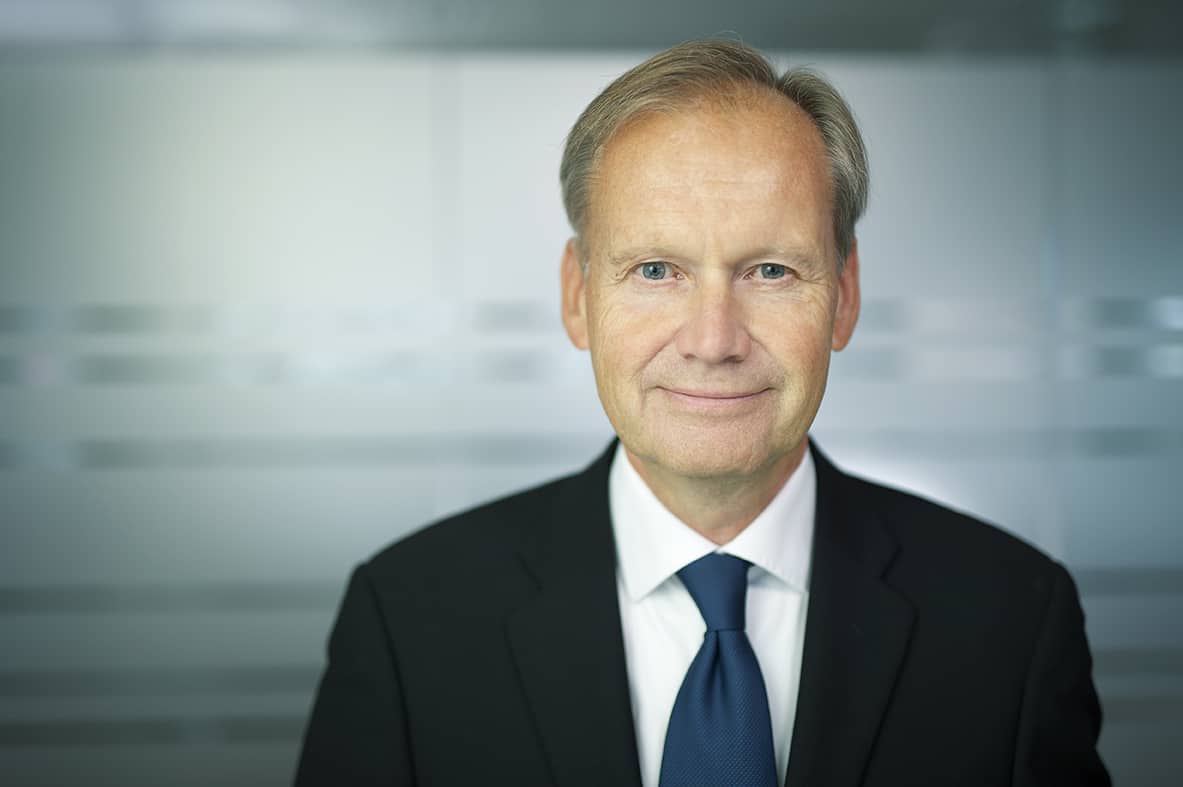
Jørgen Krog Sæbø is CIO, fixed income at Folketrygdfondet, and Lars Tronsgaard is deputy managing director. Folketrygdfondet is a professional investment manager whose main task is to manage the Government Pension Fund Norway on behalf of the Ministry of Finance. With NOK 255 billion ($27 billion) AUM, Folketrygdfondet has a benchmark allocation of 60 per cent equities and 40 per cent fixed income. Around 85 per cent of the portfolio is invested in Norway and 15 per cent in the other Nordic countries. Norway’s Government Pension Fund comprises the Government Pension Fund Norway, managed by Folketrygdfondet and the Government Pension Fund Global, managed by Norges Bank.








Leave a Comment
You must be logged in to post a comment.
Login