
PRI governance review to look at differential rights

The PRI has received many queries following the move by six Danish funds to abdicate as signatories over governance concerns. The association is holding a governance review that among other things will discuss the prospect of differential rights among signatories.


When six Danish funds, with a combined $300 billion, decided to leave the PRI as signatories the world looked up. It seems like a dramatic move for a nation known for its social conscious, socially responsible investing and fairness.

Their concern is not about the principles or a breach of governance or law. The funds are concerned with the structure of the association’s governance, decision-making, reporting and consequently its transparency. They haven’t ruled out returning as signatories.

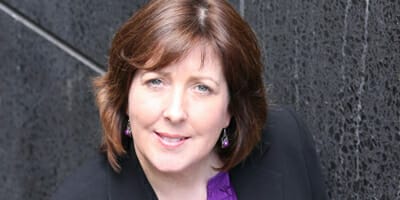
“These are important issues and we are taking it seriously,” says Fiona Reynolds, managing director of PRI, adding the PRI is currently conducting a governance review.

The PRI has an unusual structure in that it has both a council, which has elected members, and a board, not elected but made up of a majority of council members. It’s a confusing and unusual structure, and is at the heart of the Danish concerns.

Sponsored Content

“I have worked in associations my whole career and I’ve never seen this structure,” Reynolds says. “But it was put in place for good reason, and had a lot to do with the evolution of the association. It hasn’t worked for a lot of signatories and we decided in October last year to have a governance review. This was communicated to the Danish funds so we were somewhat surprised that they decided to leave.”

The funds – ATP, Industriens Pension, PensionDanmark, PKA, Sampension and PFA Pension – said in a statement they would leave the PRI organisation until it re-establishes the fundamental principles of governance that existed before the organisation, on its own initiative in 2010-11, radically changed the organisation’s constitution without the involvement or consent of its members at the time.

ATP said the change in structure had meant that ATP and other affiliated investors were no longer able to influence the purpose, accounts, membership fees and work programs of the organisation.


Governance review

The PRI now has an RFP out for an independent provider to lead a governance review, which will be decided by the end of March, and a draft scope of the review has been sent to signatories for consultation.

Reynolds says the review will not include the make-up of the signatories and it will remain an association for asset owners, funds managers and other service providers. It will however look at the rights of those different groups, including the prospect of differential rights.

The review will also look at the council and board and what the appropriate structure should be.

And it will look at what signatories should be able to make decisions about.

“Signatories want to be consulted about the work the PRI does, and they should have a say on the strategic direction, but there has to be a balance on how to operate on a daily basis.”

There is a council meeting scheduled for July where the interim findings will be presented with the final findings presented at the September annual meeting for signatory discussion and put to a vote.

“This is a growing organisation and governance is not static, it will change as it grows and evolves. This is a good opportunity to look at governance and structure.”

The PRI has also recently completed a signatory survey, which among other things includes governance, and will feed into the strategic planning process.


Growth and governance

The PRI was only formed in 2006 and has grown quickly. It now has 1200 signatories with combined asset of $34 trillion.

When it was first established it sat under the UN Foundation for Global Compact and was not a separate company.

As the organisation grew, and more signatories signed, its structure changed.

Initially a PRI board was created, made up entirely of asset owners, and a constitution was established, with all rights sitting with asset owners including voting on accounts, the work plan and the elections.

When it began, there were voluntary fees but as the PRI grew and needed more staff, mandatory fees were introduced. At the same time a lot of service providers, including funds managers became signatories, and they wanted to be part of the governance structure as a result of paying fees.

In 2010-2011 as the PRI got bigger it incorporated in the UK which meant a change in legal structure and constitution, the PRI Advisory Council was formed and service providers were added to the governing body for the first time.

The council is made up of nine asset owners, four service providers including funds managers, and two permanent positions for the UN.

“It is fair to say that when those changes were made the PRI didn’t communicate as well as it could have to the membership,” Reynolds, who became managing director in 2013, says.

Further change ensued. As the council only met a couple of times a year, a board was put in place to assist the executive with decision making.

While the council is elected the board is not elected but has a majority of the council on the board.

“The Danish signatories, and others, don’t like the fact there is a council and a board,” Reynolds says. “There is something between them and the council, and they say it is not good transparency with regard to who makes what decisions. This combined with the fact they felt their rights were removed by introducing funds managers into the council. I understand their concerns. They had also been engaging with the PRI for some time and didn’t think there had been appropriate change.”


Public disclosure of signatories reporting

The PRI signatory reporting framework closes in March and for the first time there will be public disclosure, on the PRI website, of the signatories reporting.

“This will mean there is evidence for the first time on what investors are doing with responsible investing,” Reynolds says.

The PRI is also piloting an assessment on how each signatory is tracking across asset classes with regard to responsible investment, and they will be assessed across a benchmark of peers.

“We have been spending a lot of time gearing up the organisation for mandatory disclosure and piloting assessment. If the signatories are below their peers, will say how to improve, so we are looking at our support material.”

The six Danish funds will continue to comply and back the six principles of responsible investing, but because they are not signatories will not be required to report.

The PRI also has 15 collaborative engagement projects including a project on fracking, and its continuing work on anti-corruption, and sustainable stock exchanges.

Reynolds has hired more senior staff, there are now 50 in total, including former head of policy at BT Pension Scheme, Helene Winch, to led the policy division which among other research areas is looking at long-termism and in particular how to operationalise long-term mandates.


Leave a Comment

Sort content by

Fiduciary duty to push for climate change action: CalPERS CEO

CalPERS chief executive Ann Stausboll told delegates at an investor summit on climate change held in New York this week that the fiduciary duty of pension funds should extend to issues outside the parameters typically understood as being directly related to beneficiaries’ financial interests. Stausboll said it is a fiduciary duty of investors not only

DC should look to DB for improvement

The defined contribution-dominated Australian superannuation market could do well to borrow the investment philosophy of its defined benefit cousins to better accommodate an individually-targeted retirement income strategy, a new paper finds.mrec4inarticleinline Sponsored Content scnative1 scnative2 scnative3

APG-backed hedge fund incubator expands

IMQubator, the emerging manager fund of funds backed by APG, will establish an international capital introduction network, as part of a plan to attract institutional investors in addition to the Dutch giant. mrec4inarticleinline Sponsored Content scnative1 scnative2 scnative3

Emerging markets offer glimmer of hope in 2012

It seems all predictions for 2012 are predicated on the assumption that the mess in Europe doesn’t hit the global economic fan. But as money managers gaze into their crystal balls at what 2012 might hold, emerging markets, particularly Asia, seem a bright spot amid the gloom.mrec4inarticleinline Sponsored Content scnative1 scnative2 scnative3

Investors’ climate summit

After a tentative agreement was achieved by global leaders in Durban in December more than 500 global investors will meet at the United Nations next week to discuss the investment needed to address climate change. The chief executive officers of CalPERS and CalSTRS, as well as the comptrollers of New York’s state and local public

Who pays for climate fund still up in the air

The formal approval of the Green Climate Fund (GCF) was a critical outcome of the UN climate change conference in Durban, according to Deutsche Bank Climate Change Advisors, but the lack of funding for the GCF remains a concern.mrec4inarticleinline Sponsored Content scnative1 scnative2 scnative3

Previous




