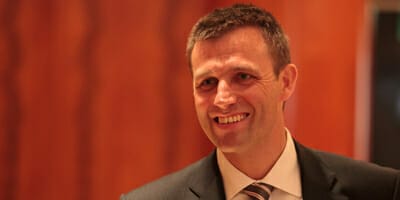

Investors need to revamp portfolio construction

Investors should re-consider their investment processes in order to achieve the needed “step-change in efficient portfolio construction” in a low return environment, the chief executive of the A$109 billion ($83 billion) Future Fund, David Neal, says.

“It is the investment process that turns the universe of opportunities into a portfolio, and right now that process needs to be as efficient and effective as it can be,” he said.

Specifically Neal said that long-term investors should look beyond the traditional characteristics of a long-term investor – the ability to take on greater levels of market risk and the ability to accept the risk of not being able to sell.

“If the reward for the higher risk is not there, it doesn’t make sense to accept that risk,” he said, urging investors to think critically about the risk/reward trade-off, not blindly accept it.

In addition he points out that just because there should be a return for illiquidity doesn’t mean a return premium is always there in practice.

Neal advocates that investors “add to their armour” and the first thing to think about is not just where to take risk, but when to take it.

Sponsored Content

“One advantage of being a long term investor is that the task is to generate the return over the long term, which means that the portfolio does not have to be constructed to achieve that target return all the time. If the reward for risk is low, it is perfectly reasonable to take lower risk (and accept an even lower return) for a while, waiting for the time when the reward for risk is once again higher,” he said.

“This introduces the concept of inter-temporal risk management – allocating your risk taking through time.”

In addition he says the way pension funds (specifically superannuation funds in Australia) organise themselves, places considerable constraints on the allocation process which leads to less efficient portfolios.

He said the tradition of strategic asset allocation, and asset buckets, is restrictive.

“I would encourage all funds to think deeply about their processes. Do they have this ability to identify great strategic opportunities, and if so, do they have the ability to right-size them in the context of the total portfolio?”

The Future Fund has a target return, but adopts a benchmark unaware approach with no strategic allocations to individual asset classes.

Its sits alongside NZ Super and the Canadian Pension Plan Investment Board in this way of thinking, allocating assets according to a total portfolio view.

An example of how this works, is that a property investment is not thought of in terms of filling a real estate allocation, but whether it is better than staying in equities.

This approach allows investors to be opportunistic. Neal says after the global financial crisis, banks were capital constrained and so companies were finding it hard to get financing.

“With the help of our managers and other relationships, we were able to identify the opportunity and build a specific private lending strategy. This didn’t appear in any benchmark, but it forms a large proportion of our debt allocation (we have $4 billion in this strategy).”

Neal says that the process evolution he is advocating requires substantial internal resources.

“This is not an argument for building internal sector implementation which is more about cost reduction. That is fine but won’t on its own deliver a step change in efficient portfolio construction.”

At the end of December 2014, the Future Fund’s asset allocation was Australian equities 8.8 per cent, developed market equities 20.9 per cent, emerging market equities 9.4 per cent, private equity 9.5 per cent, property 6.3 per cent, infrastructure and timberland 7.4 per cent, debt securities 10.8 per cent, alternative assets 14 per cent, cash 12.8 per cent.

David Neal was speaking at the ASFA Investment Interchange.

Asset Owner:Future Fund

Leave a Comment

Sort content by

Pension funds to talk climate change with the Prince

The P8, a group of 12 of the world’s largest pension funds tasked with influencing policy makers on climate change, will meet in London next week for a two-day conference convened by its patron, Prince Charles, in the last meeting of the group before the Copenhagen conference of political leaders. mrec4inarticleinline Sponsored Content scnative1 scnative2

Investors need to factor in inflation – Wurts

It may still be the right time to allocate to distressed real estate and debt-related strategies as deleveraging continues around the world and capital remains in short supply. But a significant factor likely to impact on portfolios in the medium term, according to US asset consultancy Wurts & Associates, is inflation. mrec4inarticleinline Sponsored Content scnative1

AustralianSuper rethinks hedge funds

The A$28 billion ($25.5 billion) AustralianSuper, has reduced its allocation to hedge funds from 3.5 per cent to 1.5 per cent, as part of a process of analysing the sources of beta within the overall investment portfolio. mrec4inarticleinline Sponsored Content scnative1 scnative2 scnative3

Hedge fund responds to crisis with backdoor listing

Hedge fund managers are moving to improve their capital base in the wake of the financial crisis, as well as their risk processes and asset/liability alignment for liquidity purposes. mrec4inarticleinline Sponsored Content scnative1 scnative2 scnative3

Constitutionality of Cuomo’s Common Fund reforms challenged

New York’s State Comptroller, Thomas DiNapoli, has hinted the constitutionality of legislation to create a board of trustees for the State’s Common Retirement Fund may be challenged. mrec4inarticleinline Sponsored Content scnative1 scnative2 scnative3

Correlations and the lesson, finally, learned

US-based quant shop AQR Capital has pioneered the notion of hedge fund beta as an investable product. With first-year performance numbers now in, Greg Bright spoke with the firm’s managing and founding principal, Cliff Asness. mrec4inarticleinline Sponsored Content scnative1 scnative2 scnative3

Previous




