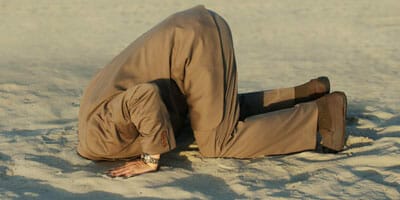
Fund “heads in sand” on climate risk

An Australian superannuation fund with A$6.6 billion ($6.9 billion) under management has achieved number-one ranking in a global survey of how the world’s top 1000 retirement funds, insurance companies and sovereign wealth funds are responding to climate risk.

Sydney-based Local Government Super (LGS) has received the top ranking in the inaugural Climate Index of the Asset Owners Disclosure Project (AODP).

The index was built following information requests to the world’s top 1000 asset owners from 63 countries, with around $60 trillion in funds under management. The survey focused on five main categories: transparency, risk management, investment chain alignment, active ownership and low carbon investment.

“We’ve been working steadily to build a sustainable portfolio for over 10 years,” said Peter Lambert, chief executive of LGS.

“The holistic approach, in which LGS seeks to invest in line with environmental, social and government principles across all asset classes, not just a few that might be considered easier, is what sets us apart.”

Around $3.46 billion, or just over half, of the LGS portfolio is held in responsible investment strategies across Australian and international equities, property, absolute return, private equity and sovereign bonds.

Sponsored Content

Australian funds made up six of the top 10 funds. South Africa’s AAA-rated Government Employees Pension Fund, which has calculated its exposure to fossil fuel reserves through the balance sheets of investee companies, was ranked second.

Also in the top 10 were Dutch funds PFZW and APG Group, along with Canada’s British Columbia Investment Corporation.

Overall, the creators of the index sounded a warning, with AODP chair John Hewson saying that despite signs of progress, the index “paints a disturbing picture of greenwash and reckless mismanagement”.

Julian Poulter, executive director of AODP, said the index showed that many funds had their “heads in the sand” on climate change and there was a “crisis of transparency” with 91 funds having “absolutely no public information available” on their climate strategies.


Leave a Comment

Sort content by

Why you should take notice of what we write

New research released this month gives impetus to the evidence that newspaper articles can predict aggregate future stock returns. Conducted by Professor of Finance at the University of St Gallen in Switzerland, Manuel Ammann, it examines articles in the German finance paper, Handeslblatt, from July 1989 until March 2011, and overall found that “newspaper content

CalPERS to move $1bn fixed income in-house

CalPERS plans to move $1 billion of its externally-managed international fixed income portfolio in-house in the next 12 months, but it will require board approval to do so.mrec4inarticleinline Sponsored Content scnative1 scnative2 scnative3

Texas Teachers extends manager partnerships

Texas Teachers Retirement System has extended a unique public markets strategic partnership structure to two of its private market managers in a move it claims will give the fund a long-term strategic advantage over other investors.mrec4inarticleinline Sponsored Content scnative1 scnative2 scnative3

Keynes and the character required for a long-term view

In the interests of educating myself I recently read Chapter 12 “The State of Long-Term Expectations” in John Maynard Keynes’ seminal economics tome General Theory. I particularly like his statement: “it needs more intelligence to defeat the forces of time and our ignorance of the future than to beat the gun”, but then I’ve always

Recipe for avoiding half-baked dynamic asset allocation

In what is lauded as somewhat of a Laurel and Hardy performance, APG’s Stefan Lundbergh and academic provocateur Jack Gray, demonstrate the disparity between ideology and action in a hypothetical dynamic asset allocation case study. But jokes aside, it highlights the misnomer in the words “best practice”, and the lack of courage in this industry.

HOOPP boss goes out on a high

Chief executive of HOOPP, John Crocker, has only one more board meeting before he retires, and except for travel plans to the Caribbean and Europe his dance card is empty. After 10 years in the position he leaves a fund in good shape – fully funded, technologically primed and with investments that use innovative, low-cost

Previous



