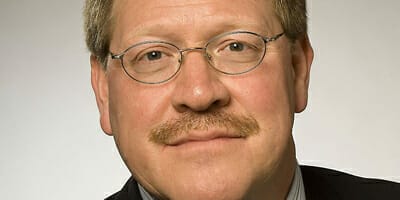
Eijffinger’s decade of financial repression

Financial repression will define the economic landscape for at least another decade, according to professor of financial economics at Tilburg University, Sylvester Eijffinger, which has serious implications for institutional investors.

Eijffinger, who also is also a visiting professor at Harvard, sits on the monetary experts panel of the European Union and is an adviser to the International Monetary Fund, says negative interest rates are the major issue of our time.

Negative real interest rates are here to stay, a realisation that has huge implications for investors.

“Governments have to de-leverage risk in times of low growth and they are not prepared to increase taxes; they have to do it with financial repression,” he says. “As an investor, be prepared. You have to realise that low interest rates are here to stay at the short-end and possibly at the long-end of the yield curve. This has huge implications for investments.”

By way of example, he says the European Central Bank’s policy rate stands at 0.5 per cent, while the eurozone’s annual inflation rate is 2.5 per cent. The Bank of England keeps its policy rate at only 0.5 per cent, despite an inflation rate that hovers above 2 per cent. And, in the United States, where inflation exceeds 2 per cent, the Federal Reserve’s benchmark federal funds rate remains at an historic low of 0 to 0.25 per cent.

This will be the financial and economic environment of the immediate future.

Sponsored Content

He says negative interest rates, which he describes as a kind of wealth tax, are necessary for governments to de-risk, but they come at the expense of savers.

“People who save should be aware that governments need to do this for at least a decade,” he says.

Eijffinger will give a keynote address at the Fiduciary Investors Symposium, an event that brings together institutional investors to examine the power and responsibility of fiduciary investment.

The event, which is convened by Conexus Financial, the publisher of conexust1f.flywheelstaging.com, will be held in Amsterdam from October 20 to 22, 2013. www.fiduciaryinvestor.com

Read an article by Eijffinger on the subject here.



Leave a Comment

Sort content by

Should hedge funds delay taking performance fees?

The US$173 billion California Public Employees’ Retirement System (CalPERS) is restructuring the relationships it has with its hedge fund managers and calling for fees to be based on long-term rather than short-term performance. CalPERS said performance fees should be judged on a long-term basis, and mechanisms such as delayed realisations and clawbacks can better align

OMERS’ new co-investment entity gateway to private deals

The Ontario Municipal Employees Retirement System (OMERS) has created a new investment entity, called OMERS Strategic Investments, with a specific mandate to secure co-investment relationships with like-minded investors from around the world, and facilitate a move to its target of about 42 per cent of investments in private markets. mrec4inarticleinline Sponsored Content scnative1 scnative2 scnative3

Beware of PE secondaries “rubbish” as dealflow rises, valuations drop

Investors in the private equity secondaries universe must be selective as more assets, including distressed assets, come to market and valuations seem set to head south. mrec4inarticleinline Sponsored Content scnative1 scnative2 scnative3

US congress challenges Bernanke on bankers’ performance pay

Federal officials in the US, including Federal Reserve chairman, Ben Bernanke, will receive letters from Congress in the next couple of days requesting documents about their knowledge of performance bonuses paid to Merrill Lynch executives just weeks before federal money was allocated to the bank’s merger with Bank of America. mrec4inarticleinline Sponsored Content scnative1 scnative2

Shareholder engagement crucial to returns: Australian Future Fund

As many corporate executives draw public criticism for their governance practices, institutional investors should exercise their power to influence who is appointed to the boards of companies they invest in, and who remains on them, the chairman of Australia’s A$59.6 billion Future Fund, David Murray, said. mrec4inarticleinline Sponsored Content scnative1 scnative2 scnative3

Co-investment opportunities come to the fore

The distress in the financial markets is offering Australian superannuation funds good opportunities to achieve a higher internal rate of return (IRR) on quality assets purchased directly. Sam Magee, commercial director at Australian investment manager Industry Funds Management (IFM), told the Conference of Major Superannuation Funds (CMSF) held in Australia this week, that there are

Previous




