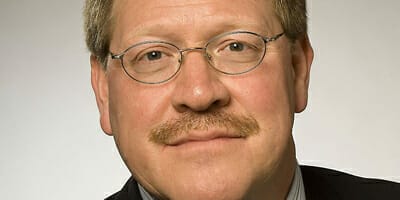

Eijffinger’s decade of financial repression

Financial repression will define the economic landscape for at least another decade, according to professor of financial economics at Tilburg University, Sylvester Eijffinger, which has serious implications for institutional investors.

Eijffinger, who also is also a visiting professor at Harvard, sits on the monetary experts panel of the European Union and is an adviser to the International Monetary Fund, says negative interest rates are the major issue of our time.

Negative real interest rates are here to stay, a realisation that has huge implications for investors.

“Governments have to de-leverage risk in times of low growth and they are not prepared to increase taxes; they have to do it with financial repression,” he says. “As an investor, be prepared. You have to realise that low interest rates are here to stay at the short-end and possibly at the long-end of the yield curve. This has huge implications for investments.”

By way of example, he says the European Central Bank’s policy rate stands at 0.5 per cent, while the eurozone’s annual inflation rate is 2.5 per cent. The Bank of England keeps its policy rate at only 0.5 per cent, despite an inflation rate that hovers above 2 per cent. And, in the United States, where inflation exceeds 2 per cent, the Federal Reserve’s benchmark federal funds rate remains at an historic low of 0 to 0.25 per cent.

This will be the financial and economic environment of the immediate future.

Sponsored Content

He says negative interest rates, which he describes as a kind of wealth tax, are necessary for governments to de-risk, but they come at the expense of savers.

“People who save should be aware that governments need to do this for at least a decade,” he says.

Eijffinger will give a keynote address at the Fiduciary Investors Symposium, an event that brings together institutional investors to examine the power and responsibility of fiduciary investment.

The event, which is convened by Conexus Financial, the publisher of conexust1f.flywheelstaging.com, will be held in Amsterdam from October 20 to 22, 2013. www.fiduciaryinvestor.com

Read an article by Eijffinger on the subject here.


Leave a Comment

Sort content by

Alecta doubles down on governance, risk management and culture

Sweden’s largest pension fund, the $126 billion Alecta, has spent much of the last year continuing to work on improving governance, risk management, competence and culture in the wake of a $2 billion loss in 2023 attributable to investments in US regional banks, including Silicon Valley Bank, turning sour.

Japan’s trifecta of challenges

After 18 years working with Japan’s leading pension funds and asset managers Chris Battaglia, president of the Global Fiduciary Symposium in Japan, is well placed to observe the pressures on the country’s retirement system and observes its evolution. mrec4inarticleinline Sponsored Content scnative1 scnative2 scnative3

日本が直面する3つの課題

グローバル・フィデューシャリー・シンポジウム代表を務めるクリス・バッタリア氏は、日本の大手年金基金や資産運用会社と18年間仕事をする中で、日本の退職金制度の課題、その進化を観察してきた。 mrec4inarticleinline Sponsored Content scnative1 scnative2 scnative3

A lot of regulation incoming for crypto, predicts former Fed governor

Former Federal Reserve governor Randall Kroszner argues crypto assets are mislabelled as “currencies”, and said digital currencies like China’s digital Renminbi could one day challenge the primacy of the US dollar, in a wide-ranging conversation.

Portfolios of the future

This session drew on themes of the conference and discuss with asset owners what the portfolios of the future will look like, particularly examining how investors plan to build robust portfolios to meet changing investment regimes.

Fiona Reynolds joins Conexus as CEO

Conexus Financial, publisher of Top1000funds.com, further cements its position as a global influencer with the appointment of Fiona Reynolds as chief executive.




