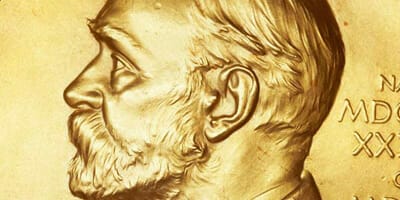
2013 Nobel Prize in economics split three ways

There is no way to predict whether the price of stocks and bonds will go up or down over the next few days or weeks. However, it is quite possible to foresee the broad course of the prices of these assets over longer time periods, such as the next three-to-five years.

These findings, which may seem both surprising and contradictory, were made and analysed by this year’s laureates, Eugene Fama, Lars Peter Hansen and Robert Shiller. Read the winning paper of the 2013 Nobel Prize in Economic Sciences, Trendspotting in asset markets.

Sponsored Content

Leave a Comment

Sort content by

Future Fund could manage others’ money

Managing money for default super is a possibility for Australia’s sovereign wealth fund. Its leadership also said becoming more ‘nimble’ and adding activity in venture and growth were priorities.

Carlyle MD says cycle isn’t done

Carlyle’s Jason Thomas says private-equity investors miss out when they try to call the top of the cycle. He thinks Trump’s impact has been overblown and that the current cycle isn’t done yet.

CalPERS says consultants could do better

CalPERS is happy with its consultants, except for their performance in recommending ways to control fees and costs and their presentation of new investment ideas, a board rating reveals.

Dutch pension funds embrace UN goals

PGGM and APG are well advanced in developing a process to identify potential sustainable development investment opportunities that could transform the UN’s targets into tangible returns.

5-yearly power transfer looms in China

As China readies for its five-yearly leadership reshuffle, global investors are watching to see how they’re poised to manage the world’s second-largest economy as it faces up to its debt dilemma.

Satyajit Das: access real income

Author Satyajit Das, who warned about derivatives before the GFC, says debt levels have turned the whole world into a carry trade and managers need to get close to real income streams.

Previous




