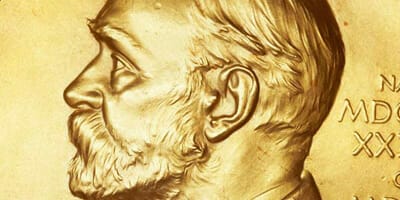
2013 Nobel Prize in economics split three ways

There is no way to predict whether the price of stocks and bonds will go up or down over the next few days or weeks. However, it is quite possible to foresee the broad course of the prices of these assets over longer time periods, such as the next three-to-five years.

These findings, which may seem both surprising and contradictory, were made and analysed by this year’s laureates, Eugene Fama, Lars Peter Hansen and Robert Shiller. Read the winning paper of the 2013 Nobel Prize in Economic Sciences, Trendspotting in asset markets.

Sponsored Content

Leave a Comment

Sort content by

Accenture puts diversity into action

Anna Darnley, 24, recently joined the board of Accenture's UK pension scheme. She and chair Peter George discuss achieving age and gender balance, and what her perspective brings.

Canadian pensions form research hub

Canada’s biggest funds are among the founders of the National Pension Hub, which aims to sponsor research that can help the industry, and has a plan for getting the right academics onto the job.

NBIM takes aim at forex practices

The manager of the $1 trillion Government Pension Fund Global has adopted the FX Global Code of Conduct and expects its counterparties to do the same. But the pension giant hasn’t stopped there.

Call for higher pension ages

The ratio of working years to retirement years should be at least 2 to 1 and raising the pension age is a universal fix for strained systems, the author of Mercer’s Global Pension Index says.

Active strategies still valued

Prominent CIOs say active management’s place is secure, even as passive strategies surge in popularity. But the two types of strategies aren’t as distinct as in years past.

Largest pension funds get bigger

Willis Towers Watson’s report on the top 300 pension funds for 2016 shows the world’s largest 20 funds have increased their share of global pension assets under management by 7.1 per cent.

Previous




